The February 2026 jobs report delivered an unexpected setback for the U.S. labor market, with a net loss of 92,000 jobs, marking the third monthly employment decline in the past five months and reinforcing the slow-growth environment that has characterized hiring over the past year. The unemployment rate edged up slightly to 4.4%, while wage growth remained solid. Several temporary factors contributed to February’s decline—including severe winter weather and a large healthcare strike that sidelined more than 30,000 workers. Still, the report underscores a broader reality employers have been navigating for months: hiring activity across most industries remains limited and highly selective.
The Numbers
- -92,000: U.S. employers lost 92,000 jobs in February.
- 4.4%: The unemployment rate ticked up slightly from 4.3% in January.
- 3.8%: Wages rose 3.8% over the past year.
The Good
Despite the disappointing headline number, several indicators suggest the labor market remains somewhat stable beneath the surface. The unemployment rate increased only modestly and continues to sit within a range that historically reflects a relatively healthy labor market. Wage growth also remained steady—increasing 3.8% year over year—a sign that employers are still competing for talent in key roles. Additionally, initial unemployment claims have stayed low in recent months, indicating that many organizations are maintaining their current workforce even as they slow hiring. For talent leaders, this combination—steady wages, limited layoffs and cautious hiring—points to a labor market defined by strategic restraint rather than broad contraction.
The Bad
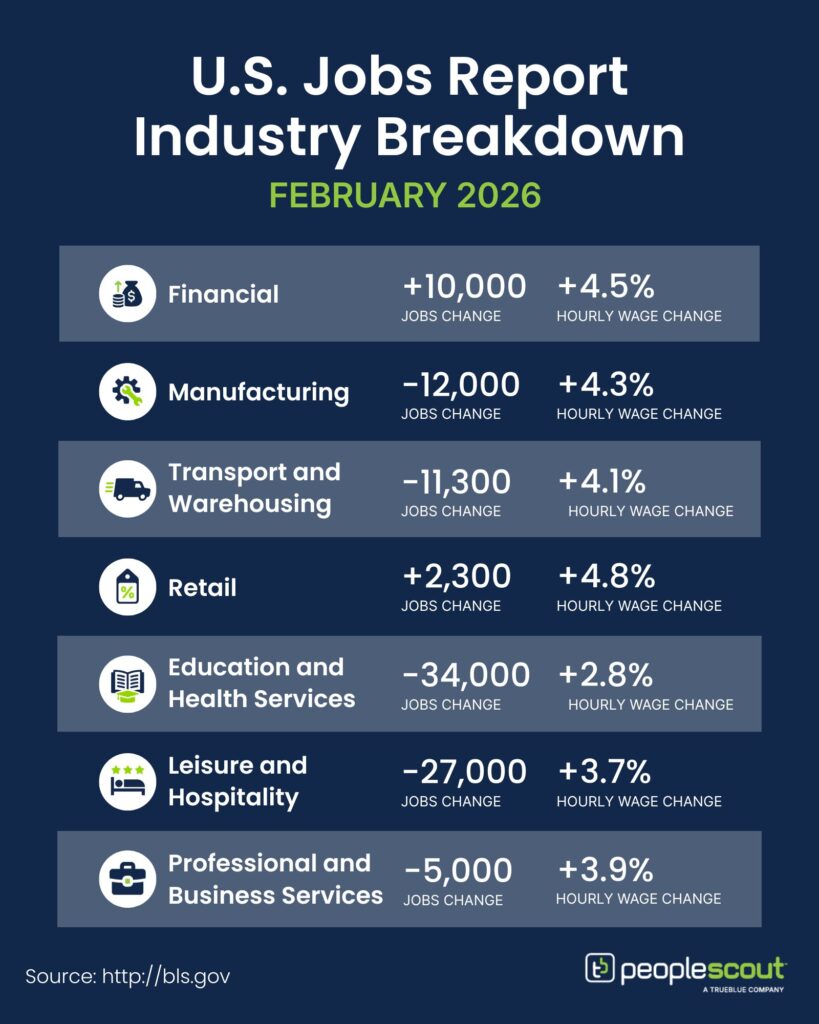
February’s data revealed a significant contraction, against an expected gain of 50,000. Healthcare, which has been a consistent and significant contributor to job growth in recent years, reported significant job losses due to a major strike. However, the decline was widespread across nearly every sector—including manufacturing, leisure and hospitality, transportation and construction—marking the second worst report since the pandemic. This shift from steady growth to net loss suggests the labor market may be moving from a period of strategic restraint toward a more concerning trend of genuine contraction. Recent revisions to prior months’ data further highlight the trend. With downward adjustments to December and January figures, the three-month average for job growth has effectively slowed to near zero, underscoring the cautious hiring environment.
The Unknown
The February report arrives amid a complex economic backdrop that continues to complicate workforce planning. Trade policy shifts, geopolitical tensions and evolving immigration patterns are all influencing labor supply and business confidence. At the same time, organizations are reassessing how technology and AI-driven productivity improvements may shape future hiring needs. In some sectors, automation is reducing the urgency to add headcount, while in others it is reshaping the types of skills employers require.
Conclusion
This latest U.S. jobs report serves as a reminder that the labor market is operating in a period of measured, uneven growth. Hiring has slowed meaningfully compared to prior years, yet unemployment remains relatively low as wages continue to rise. For employers, this environment reinforces the importance of strategic workforce planning. Organizations are increasingly focusing on business-critical roles, investing in productivity and carefully balancing cost management with long-term talent needs. For talent leaders, success in 2026 may depend less on rapid hiring expansion and more on precision—identifying the roles that matter most, strengthening retention and ensuring workforce strategies remain adaptable as economic conditions evolve.