The U.S. labor market showed renewed strength in October, adding 165,000 jobs and significantly exceeding economists’ expectations. The unemployment rate edged down to 4.1%, while upward revisions to August and September added another 84,000 jobs to previous estimates.
The numbers
- 165,000: U.S. employers added 29,000 jobs in September.
- 4.1%: The unemployment rate rose to 4.2% from 4.1%.
- 3.1%: Wages increased 3.0% over the past year.
The good
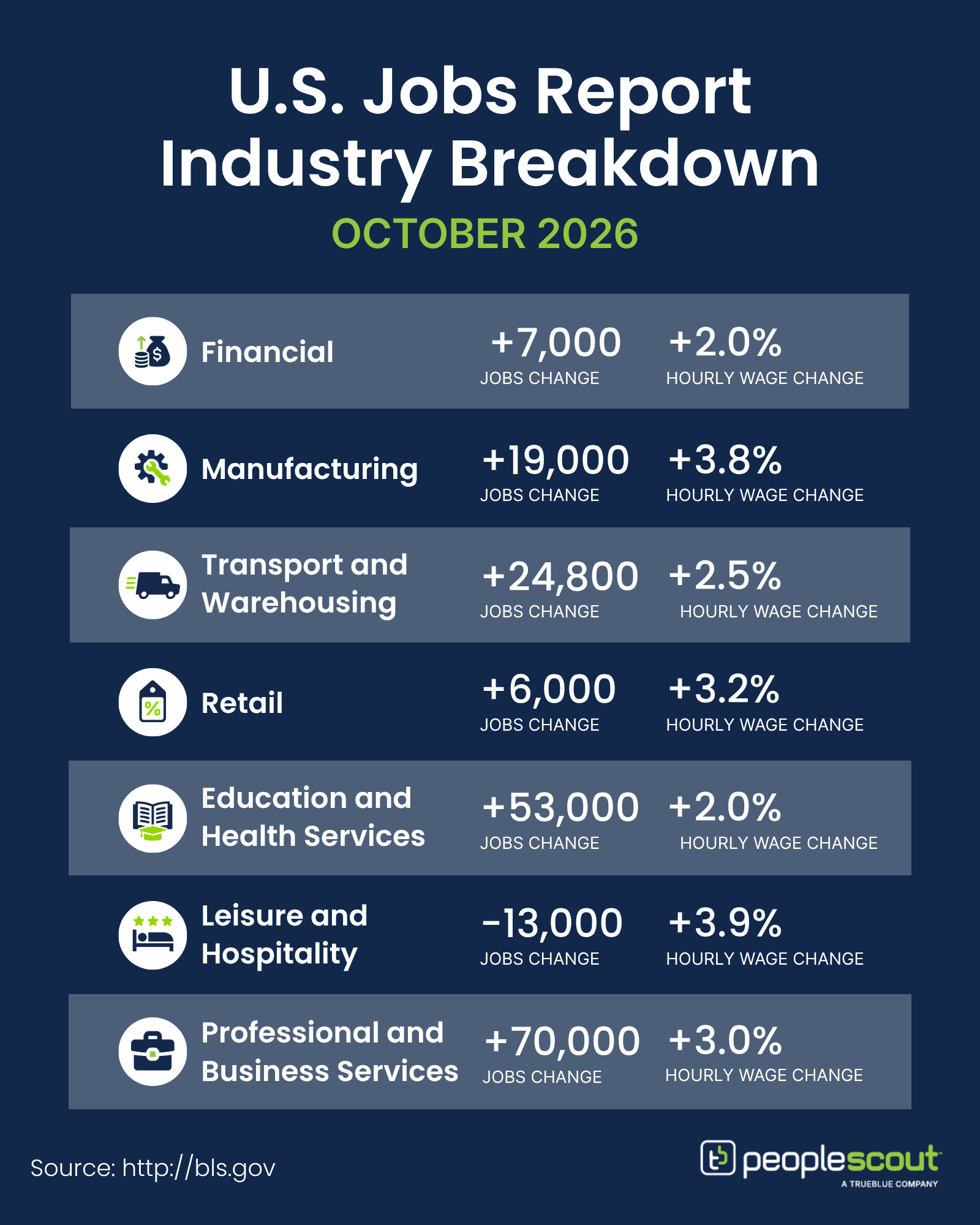
October’s 165,000 new jobs marked a significant improvement over September’s revised 60,000, with Professional and Business Services leading the way (+70,000). Healthcare (+42,000), Transportation and Warehousing (+25,000), and manufacturing (+19,000) also contributed to growth. The broader distribution of hiring is an encouraging shift from recent months when Healthcare accounted for a disproportionate share of new jobs.
Additionally, previous months were stronger than initially reported. Upward revisions added 84,000 jobs to August and September’s totals, bringing the three-month average to 137,000 jobs. Private-sector employers accounted for 159,000 of October’s gains, while temporary help services added approximately 19,000 jobs, potentially signaling growing confidence among employers looking to expand their workforces while maintaining flexibility.
The bad
Despite stronger hiring, the labor market remains characterized by relatively low turnover and limited opportunities for those seeking new employment. The average duration of unemployment rose to 27.1 weeks, its highest level since 2021, while the number of people unemployed for more than 27 weeks reached 1.96 million. These figures suggest that finding a new position remains difficult, particularly for younger workers and those reentering the workforce.
Wage growth continues to lag inflation. Average hourly earnings increased 3.1% year over year but annual wage growth has slowed from September’s 3.2%. With inflation running at 3.7% in September, workers continue to face pressure on their purchasing power. The broader underemployment rate also rose to 7.9%, highlighting challenges that aren’t fully reflected in the headline unemployment rate.
The unknown
While the latest report offers encouraging signs of resilience, monthly job growth has fluctuated throughout 2026. Employers continue to navigate elevated inflation, economic uncertainty, and the evolving impact of AI on workforce needs. With the Federal Reserve weighing additional interest rate increases, the coming months will help determine whether October marks the beginning of a sustained improvement in hiring or another temporary rebound in an otherwise cautious labor market.