Talent Pipeline and Candidate Engagement

As we return to work, resiliency, business continuity and recovery are fast emerging as critical priorities for business leaders. Creating a talent pipeline strategy for vital roles is one way organizations can build greater resilience, have clear succession plans and ensure talent continuity. However, with hiring freezes and uncertainty around when hiring will resume has left many talent teams in limbo.

That said, there has never been a more important time to focus on building your talent pipeline strategy to ensure you have the best possible talent on your team and are well-positioned as things return to normal. You may not have positions to fill now, but by building a robust talent pipeline now, you will place yourself in a better position when we return to business as usual.

In this article, we cover how to build a better talent pipeline and engagement strategies and best practices for building stronger relationships with your candidate pool.

What is a Talent Pipeline?

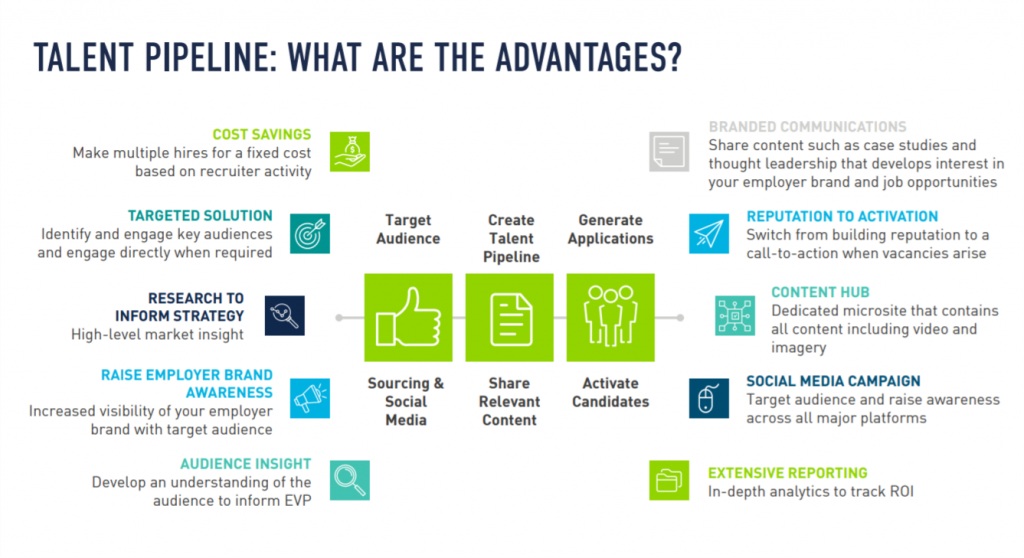
A talent pipeline is a proactive talent acquisition strategy that seeks to identify, engage and recruit talent to build a robust pool of candidates to fill roles as needed. Similar to a sales funnel where leads progress through multiple stages of engagement and are eventually converted into clients, a talent pipeline moves potential job candidates through engagement stages that hopefully lead to making a hire. Like most modern recruitment practices, talent pipelining has been derived from proven sales and marketing strategies.

Talent pipeline

With a talent pipeline, organizations can pick and choose from a highly qualified group of candidates who are already familiar with the organization. The key to a successful talent pipeline strategy lies in candidate engagement because recruiting teams are not focused solely on filling open roles. Rather, they are thinking about how to best meet future talent needs through building better relationships with top talent. In addition to better candidates, talent pipelining allows you to diversify your talent pool, deliver personalized candidate experiences and improve your overall employer brand. 

How to Build a Pipeline of Candidates: Talent Pipeline Strategy and Engagement Starts with Your Employer Brand

how to build a pipeline of candidates

Talent pipelining is about influencing candidate behavior, so the first and most logical place to begin when creating a talent pipeline is the answering the following questions:

  • How do you generate interest in your organization?
  • What differentiating factors set your organization apart from other employers?
  • Why should candidates choose to work for your organization?

To find the answers to these questions, you need to turn to your employer brand. In a talent market that’s reeling from the effects of a global pandemic and calls for increasing racial diversity, your reputation as an employer is now more important than ever to attract high-quality candidates.

What’s more, at a time when candidates can quickly look up information about your organization, from compensation and benefits to the work culture and advancement opportunities, building a strong employer brand is paramount. In fact, according to the Harvard Business Review, a negative employer reputation can costs organizations up to 10% more per hire.

To attract and bring top talent to your organization’s talent pipeline, maintaining and personalizing your candidate-facing content should be a top priority. You can achieve this by improving the content on your careers page and in your social media outreach with high-quality resources, guides, videos.

So, how do you position yourself as an employer of choice in your industry and fill your talent pipeline with qualified talent? Below are some simple steps that can help you get started:

Leverage Your Career Site

The first place many candidates will engage with your employer brand will be through your career site. Use your career site to highlight your corporate values, culture and provide a real glimpse of what life for the employees of your organization is like.

Make sure that your employer brand messaging on your career site is consistent with that on your social media channels, company website and review pages such as Glassdoor and Indeed. Also, make sure your career site is mobile optimized as many mid-career professionals are more likely to search for opportunities on their mobile devices. The easier it is to apply and interact with your organization, the more top candidates you will be able to add to your pipeline.

Candidate Engagement Best Practices: Engage Your Talent Pipeline on Social Channels

Social media has fast become a top recruitment marketing channel. Moreover, according to Glassdoor, 79% of job applicants use social media in their job search, so engaging with candidates and presenting a positive employer brand on social media is essential.

For example, you can build a stronger employer brand and engagement with your target audience by promoting authentic conversations about life within your organization and asking candidates to share what they seek in an employer. You should also celebrate employee achievements, share real-life stories, photos and videos to show potential candidates what it is like working with you. This will make it more likely that candidates will feel comfortable applying for positions at your organization.

Your Employees Are Your Best Advocates

Building on your social media strategy, you can also look at employee advocacy as an effective branding and talent pipeline building tactic. Employee advocacy is the word-of-mouth marketing equivalent for recruitment. Your employees can tap into their networks, refer friends to open roles and bring in more candidates into your talent pipeline.

talent pipeline strategy

Identify employees who can act as your brand ambassadors and share the perks of working with your organization with their network and build a great referral pipeline for talent. Candidates are three times more likely to trust your employees over recruiters to provide credible information about your work culture.

How to Build Talent Pipeline: Communicating with Your Talent Pipeline

how to build talent pipeline

Send Confirmation Emails to Candidates

Sending confirmation emails to candidates in your pipeline who have applied to open positions should be an obvious step, as 96% of job applicants want confirmation their application has been received. However, just 8% say they always get one from a potential employer. You can leverage technology and automate your communication with candidates to make sure emails are sent on time and reach candidates.

You should include in your replies a “thank you” for taking the time to fill out your application, let candidates know when they can expect to hear back about their application status. You do not have to provide feedback to unsuccessful candidates, just make sure you tell any unsuccessful candidates that they have not progressed and thank them again for taking the time to apply. This reply can be automated too.

Keeping your Talent Pipeline Warm During a Hiring Freeze

You may have many talented professionals out of work looking for new opportunities but might not be in a position to do any hiring right now. That does not mean that your recruiting activity should be on hold. In fact, this is the perfect time to work on building and nurturing your talent pipeline.

Keeping candidates “warm” is a balancing act, especially in uncertain times. You can keep candidates engaged by sending them updated press releases, and managers can periodically send a personal note or text to keep the lines of communications open.

You can share updates about the conditions at your organization, statements your CEO has made, or other information to give them an understating of how your organization is dealing with this crisis. These efforts might impress candidates and make them want to work with you even if you do not have an opening yet.

Consider Using a Chatbot

Candidates in your talent pipeline will have questions for you – about the role itself, about the application process or the timeline between applying and hiring. If you have high-volume hiring needs, or your internal recruiting teams are stretched too thin to answer all of the questions, deploying a chatbot to answer some of the most common questions immediately can prevent candidates from losing touch with you or becoming frustrated.

If you are wonder if candidates would be happy accepting answers from a chatbot, modern candidates are already interacting with them, because like Alexa or Siri, they mimic our natural conversational styles.

Your job is to figure out what the most common questions will be and craft answers that the chatbot can supply. Just ensure you have a process in place if the candidate’s question was not answered satisfactorily – that the question then gets routed to a human who can answer it.

Conclusion

Ultimately, effective talent pipelining engagement boils down to how you plan, strategize and leverage technology to support your long-term business needs. The landscape for candidates today is drastically different from the past years. Empathy, flexibility and understanding will go a long way in building lasting relationships with candidates and successfully adapting to the realities of a post-COVID world.

The Importance of Inclusion in Your Diversity Program

The seemingly never-ending obstacle course of 2020 has been filled with highs, lows and everything in between — from a landmark ruling for LGBTQ+ workers to an international awakening to systemic racism and a global pandemic that has impacted the lives of millions. As organizations around the world face a future more unpredictable than ever before, one thing remains certain: the business case for diversity and inclusion (D&I) is stronger than ever. 

In order to face unique challenges, organizations will need unique thinking, the kind that only comes with a truly diverse team — whether in age, gender, sexuality, race or otherwise. According to a report from the World Economic Forum, companies with above-average diversity scores report nearly 20% higher revenue due to innovation. Moreover, this article from The Conversation cites research from more than 300 Australian studies that conclusively shows how workplace racism has a direct, detrimental impact on performance, accounting for an estimated 3% loss in average annual gross domestic product. 

That said, the driving motivators for organizations to foster effective D&I programs should not be focused only on performance metrics, but rather the desire to make employees feel represented, understood, respected and cared for. While most companies are able to increase their level of diversity, they struggle with cultivating a culture in which those diverse voices are heard — leaving room for improvement in their inclusion efforts. 

D&I: Defined 

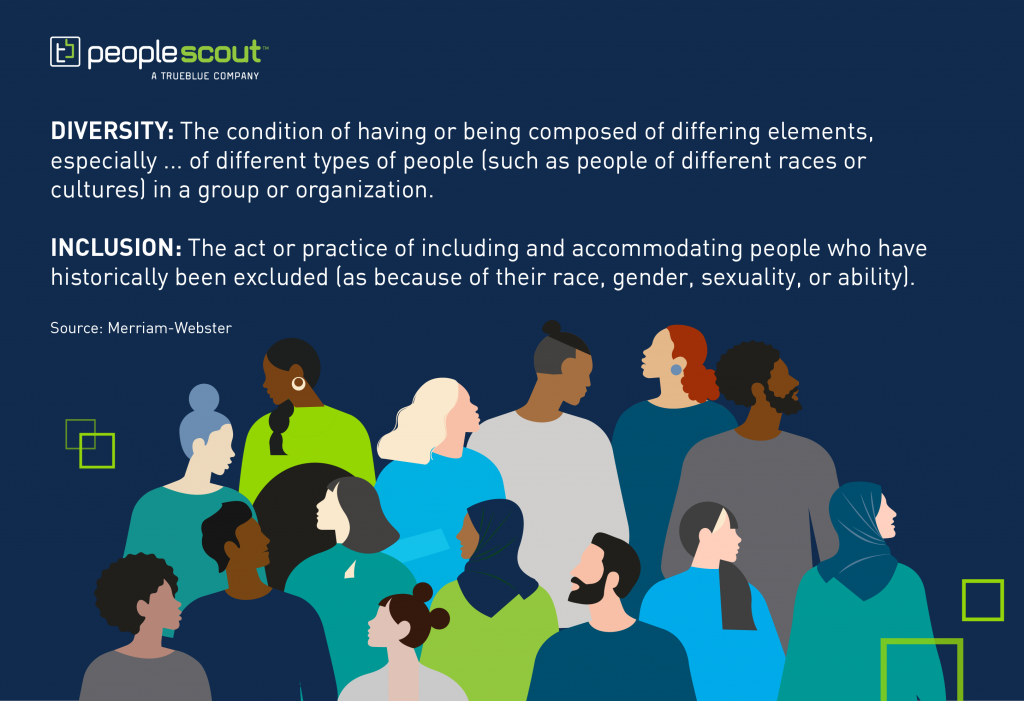
Diversity and inclusion in the workplace has been a hot topic for years, so why does it often seem like minimal meaningful change has occurred? Unfortunately, the downfall for many organizations is the misinterpretation that diversity and inclusion are synonymous. To avoid making this mistake, it is important to understand the difference between diversity and inclusion, to better understand why it’s time to shift focus to the latter. 

The definition for diversity is relatively straightforward, and simple enough for most organizations to achieve by tracking demographics and collecting concrete data to ensure they hire and promote people of varying backgrounds. 

However, the definition for inclusion is more difficult to effectively measure results against because every organization can interpret words like “including” and “accommodating” differently.  

According to Deloitte, “without a shared understanding of inclusion, people are prone to miscommunication, progress cannot be reliably evaluated, leaders can’t be held accountable and organizations default to counting diversity numbers.” 

Deloitte goes a step further by using its research to create a holistic definition comprised of four distinct yet connected elements:  

  • Fairness and respect: The starting point for effective inclusion is ensuring people are treated equitably and with respect — in both nondiscrimination and basic courtesy.  
  • Valued and belonging: People will feel included when they believe their authentic self is valued by others and they feel a sense of connectedness with their peers. 
  • Safe and open: Inclusion is experienced when people feel safe to speak up without any fear of embarrassment or retaliation. 
  • Empowered and growing: True inclusion happens when people feel empowered to grow in their role and do their best work — diversity of thinking can emerge.  

By looking at the depth of these definitions, it’s clear that building and maintaining an effective inclusion program requires considerably more time and effort than it does to reformat a hiring process to increase diversity. While diversity can be measured and those metrics can be used to set and achieve goals, inclusion calls for a continuous cultural reset.  

Inclusion Requires Action 

In a 2020 report by McKinsey & Company, data from three industries with the highest levels of executive-team diversity — financial services, technology and healthcare — showed that “while overall [employee] sentiment on diversity was 52% positive and 31% negative, sentiment on inclusion was markedly worse, at only 29% positive and 61% negative.” Furthermore, the levels of negative sentiment about equality and fairness of opportunity, key indicators of inclusion, were also particularly high — proving that even more diverse companies struggle with effective inclusion.  

So, what are some steps organizations can take toward fostering better inclusion? To gain some insight, LinkedIn asked Black talent leaders their thoughts on what talent acquisition teams can do to accelerate diversity and inclusion. Here are three of their tactics: 

Change how and where you look for talent  

This starts with having diverse recruiting teams. Having recruiters from a wide variety of backgrounds will help employers change the way they think about how and where they find talent — shifting their sourcing beyond the geographies, companies and schools they’ve become accustomed to. 

Make a top-down investment” in diverse employees 

To build diversity into the succession plan, organizations should invest time, money, training and executive sponsorship into their diversity efforts, ensuring representation across the business. By hiring and promoting diverse talent, an organization sends a message of inclusion that ripples throughout the company and into the industry — positioning you as an inclusive workplace that recognizes the value of diverse talent. 

Leverage the power of remote work  

Continuing distributed work strategies beyond the current crisis will allow recruiting teams to source, engage and hire talent where they are. Organizations will no longer be limited to talent that lives in the same geographies as their physical offices, meaning they can expand their scope to locations that are historically diverse.  

These tactics may seem like large feats, and that’s because they are. Building an organization that is truly diverse and inclusive is a huge undertaking that takes time, effort and serious commitment. While you work on the organizational overhaul, keep in mind that there are also some smaller steps you can take along the way: 

  • Provide resources. Inclusion can’t be mandated; it requires the “changing of hearts and minds.” Organizations can do their part by encouraging open dialogue and providing educational resources, like this anti-racist reading list from DiversityInc
  • Break up cliques. We are naturally drawn toward others who are like us, which can often result in cliques. Create opportunities to position employees outside of their comfort zone and into work groups made up of people with various backgrounds. 
  • Form inclusive groups. Create a dedicated task force focused on updating policies that promote your company’s values. Project Include offers more suggestions for creating systemic inclusion here
  • Offer professional development. Offering development programs and mentorship opportunities to underrepresented employees who may have a steeper hill to climb can help them in their career ascent.  
  • Showcase diverse talent. Representation matters, and employees and candidates will understand how you value diverse talent when you celebrate and share their stories

A Continuous Journey 

It can be easy to get lost in the mindset that inclusion is a “one and done” activity. That mindset has a certain allure, because it would mean we could all rest assured knowing we’ve created a workforce that is 100% diverse and effectively inclusive. In reality, inclusion is a continuous journey that requires a concerted effort, focus and determination to effect meaningful change. You can think of it like a long road trip — one that requires multiple checkpoints, refuels and stops to check you’re still going in the right direction. To ensure you’re always on the correct path, it can be helpful to perform a regular inclusion audit that asks: 

  • Does the organization have a continuous representation of diverse talent? 
  • Is diverse talent represented in leadership roles? 
  • Is there room to remove bias in the hiring process? Promotion process? 
  • Are we listening to employee concerns? 
  • Are we regularly surveying employee sentiment on D&I? 
  • Do we know what’s working? What isn’t? 
  • Have we asked employees what they want and need? 

It’s clear that simply hiring diverse talent is not enough. While it’s a start, it’s only part of the solution. Workplace experience and true inclusion is what will help employees feel represented and valued, leading to diverse hires that stay, grow and thrive. The road ahead is a long one, but by implementing the strategies outlined in this article, your organization will be well on its way toward a better diverse and inclusive workplace. 

Transport for Wales: Growing the Workforce of a Newly-Created Organization

Transport for Wales: Growing the Workforce of a Newly-Created Organization

Transport for Wales: Growing the Workforce of a Newly-Created Organization

Supporting the launch of Transport for Wales with recruitment process outsourcing (RPO) for specialist engineering, transportation, project management and support roles.

92 % of Candidate Rated the Experience as Excellent
Grew Workforce from 9 employees to 140 During the Initial Engagement
2 Languages, English and Welsh

Situation

Transport for Wales (TfW) was created to drive forward the Welsh Government’s vision for a high quality, safe, integrated, affordable and accessible transport network that the people of Wales would be proud of. As a new rail franchise operator, their initial focus was to grow at speed, recruiting 100 or more key staff within challenging timescales, in preparation for a rail franchise switch over.

As a newly-created organisation, Transport for Wales had no recruitment expertise or talent technology to support their ambitious resourcing plans for roles at all levels, from apprentices and graduates to Directors with every level in between.

TfW selected PeopleScout as their sole RPO partner to build their workforce from just nine employees to over 140 and growing, most of which are permanent with some temporary staff and contractors. Another key requirement was to work in both English and Welsh.

Solution

A Unique Service Model

To establish the Transport for Wales recruitment strategy, we placed a senior recruiter on site with expertise and industry experience who could consult and provide solutions to market challenges and engage with hiring communities and other key stakeholders. The immediate challenge was to identify and hire for key senior positions, starting with the Directors. We then worked with these leaders to build their teams from the top down in order to deliver on their goals.

Best-In-Class Candidate Experience

Our off-site recruiting team provided full-cycle RPO, from sourcing to onboarding services, to ensure that candidates received a best-in-class experience right through to their first day and beyond.

Attracting a Wider Talent Pool

As an RPO provider with a creative flair, we were able to help TfW move away from a more traditional marketing style to something which attracted diverse talent. As leaders in employer brand and candidate experience, this extended into a go-to-market broadcasting strategy that encompassed social media, community management and talent pooling. It also maximized the TfW employer brand story and reduced pressure on budgets.

Results

  • 95% offer fulfilment across all levels of roles
  • Rapid identification and hiring of crucial roles
  • 92% of candidates rated their hiring experience as excellent
  • Talent pools created for future hiring
  • A developed and refined future-proof recruitment strategy

PeopleScout have been excellent in the delivery of the recruitment services into Transport for Wales. They are transparent, hardworking and qualitatively focused. All the team have been dedicated to our growth ambition and have represented our brand well to external candidates. I am delighted to work with the whole team as we share our continued success with our partners.

Recruitment Leader, Transport for Wales

At a Glance

  • COMPANY
    Transport for Wales (TfW)
  • INDUSTRY
    Public Transportation
  • PEOPLESCOUT SOLUTIONS
    Recruitment Process Outsourcing, Affinix
  • ANNUAL HIRES
    100+ roles across specialist engineering, transportation, project management and admin support
  • ABOUT TfW
    Founded in 2016, Transport for Wales (TfW) was set up by the Welsh Government to make sustainable travel a reality in Wales. Their multimodal, integrated transport network aims to increase the number of journeys on public transport by 40% by 2040.

The Future of Graduate Recruitment is Digital

The graduate recruitment process has grown increasingly digital in the past few years, but the entire process for 2020 was held online due to the pandemic. However, the virus didn’t create this change; it simply sped up a process that was already happening.

As a graduate resourcing consultant, 2020 is my fourth graduate recruitment cycle. I currently work on the Lendlease team at PeopleScout, supporting our client by sourcing bright minded graduates who will help to shape and deliver the future of the construction and property industry.

And, despite the uncertainty in the world right now, I am confident that this move to digital graduate recruitment will stick.

Graduate Roles are Still Important

Graduates are the future of every business. Lendlease has a two-year graduate program, and the people hired for those roles use that program to grow their skills and experience before moving on to other roles within the business. We have even seen some of those graduate hires grow to become senior leaders at Lendlease.

Furthermore, it is critically important to continue recruiting for graduate roles during this uncertain time. Graduates futureproof the business by bringing in diverse, new talent with different perspectives, new ideas and an understanding of current trends. By actively filling these roles, we are preparing for the future beyond COVID-19.

But, the Graduate Recruitment Process Needs to Change

Normally, the planning for a graduate recruitment cycle begins in the previous year. For 2020, we started planning in November and December of 2019. We prepare through January and February, and then the campaign goes live in March. In previous years, we would attend career fairs, flying to different universities and presenting information about Lendlease in person. Throughout the next few months, candidates would apply and interview online, and finally attend an in-person assessment center.

But, in 2020, we needed to adapt rapidly. We stuck with our normal timeframes, but moved the entire process online – career fairs and assessment centers included. Earlier this year, I attended one of the virtual career fairs.

The fair was run by a university, and nearly 1,500 students registered. We advertised on social media to get students excited to speak with Lendlease. On the day of the fair, about 300 students visited the digital booth – making it one of the most popular. I was able to present to larger groups of students at once – something that isn’t possible at a traditional booth. Students also came with questions, which I was able to answer and talk with them about one-on-one.

The virtual fair I attended was held using Zoom video technology, along with the help of a third-party provider to ensure everything ran smoothly on the day of the event. Each employer had a unique booth and logo, so students could easily identify them and talk with employer representatives. Many graduates registered to come talk with us, allowing us to target hundreds of students in just three hours without having to travel.

Best Practices to Make the Transition Smooth

For the process to be successful, consider the types of technology you use. For virtual career fairs, the university may already have a preferred platform. However, you will still need to consider virtual interviews and virtual assessments. At PeopleScout, we use Affinix™, our proprietary talent technology. With Affinix, we can schedule and conduct virtual interviews – live or recorded – on a candidate’s own time.

Likewise, it is important to focus on communication. Graduates want to hear from you. Something as simple as a message to check in can be powerful. Communicating with candidates, even if it means admitting you don’t have all the answers, builds trust in an uncertain time.

Graduate Recruitment Won’t Go Back

With the COVID-19 crisis, we are always facing new surprises. However, with graduate recruitment, the surprise was how well the process worked – even with changes taking place under a tight timeline. We had to adapt quickly, but we saw that the digital process works. Students responded well to online career fairs. We saved money by avoiding air travel and lodging. We communicated with and assessed candidates in ways that kept everyone safe.

Based on our experience, 2020 won’t be a one-off year in which graduate recruitment looks different than normal. It will be the first year where digital graduate recruitment is normal.

Texting Talent: Driving Engagement and Candidate Communication

In light of the workforce disruptions caused by the outbreak of the COVID-19 virus, talent leaders are quickly adapting and transforming their organization’s talent function to match our present reality. 

The current crisis gives talent leaders the opportunity to assess and fine-tune recruiting practices in a way that will keep both candidates and recruiters safe while better positioning their organization for the future working conditions.  

Technologies such as text messaging tools built for recruiters offer enormous opportunities to improve recruiter efficiency, time to hire and build stronger relationships with candidates. What’s more, text messaging, when paired with a virtual hiring solution, is a safer alternative to traditional recruiting.   

Before you implement a texting solution, you need a solid understanding of use cases and best practices that can help ensure success and mitigate risk. In this article, we will outline the case for texting and share best practices for leveraging texting in your recruiting program.  

The Case For Text Recruitment

Recruiters and talent leaders understand that good recruiting begins and ends with building strong relationships with candidates. So, why add yet another communications channel to the recruiting mix?  

The answer is simple: Times keep changing, and so do the ways we communicate. As that happens, the effectiveness of tried and true methods also changes as demographics and preferences shift. 

Texting Recruitment is Straightforward: Text messages are typically short and to the point, which makes them easier to read and respond to than email messages. Texting also carries with it an expectation of informality which makes it easier to communicate. For example, saying “yes” instead of “Yes.” is totally acceptable via a text exchange. 

Text Recruitment is Convenient: Candidates can respond to texts whenever and wherever while they are running errands, on break at work or home watching a movie.  

Text Recruitment Has Greater Reach: Many hourly and elderly workers don’t own or have access to a computer and rely on their mobile devices exclusively for job searches. Texting is also more accessible for job seekers who don’t have unlimited data plans or who do not have a smart phone, making your application process more accessible to a broader population.

Text Recruitment Builds Dialogue: The nature of conversation is constantly evolving. That means candidates are becoming increasingly open to beginning conversations via text.   

Use Cases for Text Recruitment  

There are as many ways to integrate texting into your recruiting process as there are topics to communicate about. Below, we cover some of the best use cases for text recruitment

Automating Candidate Reengagement 

Many organizations already have a large database of candidates in their ATS. Sending automated text messages is an extremely effective way to reach out to those contacts at scale to rapidly generate interest in new positions. You can also use automation to reach out to previous employees, if they have opted-in for texting. To gain that opt in, you could ask for consent as part of the off-boarding process for departing employees. 

Automated Updates  

Sending automated texts to candidates to confirm that their job application has been received and is under review can be a great way to keep them engaged in the process. What’s more, you can set up automated messages that are triggered at each phase of the hiring process to keep candidates up to date with their status. This makes the recruiting process feel more personal and less like their application was sent down a black hole. 

Automated Scheduling 

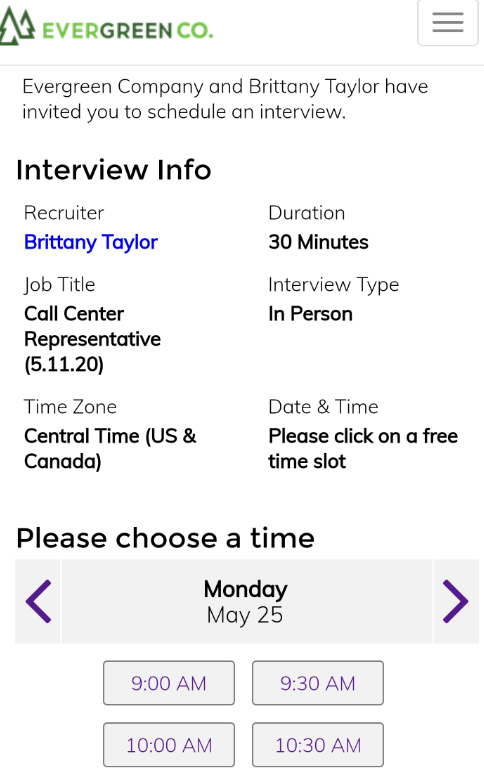
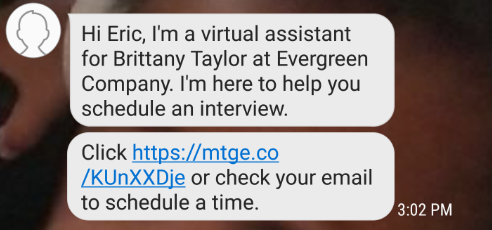
Interview coordination is ideally suited to texting. Your organization can send text links for candidate self-scheduling to streamline interviews.  

Enhanced Screening Capabilities 

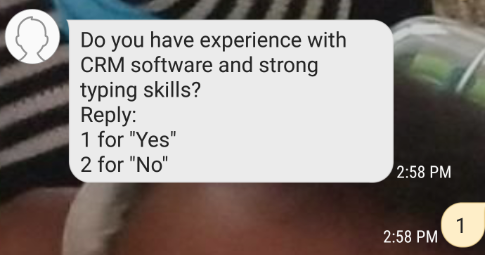
When handling a high volume of applicants, it can be difficult for recruiters to respond quickly and individually to each candidate. Using texts, you can qualify applicants faster using response templates and automated screening questions. Recruitment texting platforms can be programmed to send back follow up questions, job application links, or other content based on candidate responses. 

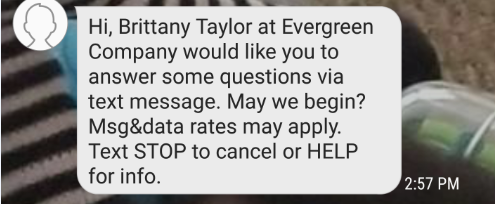
This exchange is an example of not just interview scheduling, but also actual interviewing over text. At PeopleScout, we have seen client’s receive an 85% response rate for this type of question and answer exchange, which is higher than other communication channels. 

Better Interview Completion Rate  

Recruiters know that coordinating with the candidate is only half the hiring battle. Recruiting teams can use texts to send automated interview reminders to hiring managers and colleagues, so nothing slips through the cracks. Fewer missed or reschedule interviews means a shorter time to hire. 

Field Recruiting 

Retail, hospitality and other employers with large physical footprints can also utilize text short codes to capitalize on walk-in applicants. Signage placed on doors, at the register, or elsewhere connects job seekers directly to the online job application forms and minimizes distractions for managers in the field.  

SMS short codes are five to six-digit numbers that are often paired with keywords for use in text recruitment (e.g. ‘Text JOBS to 123456’). You can utilize them on signage at job events to maximize ROI.  

Best Practices for Text Recruitment  

While mobile phones and texting have become ubiquitous tools in everyday life, it is important to realize that communication preferences vary from individual to individual. It is also critical to recognize that the attributes that makes texting such a powerful recruiting tool – that’s it is direct, convenient and personal – are the same things that make observing best practices so important. 

Secure Permission from Candidates 

Text messages are governed by different laws and standards than email. Employers in the U.S. will want to consider how the Telephone Consumer Protection Act (TCPA), or similar laws such as the European Union regulations regarding electronic communications, namely the General Data Protection Regulation (GDPR), apply to different types of recruitment texting activity. Talent leaders should consult their legal counsel and get comfortable with the ins and outs of the TCPA when formulating a text recruitment strategy and all related policies.   

Before you text candidates, you must first obtain express consent from the candidate and it must be easy for them to opt-out of communications. As a starting point, review your organization’s website and application process and add simple, clear language stating that phone numbers may be used to message applicants. The notice should be placed near the phone number entry field, rather than buried in lengthy terms of service statement and privacy policy should also be updated.  

Consider Compliance Requirements 

Even if your organization does not have a text recruitment platform, chances are that some recruiters are using personal devices to communicate with candidates via text. This may produce positive results, but places you at greater compliance risk because there is no centralized record of communications. Using personal devices, or even dedicated company devices, also makes it difficult to exercise effective oversight to ensure that organizational guidelines are followed. 

Text messaging activity is increasingly likely to be included in compliance audits, so make sure your bases are covered. Follow all of the same protocols – business and legal – that you would in writing, email or telephone conversations. 

Define Messaging Guidelines for Recruiters 

Texting should be professional and consistent with your employer brand, just like any other type of communication. So, it’s helpful to provide high-level guidelines to your recruiting team to ensure that everyone is on the same page about internal text messaging practices. 

Communicate Clearly with Candidates 

The best text outreach messages get straight to the point. In any initial conversations, the recruiter should answer a few key questions candidates may have to get the best possible response: 

Who are you and why you are reaching out? 
 

Text recruitment

What are the next steps? 
 

Setting context and expectations up front maximizes engagement. What’s more, these questions can be set up as automated responses, so recruiters may only have to step in once the initial screening questions have been asked and answered.  

Timing is Everything  

Text only during the workday, from 8 a.m. at the candidate’s local time to 5 or 6 p.m. Texting a candidate during off-hours, may lead them to do the same and set an expectation of a response from your team. If job seekers do reach out on weekends or evenings and you do not want your recruiters to engage, you can steer their communications back to the normal business hours. For example, if you receive a text on Saturday, you might set up an automated response that you will follow up first thing Monday. 

Texting is Not Always Appropriate  

Some aspects of the recruiting process require a more personal touch than others. While many consider messaging “personal” and “immediate,” you may want to deliver important information (ex. “you didn’t get the job”) or discuss sensitive topics like salary using other means such as a phone call or email depending on the situation. 

Closing Thoughts  

Automation of the recruiting process is where the candidate experience is headed. As a result, it is going to free up time for your recruiters and allow them to seamlessly connect one-on-one with candidates and holding meaningful conversations.  

Texting has become such a big large part of modern life that embracing it can make your organization an employer of choice to top candidates in your industry.   

Positioning a National Healthcare Provider to Become a World-Class Leader

Positioning a National Healthcare Provider to Become a World-Class Leader

Positioning a National Healthcare Provider to Become a World-Class Leader

PeopleScout partnered with Australia’s largest non-government community services provider to perform a recruitment diagnostic of their current recruitment function to help position them as a world-class leader.

PeopleScout partnered with Australia’s largest non-government community services provider to perform a diagnostic overview of their 1,600 sites across Australia that employ a network of 40,000 employees and 30,000 volunteers nationally.

Scope and Scale

The client provides services to children, young people and families, people with disabilities and older Australians in urban, rural and remote communities, including residential and community care, child care, homelessness prevention and support, family support, domestic violence and disability services.

Situation

PeopleScout performed a recruitment diagnostic of the client’s current recruitment function including a review of recruitment tools and technology, recruitment team structure, process and allocation of recruitment costs.

The purpose of the review was to provide the client with a road map to transform the current transactional recruitment function into one that reduced risk and cost while increasing quality and efficiency.

We were also tasked with providing a recommendation on a future-state recruitment model that positioned this
client for aggressive growth targets.

Solution

PeopleScout’s solution addressed the provider’s core objectives and embraced their values of challenging convention, exploring new possibilities and daring to dream for a better future.

The recommended model combined a dedicated service line with the latest technology and sophisticated recruitment processes to source market-leading talent.

The model viewed talent holistically – including both internal and external talent – creating pipelines that increased the speed and access to talent, leveraged talent across business units, facilitated internal mobility and retained core talent while reducing the time-to-hire.

The solution addressed these key recruitment and sourcing challenges into six core deliverables that underpinned their critical success factors:

  • Quality of talent
  • Quality of service
  • Innovation
  • Process efficiencies
  • Analytics and reporting
  • Cost

At a Glance

  • COMPANY
    Australia’s largest non-government community services provider
  • INDUSTRY
    Healthcare
  • PEOPLESCOUT SOLUTIONS
    Talent Advisory
  • LOCATIONS
    1,600 sites across Australia

Hiring Solutions for Healthcare Providers with Krista Sullivan de Torres

As organizations around the globe confront talent scarcity challenges, even the most seasoned talent leaders find themselves in uncharted territory. This profile shares insights from PeopleScout Global Leader of Solutions Design, Krista Sullivan de Torres. Krista is a seasoned professional with more than a decade of human resources and talent acquisition experience. While Krista’s professional experience spans many industries, she has a passion for and deep expertise in healthcare recruitment. Her experience includes launching RPO programs for healthcare startup organizations, managing RPO operations for managed care, population health, behavioral health, and healthcare system clients. Krista’s specialties include global talent acquisition team design, talent acquisition operations, analytics and reporting, recruiting, sourcing and retention. Krista holds a bachelor’s degree in Mathematics from the University of California, Santa Cruz. 

Krista shared her insights about hiring solutions for healthcare providers from her home office in Florida. 

Ebook

How RPO Can Solve The Top Challenges In Healthcare Talent Acquisition

What are some of the hiring challenges facing the healthcare industry right now? 

Prior to the COVID-19 crisis, there were already many challenges around healthcare hiring. We all hear about the shortage of nurses, but there’s also a shortage of clinicians across the board. Since the outbreak of COVID-19, we’ve seen an increased number of patients, so these shortages have become even more acute — particularly in the areas that have been hit hardest with the disease. In addition, some challenges arise when clinicians who have COVID-19 risk factors, or live with someone who does, are now unable or unwilling to work in order to protect themselves and their families — causing a large strain in hiring for these specialized roles.  

Hiring for a healthcare role, clinical or nonclinical, is much more difficult than hiring in many of the other essential industries right now. How and why is that? 

Regardless of whether we’re hiring for a role that is clinical or nonclinical, there are a lot of additional requirements for working in healthcare than there are in most other fields. If a candidate is going to be working directly with patients, particularly those that are most vulnerable, an extremely thorough background check is necessary to protect the safety of patients. So, rather than a traditional pre-hire online form and standard background check, healthcare candidates will undergo additional criminal history checks, fingerprinting and more. These critical checks tend to slow down the hiring process and can add a layer of complexity when we’re looking at the available workforce. 

Another factor affecting hiring is that a lot of people are a little afraid to work in the healthcare industry right now. As I mentioned earlier, people may be cautious about taking a job in healthcare in order to protect themselves or high-risk family members against COVID-19. In addition to there being a challenge in the number of candidates available to start, we are faced with the challenge of selecting the right people for the job and ensuring we have a pool of candidates who are excited and available to work during this unusual time.  

Lastly, a major factor we consider in the healthcare industry — particularly in a clinical setting — is ensuring healthcare workers are extremely customer-focused. We look for people who are very focused on the patient and the patient’s family. We’re facing challenges in the spike in the number of people who are severely ill, so ensuring we have workers who are correctly educating and caring for patients is of the utmost importance.  

What sort of hiring solution for healthcare providers are available right now? 

A lot of healthcare organizations are really trying to get creative during this critical hiring time due to the healthcare talent shortage. They’re looking to potentially bring back previously retired workers, flexing up hours for part-time associates and bringing in traveling nurses or clinicians to support them where their internal teams are at capacity. Many organizations are also interested in implementing a recruitment process outsourcing (RPO) solution to quickly get short-term support in locations that are particularly hard-hit.  

How do these RPO solutions work in practice? What are some of their benefits? 

That’s a great question. One of the many benefits of healthcare RPO is that we’re able to ramp up very quickly to meet client needs. For example, a client came to PeopleScout when they needed to rapidly scale up hiring to support their hospitals. We spoke with the client, came up with a solution and worked through the contracting phase all within three days. It helps that PeopleScout has a large team of clinical and nonclinical healthcare recruiters who are trained to know the industry and can identify high-quality candidates to get the pipeline filled quickly. 

When it comes to on-demand recruitment support, the beauty lies in rapid engagement and disengagement. Once immediate hiring needs are fulfilled, an RPO provider can pull recruiters back in-house and assign them to a new project. This is a great benefit for clients — they don’t need to deal with the stress of layoffs and furloughs because they’re able to engage and disengage experienced recruiters as needed.  

The most important thing right now is to keep everyone safe and healthy. What is the best kind of solution for that? 

One important way to keep people safe while still meeting critical talent needs is to use a virtual hiring solution for healthcare providers. PeopleScout has a bit of an advantage here because we were a virtually based culture even prior to the COVID-19 crisis, so many of our recruiters were already working from home. Our virtual solution allows us to conduct digital interviews — on-demand or live — so we can continue to safely service our clients without interruption. We’ve been able to effectively maintain — and in some cases exceed — productivity while also minimizing the risk for our clients, candidates and internal teams. 

Are there any final thoughts on hiring solutions healthcare providers you’d like to leave us with? 

We’re all going through a really challenging time right now and trying to support one another. We’re all in this together and PeopleScout is here to support our clients, candidates, teams and prospects in any way we can. 

COVID-19 Series: Keeping Candidates and Employees Safe with a Virtual Hiring Solution

As organizations around the globe confront the challenges presented by the coronavirus (COVID-19) outbreak, even the most seasoned talent leaders find themselves in uncharted territory. We’re creating a miniseries with our experts here at PeopleScout about the issues that are most pressing during this uncertain time.

We are focused on the safety of our employees and clients, friends, families and loved ones. However, it is important for many organizations to keep their talent acquisition functions moving – whether to provide essential services or to serve our communities by providing jobs. Many organizations are also now adapting to a newly virtual workforce.

In that spirit, in this podcast, we share insights from PeopleScout Global Leader of Affinix Client Success and Strategy Allison Brigden on transitioning to a virtual talent acquisition solution.

Allison has been with PeopleScout since 1995 and has served in roles related to implementing and managing complex RPO programs as well as operations and technology. In her current role, Allison focuses on leveraging technology to elevate the talent strategy and client success through Affinix, PeopleScout’s proprietary talent technology platform. Allison leads an Affinix Client Success Team and our strategic technology partnerships. The Affinix Client Success Team is focused on understanding our clients’ objectives with Affinix and creating positive outcomes. She also possesses a deep commitment to corporate social responsibility, with an emphasis on military veteran advocacy. Allison holds a bachelor’s degree from the University of Utah.

At PeopleScout, we’re all dealing with the same changes—working from home and recording these podcasts from a distance, so things may sound a bit different than you’re used to hearing.

2020 TALENT TECH TRENDS

Talent Tech

ARTIFICIAL INTELLIGENCE includes machine learning, deep learning and automation. Talent tech platforms integrate AI to streamline time-intensive tasks. Through AI, recruiters can find candidates faster, while candidates can receive consumer-like branded employer experiences.

87% of senior executives believe AI is important to achieving overall business objectives.

Source: Forbes Insights

AUTOMATION continues to grow, replacing low-value, manual tasks with more strategic ones. How can employers achieve the right balance between automation and human interaction?

For more on automation, watch our webinar, “The Dos and Don’ts of Automating Your Candidate Experience” on-demand at peoplescout.com/webinars.

BEHAVIORAL ANALYTICS helps explain why people take certain actions. This form of analytics can target passive candidates, as well as help predict candidates’ future success.

Organizations that use behavioral insights outperform peers by 85% in sales growth.

Source: McKinsey sales growth.

The CANDIDATE EXPERIENCE differentiates and bolsters employers’ brands. Organizations that do not improve their candidate experience may negatively affect their ability to hire talent.

27% of candidates who have a bad experience would “actively discourage others to apply.”

Source: LinkedIn

PRIVACY in the digital age and the way organizations handle candidate information is an ongoing concern made more complex across the digital and international world.

GDPR’s Effect Since Implementation: Large UK companies spent $1.1 billion collectively on GDPR prep. Large American companies spent $7.8 billion on GDPR prep.

Source: www.varonis.com/blog/gdpr-effect-review/

IN 2020, THE INFLUENCE OF TECHNOLOGY IN TALENT ACQUISITION WILL CONTINUE TO GROW IN EACH STAGE OF THE RECRUITMENT CYCLE.

Many in the industry expect talent tech to play an increasingly large role in recruiting activities in the next three years.

Source: Deloitte Global Human Capital Trends survey, 2019.

WHILE THE CROWDED TALENT TECH WORLD EXPANDS, A FEW TECHNOLOGIES WILL CONTINUE TO DOMINATE THE RECRUITMENT CYCLE THIS YEAR: ANALYTICS, AI, BLOCKCHAIN AND RPA.

RPO service providers are creating a digital ecosystem using third-party technology providers to provide a seamless experience to hiring managers and candidates.

Source: Recruitment Process Outsourcing (RPO) Annual Report 2019: Steering 3D Growth on the Tides of Talent Shortage, RPO Annual Report, page 50, August 2019, Everest Group.

MAKE SURE TO CHOOSE THE RIGHT TALENT TECH PROVIDER FOR YOUR ORGANIZATION’S NEEDS

Talent tech growth is driven by the competitive job market and new AI-based solutions.

As an industry, talent acquisition is mid-way through a massive replacement of legacy systems and looking at more nimble models.

When choosing a talent tech provider for your project, ask questions, understand the vision of the project, ask for a road map and agree on the support model.

Source: HR Technology Market 2019: Disruption Ahead, Josh Bersin, Page 50

Talking Talent Leadership Profile: Jon Porter

Jon Porter doesn’t have a typical recruiting background. He started out as an accountant with KPMG and made his way through the advertising sector before finally landing as the Managing Director of PeopleScout in the UK and Head of EMEA Operational Delivery. Along the way, he was lucky enough to work with many organizations with diverse recruiting challenges – from the British Army and the Metropolitan Police to Diageo. So, when Jon looks at talent challenges, he doesn’t just look at them as a recruiter; he views them through the wide-angle lens of the entire business, and he sees them as a storyteller.

Jon shared his story from PeopleScout’s London offices. He explained how the unique and ever-evolving challenges and opportunities in the UK and Europe will influence talent acquisition leaders around the globe.

What are some of the biggest challenges facing the UK and Europe in talent acquisition right now?

The biggest challenge has been the uncertainty around Brexit since the referendum in 2016. Organizations have not had certainty around the future, and this has influenced decision-making around how to potentially invest and grow a business. The focus of government around the normal investment programs has also been affected, as much of parliamentary time was focused on the many Brexit bills progressing through both Houses. It almost felt that the UK was on pause and we just needed to press the play button. After the election result of December 12, 2019, it now looks like some of that uncertainty has been removed. The newly formed government, now with a working majority, is pushing for a conclusion of the Brexit debate by the end of 2020.

What are the talent acquisition trends you’re seeing in the UK and Europe today?

There are some clear trends in the marketplace. The obvious one is technology. There is a fragmented and hugely diverse technology landscape in the UK and EMEA (Europe, Middle East and Africa), and leaders are looking at how to better navigate that landscape. How do they make the most of it – to drive efficiency, cost savings and better-quality candidates – and optimize the way they do things?

There is also a trend of organizations looking at multi-country programs, with a focus around EMEA. Organizations seem to be looking at talent more globally and around the concept that talent isn’t limited by traditional country boundaries or geography, or even technology. It’s fast-becoming a boundary-less environment.

How is the introduction of Affinix™ to Europe fitting into and changing the conversation about technology in the region?

I think that our timing couldn’t be better. We’ve had loads of great feedback on Affinix since our September launch at our Resourcing 2025 event at the London Science Museum, and I think it’s because it provides a flexible solution at a time when organizations are still a bit cautious about how they’re going to evolve their technology solutions. Because Affinix is a middleware, it affords our clients the opportunity to get the great technology of the now, but also it provides them with security for the future. It’s a manifestation of now to next.

How do you tell a cohesive and relevant story when recruiting across borders?

Finding “space” in a busy talent marketplace is hard; differentiating one company offer from another requires a deep understanding of brand and channel. Developing target personas, and understanding how they live their lives and how to create a one-to-one dialogue is essential. At PeopleScout, this approach and understanding is in our DNA. It’s how we think.    

When looking at cross-border campaigns, we first consider the message – the employer brand promise; the value exchange between the organization and the candidate – the deal. This message needs to be authentic across all borders. It needs to reflect the lived experience of employees within the organization. It can be aspirational; however, it can’t be an exaggeration of the truth. That can only lead to unfulfilled expectations, reduced engagement and increased attrition.

The art of the storyteller is to deliver a consistent, overarching message while accommodating the nuances of the countries in which it needs to be delivered. The language, tone, imagery and cultural touchpoints may change, but the essence of the promise remains consistent. Good recruiters understand how to bring the story to life in conversation with candidates and yet remain true to the organizational narrative.

What are some of the lessons from the UK and Europe that leaders in other regions should be paying attention to?

Many organizations have a structured view around their approach to talent and where they think hires might come from – whether it’s specific geographies, sectors or universities. I think one of the things that we’re doing in Europe – which does seem to be a message that’s landing elsewhere – is that we need to be more open-minded and a bit more conscious around things like social mobility and inclusivity.

Organizations are looking past the barriers of geography, society and technology. They’re seeing that talent is going to be pivotal to the evolution of business. That’s driving a mentality of embracing talent without any boundaries and taking a more progressive and equitable view of talent.

What are you most excited about for the future of talent acquisition?

The speed of change in talent acquisition is going to accelerate. Technology is absolutely going to fuel that acceleration. Clients are going to have greater and greater expectations, requiring more dynamic talent acquisition strategies. That will be driven by the fact that talent will be even more of a differentiator for organizations.

We’re also going to see employer brands and employer value propositions (EVPs) play an even greater role in the hiring process. The EVP is going to become the cornerstone of the people agenda – so, not just recruiting, but also learning and development, organizational design and more. How does the EVP play into the culture and behaviors of the organization?

Additionally, the vast majority of jobs that will be created five to 10 years from now probably don’t even exist today. So, there will be the evolution of new job roles, new technologies, new demands from organizations and new challenges in the world and political landscapes. This makes talent acquisition an exciting place to be.