Strategies for Overcoming High-Volume Hiring Challenges

High-volume recruitment is one of the most demanding disciplines in talent acquisition. Whether you’re staffing a contact center, scaling a logistics network, preparing for a seasonal retail surge or maintaining a large healthcare workforce, the challenge is the same: hire large numbers of the right people, quickly, without letting quality slip or burning out your team. 

The organizations that do this well aren’t just working harder—they’re working differently. This guide explores the most common high-volume hiring challenges and the strategies that leading talent acquisition teams are using to overcome them. 

👉 Get our ebook: 9 Strategies for Solving High-Volume Hiring Challenges 

What is High-Volume Recruitment?

High-volume recruitment involves sourcing, screening, interviewing and hiring large numbers of candidates for similar openings or job types, often within compressed timeframes. It’s common across sectors including retail, hospitality, logistics, healthcare, contact centers, travel and government—and it requires a fundamentally different approach to talent acquisition than professional or specialist hiring.

The core tension in high-volume recruitment is speed versus quality. Move too slowly and candidates drop out or accept offers elsewhere. Move too fast without the right processes and you compromise on hire quality, driving up attrition and starting the cycle again. Getting this balance right—consistently, at scale—is what separates high-performing high-volume programs from those that are perpetually in firefighting mode.

The Biggest High-Volume Hiring Challenges—and How to Solve Them

Challenge 1: Candidate Drop-Off and Ghosting

Candidate drop-off—where applicants disengage partway through the process—and ghosting—where candidates simply stop responding or fail to show up—are among the most costly and frustrating problems in high-volume recruitment. When you’re processing hundreds or thousands of applications, even a modest drop-off rate translates into significant wasted effort and extended time-to-fill. 

The root cause is almost always the same: a process that moves too slowly, communicates too infrequently, or asks too much of candidates. Today’s high-volume candidates—many of whom are applying to multiple employers simultaneously—have limited tolerance for lengthy applications, long gaps between process stages or radio silence from recruiters. If a competitor makes an offer first, or the application simply feels like too much effort, they’ll move on. 

How to address it: 

Audit your application process ruthlessly. Every question that isn’t genuinely necessary to advance a candidate is a potential drop-off point. Streamline the process to capture only what’s needed at each stage, and reserve more detailed information gathering for later in the funnel when candidates are more committed. 

Look at where processes can be automated so that at every touchpoint—application confirmation, status updates, interview scheduling, offer—communication happens quickly and consistently. Candidates should never be left wondering where they stand. SMS and messaging tools are particularly effective in high-volume contexts, where candidates may not regularly check email. 

Reduce the time between process stages wherever possible. Speed is itself a candidate experience differentiator in high-volume markets. The organizations that move fastest tend to secure the best candidates. 

An RPO partner is particularly well-placed to address drop-off and ghosting. With dedicated volume recruiting expertise and access to the latest talent technology—AI-enabled CRM, automated scheduling, pipeline analytics—a high-volume RPO solution keeps candidates moving through your funnel efficiently while freeing your internal team from the administrative burden of managing large applicant volumes manually. 

Challenge 2: Maintaining Quality of Hire at Scale

Speed pressure in high-volume recruitment creates a persistent temptation to cut corners on assessment, like skipping interview stages, loosening criteria or defaulting to “warm body” hiring when vacancies feel urgent. The short-term relief this provides is almost always offset by higher attrition, lower performance and the cost of rehiring. 

The challenge is that traditional assessment approaches—often designed for professional or specialist hiring—don’t translate well to volume contexts. They’re too slow, too resource-intensive and often measure the wrong things. 

How to address it: 

Start by challenging the assumptions underpinning your current criteria. The skills and background that seem like obvious requirements for a role aren’t always the ones that predict success. At PeopleScout, when working with a high-volume RPO client struggling to hire for customer service roles, we interviewed their most successful customer-facing employees and found that prior customer service experience was not a predictor of performance, but problem-solving aptitude was. That insight expanded their talent pool significantly while improving quality of hire and reducing attrition. 

Redesign your candidate assessment to evaluate both hard and soft skills efficiently. For high-volume roles, soft skills, like attitude, adaptability, work ethic and communication style, are often the stronger predictors of success and retention. PeopleScout’s 1XP assessment model is built specifically for high-volume contexts, helping organizations evaluate what actually matters without adding time to the process. 

Structured, consistent assessments also reduce bias and support diversity hiring goals—an important consideration for high-volume programs that are often the largest source of diverse talent entry points into an organization. 

Challenge 3: Recruiter and Hiring Manager Burnout

High-volume hiring puts enormous pressure on internal teams. When recruitment processes are inefficient, hiring managers are pulled into administrative tasks they’re not equipped or resourced for—screening resumes and CVs, chasing candidates, coordinating interviews—on top of their day jobs. Recruiters managing large requisition loads without adequate technology quickly reach a point where quality suffers simply because there aren’t enough hours. 

This is a structural problem, not a motivation problem. Asking people to work harder within a broken process doesn’t fix it. 

How to address it: 

Identify which parts of your recruitment process are consuming the most recruiter and hiring manager time and ask whether they can be streamlined. Scheduling, application screening, reference verification and background checks are all areas where automation or RPO support can dramatically reduce the administrative burden on your team—without compromising candidate experience. 

Modular RPO solutions can also help you augment your internal team. By selectively outsourcing specific components of your hiring process, you allow an RPO partner to absorb the volume-intensive elements so your recruiters and hiring managers can focus on the decisions and interactions that genuinely require time and attention. This isn’t just about capacity—it’s about directing your internal resources toward the highest-value parts of the hiring process.

Challenge 4: Scaling Up and Down for Seasonal Demand

Many high-volume hiring programs aren’t steady-state—they spike. Retail ramps up for peak trading periods. Hospitality and travel scale dramatically for summer or holiday seasons. Tax and financial services see surges at predictable points in the year. Building and then dismantling a large internal recruitment team to match these peaks is expensive, inefficient and disruptive. 

How to address it: 

Build scalability into your recruitment model rather than treating it as an emergency response. This means establishing talent pipelines and candidate communities year-round—not just when the hiring surge hits—so you’re converting warm candidates rather than starting from scratch each season. 

RPO partnerships are particularly well-suited to seasonal high-volume programs because the engagement model is designed to flex. A high-volume RPO partner can scale delivery resources up or down in line with your hiring calendar, providing a consistent, experienced recruiting team without the overhead of permanent headcount. 

Why RPO is the Right Solution for High-Volume Hiring 

Most high-volume hiring challenges share a common root: a recruitment model built for normal hiring volumes, stretched beyond what it can reliably deliver. Bolt-on fixes—an extra job board, a temporary agency, an additional internal recruiter—rarely address the underlying process and technology gaps that are driving the problem. 

Recruitment process outsourcing is designed specifically to address this. A high-volume RPO partner brings: 

  • Purpose-built processes for high-volume contexts, designed around candidate behavior, dropout patterns and assessment approaches that work at scale 
  • Talent technology that organizations often can’t justify building or buying independently including AI-powered sourcing, automated candidate engagement, predictive analytics and pipeline reporting 
  • Dedicated recruiting expertise that your internal team can draw on without having to build and maintain the capability in-house 
  • Scalable delivery that flexes with your hiring calendar rather than forcing you to over- or under-resource for predictable peaks 
  • Talent advisory capabilities like employer branding, recruitment marketing and assessment design, that address the upstream factors affecting your ability to attract and convert candidates at scale 

PeopleScout’s high-volume RPO solution is purpose-built for organizations managing large-scale, fast-paced hiring programs across retail, hospitality, logistics, healthcare and beyond. 

👉 Explore PeopleScout’s high-volume RPO solution  

👉 Get our ebook: 9 Strategies for Solving High-Volume Hiring Challenges 

9 Strategies for Solving High-Volume Hiring Challenges
9 Strategies for Solving High-Volume Hiring Challenges
Competition for hourly talent is steep, with high demand from call centers, hospitality, retail, security, travel, logistics, healthcare and even government entities. In fact, 65% of companies have high-volume recruitment needs.

Talent acquisition leaders are facing the most tumultuous job market in recent memory with an impossible combination of soaring job openings and a labor shortage.

  • So, how do they compete for hourly talent when the competition is so fierce?
  • And how can they prepare for seasonal peaks?
  • More importantly, how can they increase speed without sacrificing on quality-of-hire?

Download our ebook to learn 9 Strategies for Solving High-Volume Hiring Challenges. It’s a must-read for any talent acquisition team focused on solving critical problems in their high-volume hiring programs.

Answering Your FAQs on RPO

Answering Your FAQs on RPO

Download this fact sheet to answer all your questions on recruitment process outsourcing (RPO).

Learn more about RPO from PeopleScout.

Dig into More Insights

Ultimate Recruitment Process Outsourcing Toolkit
Toolkit

Ultimate Recruitment Process Outsourcing Toolkit

Our complete six-piece toolkit gives you the essential information on how RPO can boost your recruitment outcomes.

Recruitment Process Outsourcing (RPO) Buyer’s Guide
Buyer’s Guide

Recruitment Process Outsourcing (RPO) Buyer’s Guide

Check out this in-depth exploration of RPO and how it can help you achieve your recruitment goals.

The Skills Crisis Countdown: The Clock is Ticking on Tackling Skills Gaps
Research Report

The Skills Crisis Countdown: The Clock is Ticking on Tackling Skills Gaps

Our latest research shows a detailed picture of the current state of skills in the global workforce and how HR leaders are preparing for the impending skills crisis

Healthcare RPO

PeopleScout RPO Solutions for Healthcare

Hiring the right talent is critical for any healthcare employer looking to stay ahead of the challenges facing today’s healthcare industry.

Download this fact sheet to learn how a recruitment process outsourcing (RPO) from PeopleScout can help your healthcare organization stay ahead of talent scarcity challenges.

Learn more about PeopleScout’s healthcare talent solutions.

Answering Your FAQs on RPO 

The terminology and processes involved in the world of RPO may seem unfamiliar. To gain a better understanding of how RPO can help improve your healthcare recruiting program, we answer some of the most frequently asked questions in healthcare RPO. 

Q: What Does RPO Stand For? 

A: Recruitment Process Outsourcing (RPO) is a type of business process outsourcing (BPO) where an external organization (RPO provider) supports an employer’s talent acquisition function by assuming responsibility for portions or all facets of talent acquisition for some or all of an employer’s hiring needs. 

Q: What are RPO Companies? 

A: Recruitment process outsourcing companies provide outsourced talent acquisition services for professional and non-professional positions to solve compliance, scalability, cost, quality, or other recruiting challenges. By assuming all or some portions of an organization’s recruitment functions, RPO companies improve recruiting effectiveness, reduce turnover and enable strategic growth. 

Q: What is an RPO Provider’s Role During an Engagement? 

A: During an RPO engagement, an RPO provider’s team works closely with their client’s talent acquisition and HR department to learn the organization’s long-term talent acquisition strategy, hiring challenges and objectives. The RPO provider then designs a customized recruiting program to support the client’s specific needs. 

Q: RPO vs Staffing Agency, What’s the Difference?  

A: RPO providers manage a client’s end-to-end recruitment cycle, operating as a trusted partner and advisor. An RPO provider’s primary goal is to deploy a recruitment strategy that attracts, sources and hires high-quality permanent employees. Staffing agencies operate on a more reactive recruitment model, often hiring temporary or temp-to-perm talent on a requisition-to-requisition basis.  

Q: What is the Difference Between MSP and RPO? 

A: An RPO solution traditionally supports all responsibilities associated with permanent hiring within an organization, such as candidate sourcing, screening, candidate assessments, interviewing, and building talent pipelines. A Managed Service Provider’s (MSP) services are focused on contingent workforce management practices such as payroll management, staffing vendor management, procurement, and contingent workforce compliance expertise. 

Q: What Are the Benefits of the RPO Recruitment Model?  

A: 

  • Scalable Recruiting Resources: RPO solutions provide greater recruitment flexibility through an RPO provider’s ability to scale recruitment resources to match a client’s workforce objectives.  Scalable recruiting resources are ideal for organizations experiencing fluctuations in hiring volume, rapid growth, or who may need additional support to meet hiring demand. 
  • A More Consistent and Standardized Recruitment Process: RPO providers can help an organization better organize and execute its recruitment program leading to a more seamless recruit-to-hire process and consistent and predictable results for job seekers and hiring managers.   
  • Improved Candidate Quality: RPO providers have experience sourcing and hiring talent across all industries and skill types. An RPO provider will home in on more than a candidate’s experience and education to find candidates who best match the client’s company culture and business objectives. 

Q: What is Full-Cycle Recruiting and Why is it Best Managed Through An RPO? 

A: Full-cycle recruiting or “end-to-end recruitment” is a holistic approach to talent acquisition where an RPO provider is involved in each step of the hiring process. From talent pipelining and delivering talent assessments to interviewing, sourcing, screening, and candidate selection, an RPO provider can support a client’s strategic talent acquisition goals through the entire recruitment lifecycle.  

Q: What is Project-Based RPO? 

A: Project-based RPO is a type of RPO solution where a client outsources its recruitment needs on a project-by-project basis. Project-based RPO is ideal for organizations looking to meet short-term talent acquisition needs without committing to long-term engagements. Project-based RPO can also help support one-off hiring projects where niche expertise is needed. 

Dig into More Healthcare Talent Insights

Nurse Recruitment Strategies to Address the Nursing Shortage
Articles

Nurse Recruitment Strategies to Address the Nursing Shortage

The healthcare industry is facing a severe shortage of nurses and other frontline clinical staff, creating unprecedented challenges for medical facilities across the nation. This crisis, exacerbated by an aging population and the lingering effects of the COVID-19 pandemic, threatens the quality, accessibility and continuity of patient care. Whether healthcare organizations require the recruitment of…

Allied Health Recruiting & Retention Best Practices 
Articles

Allied Health Recruiting & Retention Best Practices 

With an aging population pushing demand for healthcare ever higher, allied healthcare professionals—physical and occupational therapists, medical laboratory scientists, dietitians and nutritionists, dental hygienists, optometrists, phlebotomists and many more—play crucial roles in the care, diagnosis and treatment of patients. However, healthcare organizations worldwide face significant challenges in recruiting and retaining these vital providers, potentially compromising…

[On-Demand] How to Build a Customer-Focused Workforce

[On-Demand] How to Build a Customer-Focused Workforce

Is your business finding that customer behavior or expectations are changing? And does this mean you need staff with different skills or behaviors?

This Personnel Today webinar, in association with PeopleScout, looks at how many employers are re-engineering how they engage their customers.

Statistics from customer service platform provide Zendesk show that 60% of customers will choose an alternative supplier after just one bad experience. And research from Bain Capital found that organizations that excel at customer experience drive revenues up to 8% higher than others in their market.

To meet changing consumer expectations, customer facing teams need different skills and employers are having to adapt the competencies they look for in the hiring process.

Join Rob Moss, editor of Personnel Today, as he chairs a panel of industry experts to discuss the talent changes they’re making and anticipate for 2023. Panellists include: Sam Westwood, head of people for The White Company; Chris Jackson, group head of colleague experience at Centrica; Patsy Legender, head of operations at Newcastle Strategic Solutions; and Debbie Hayes, HR director at Renewco Power.

Despite the growth of digital channels, excellent customer service is still a must-have. Watch this webinar to learn:

  • Customer queries have become are more intricate and high-value
  • Employees need the skills to liaise with customers through chats, emails and social media
  • Customer service representatives need soft skills like listening and empathy
  • Problem solving abilities have become key to resolving more complex queries.

Dow: Supporting Graduate Recruitment in EMEA and India

Dow: Supporting Graduate Recruitment in EMEA and India

Dow: Supporting Graduate Recruitment in EMEA and India

Dow, a leading materials science company, turned to PeopleScout for recruitment process outsourcing for their graduate recruitment program across Europe, the Middle East, Africa and India.

15 countries and 5 languages
63 candidate NPS score (considered “great”)
25 % of candidates were female

Situation

Dow has been at the forefront of materials science for 125 years, pioneering new ways for science to make the world a better place. Due the specialist nature of the talent they need, Dow’s in-house recruitment team was at capacity executing a high-touch hiring process and needed support recruiting for their internships and graduate programs in EMEA. They turned to PeopleScout for a global RPO solution spanning 15 countries, including Belgium, France, Germany, India, Italy, Kenya, Netherlands, Portugal, South Africa, Spain, Sweden, Switzerland, Turkey, UAE and the United Kingdom.

They needed over 100 interns and graduates from science, technology, engineering and math (STEM) programs. Dow was competing with several other employers in the region for this talent. Plus, the implementation period was compressed from 12 weeks down to five, so we needed to act fast to engage these future innovators.

Solution

The PeopleScout Talent Advisory team built a bespoke microsite, featuring real graduate employees, that brought the Dow culture and their career opportunities to life for their young audience. We also polished job descriptions to resonate with the audience and posted job adverts online, leveraging LinkedIn in some cases to expand the promotion of more specialized roles.

Working as an extension of their in-house team, we conducted phone screens and scheduled interviews for Dow hiring managers. Processing over 6,000 applicants, our multi-lingual delivery team in Poland conducted over 1,200 phone interviews in English, German, Italian, Portuguese and Spanish.

Results

We filled 134 graduate and intern vacancies. Candidate feedback has been overwhelmingly positive with candidate Net Promoter Score (NPS) coming in at 63, which is considered “great.”

“I would definitely suggest Dow to anyone because I had a very good recruitment experience. The company and the position were introduced to me in very detailed way by the recruiter. So, I believe my ambitions and goals are aligned with Dow’s expectations.”

Candidate Feedback

Another key point of success for the graduate recruitment program is that more than a quarter of candidates were women, despite their underrepresentation in STEM fields.

“PeopleScout has been fast in responding to every email, and it’s clear that they value meeting their clients’ needs. The roles they’re working on are very niche and technical, but they’ve been able to align to what hiring managers need.”

Hiring Manager at Dow

At a Glance

  • COMPANY
    Dow
  • INDUSTRY
    Pharmaceuticals & Life Science
  • PEOPLESCOUT SOLUTIONS
    Recruitment Process Outsourcing
  • LOCATIONS
    15 countries across EMEA, including Belgium, France, Germany, India, Italy, Kenya, Netherlands, Portugal, South Africa, Spain, Sweden, Switzerland, Turkey, UAE and the United Kingdom
  • ABOUT DOW
    Dow’s (NYSE: DOW) ambition is to become the most innovative, customer centric, inclusive and sustainable materials science company in the world. Dow’s portfolio of plastics, industrial intermediates, coatings and silicones businesses delivers a broad range of differentiated, science-based products and solutions for its customers in high-growth market segments, such as packaging, infrastructure, mobility and consumer applications. Dow operates 104 manufacturing sites in 31 countries and employs approximately 35,700 people. For more information, please visit www.dow.com or follow @DowNewsroom on Twitter.

Merivale: High-Volume Recruitment for a Winning Hospitality Brand

Merivale: High-Volume Recruitment for a Winning Hospitality Brand

Merivale: High-Volume Recruitment for a Winning Hospitality Brand

Merivale, Australia’s most innovative hospitality brand, turned to PeopleScout for a high-volume recruitment process outsourcing (RPO) solution, powered by Affinix®, our talent acquisition suite.

800 hospitality roles filled in just six weeks
3,000 total hires made leveraging a data-driven approach
3.36 days time-to-offer achieved on average

Situation

In late 2021, Merivale was formally awarded the contract to manage the hospitality venues in the Sydney Cricket Ground (SCG) and the Sydney Football Stadium (SFS). This opportunity represented a new approach to dining at Sydney’s major sporting venues, moving away from the traditional fast food stadium experience toward more refined dining that will enhance the stadium experience.

However, the Sydney hospitality market was facing a crisis. After two years of border closures, the hospitality workforce was decimated. Plus, the uncertainty around the lifting of lockdown restrictions meant that Merivale received confirmation of their appointment to the stadium contract with only six weeks to prepare before the Ashes test would be held at the SCG.

Merivale came to PeopleScout with a challenge—to source over 800 roles in one of the tightest talent markets in a generation.

Challenge accepted!

Solution

PeopleScout needed to act fast. We quickly mobilised Affinix®, our proprietary talent acquisition suite, to capture expressions of interest from potential applicants. We built an online application form and campaign page that would educate applicants on the opportunities at Merivale, and through the dynamic application form, automatically categorized candidates into Merivale’s role streams of:

  • Bar staff
  • Wait staff
  • Cashiers

PeopleScout knew that speed was essential due both to our short timeframe and the highly mobile nature of hospitality candidates—we had to act fast! PeopleScout implemented a tech-powered talent acquisition solution through which eligible applicants were immediately invited to complete a video interview following their application. If applicants had not completed the video interview within 24 hours of submitting their application, our Center of Excellence team followed up to conduct a live phone interview. The PeopleScout Center of Excellence vetted all video interviews and phone screens, and successful candidates were handed over to Merivale for offer and onboarding.

Evolution

The PeopleScout team worked tirelessly in the lead-up to the New Year’s Ashes test, and we were able to fill the 800 roles for the Merivale stadium launch—in just six weeks.

Following the success of the first phase of the hospitality launch, Merivale engaged PeopleScout to source the talent they required to support the hospitality venues across both the SCG and SFS for the remainder of the year. Merivale needed a total talent pool of 3,000 skilled hospitality workers including those with fine dining experience, like chefs and front of house staff and retail personnel.

Following the Ashes pilot, Merivale had a better understanding of the candidate profiles they needed, so PeopleScout worked closely with the Merivale team to profile nine job categories across three job families. Candidate responses were screened using AI-powered tools in Affinix to dynamically filter them into qualified roles.

PeopleScout leveraged Affinix to build real-time analytics dashboards which helped us build the insight gained through the first round of recruiting into the decision-making process. In Affinix, we tracked candidate sources and engagement levels and fed this insight back to the Merivale marketing team so they could direct their activities to the channel which yielded the greatest results. Leveraging the CRM tool in Affinix, we also encouraged referrals from current Merivale staff and alumni.

PeopleScout maintained the same high-touch approach and fast turnaround for video and phone screening. We collaborated closely with the Merivale team to assess our results completing, spot audits throughout the process to ensure the team maintains high-quality hires and achieves the best possible outcome.

Results

PeopleScout was able to generate so much trust from Merivale that they gave our team permission to make direct offers to candidates without validation from the Merivale team.

In an extremely challenging talent market, PeopleScout achieved a time-to-offer of just 3.36 days and a time to fill of 5.5 days. PeopleScout is on track to source the volume of candidates Merivale needs, and with the SFS launching in late 2022, this requirement continues to grow.

At a Glance

  • COMPANY
    Merivale
  • INDUSTRY
    Hospitality
  • PEOPLESCOUT SOLUTIONS
    Recruitment Process Outsourcing, Affinix
  • ANNUAL HIRES
    3,000+
  • ABOUT MERIVALE
    Merivale is a pioneer within the Australian hospitality industry. With over 70 brands and venues, it is synonymous with delivering unique and memorable experiences.

The UK Talent Shortage: How to Engage & Support the “Missing Million”

By Joe Mongon, Head of Recruitment Delivery, EMEA

When Dame Sharon White, former Chief Executive of Ofcom and current Chairman of the John Lewis Partnership, was recently interviewed on BBC radio, she said: “One area that I think has not had enough attention is what has happened in the jobs market over the last 18 months.” Not enough attention? The UK talent shortage, and the tightness of the labour market, has been at the heart of many mainstream news stories in the UK over the past year: petrol shortages, queues at air and sea ports, and general “skimpflation” in the customer experience.

In this case, White touched upon an interesting factor in the dynamic between an oversupply of job vacancies and an under-supply of job seekers—the “missing million” in the UK workforce who have left employment all together since the start of the COVID-19 pandemic in March 2020.

Who Are the Missing Million?

White identified that there are “1 million fewer people in work,” adding that, “Some think about it as the ‘great resignation’. I think about it as the ‘life reappraisal’, because this is predominantly people in their 50s.”

This latter point is broadly correct: four-fifths of the recent rise in economic activity is among older people, and while the concerning increase in long-term ill health negates the idea that this is most often the result a positive “reappraisal” of life priorities, growth in early retirement started in summer 2021 and remains persistent.

White rightly called for government action to address the challenge of encouraging early retirees back to work, and it’s possible that “flexible retirement” will in the future be discussed as often as “flexible working.” In the meantime, there is much that employers can do directly to support and re-engage early retirees including approaches to recruitment, job design, workplace support, and – yes – flexibility.

How to Attract and Retain Older Workers

A clear and informative job profile that brings the role to life and amplifies these factors can be the first step to finding the right candidate, including engaging overlooked or under-engaged audiences like the missing million. Job seeker priorities are often straightforward and are typically unaffected by age. Salary and flexibility—especially work from home considerations—lead the way when it comes to potential job switches.

To succeed, employers must recognise that temporary solutions to business problems, such as hybrid working, have turned into ongoing employee preferences and expectations. If you can’t advertise jobs as flexible and leverage that advantage due to the type of role, investment in pay or upskilling offers may be the answer.

At PeopleScout, we are certainly giving the UK talent shortage our full attention. We’re offering our clients bespoke strategies and tactics to overcome these challenges. By helping organisations understand their audiences—including the missing million—we’re able to support targeted candidate attraction efforts that create real results.

High-Volume Hiring in the Contact Center: 3 Challenges and How to Tackle Them

In our world of e-commerce and online banking, consumers want slick digital experiences. But they still want the human touch when they run into a problem. Despite the growth of digital channels, excellent customer service is still a must-have in a business landscape where companies compete on customer experience. High-volume hiring in the contact center has never been more important or more challenging.

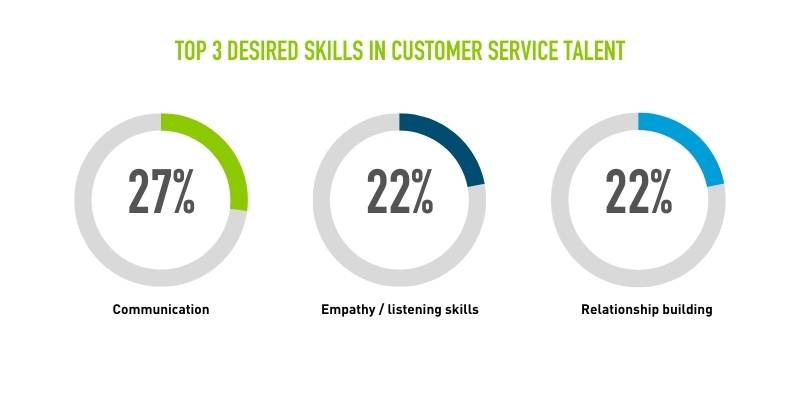
Customer queries are more complex and high-value, and contact center agents are now expected to not only answer calls, but interact with customers through chats, emails and social media. Contact centers need highly-skilled talent who are comfortable working in a myriad of technology platforms. Customer service representatives (CSRs) must also exhibit strong soft skills like listening and empathy—especially as consumers are experiencing more financial hardships and mental health struggles post-pandemic.

Indeed, 84% of contact center leaders—whether part of a BPO or an internal contact center—believe the pandemic permanently elevated the importance of the contact center for their business. But, it’s hard to deliver against your service levels when you’re struggling to hire or when you’re losing staff amidst the Great Resignation. Since 2019, the number of vacancies has increased, while the number of applicants per opening has dropped by 50%.

Chart showing reduction in applicants for high-volume hiring for the contact center
(Source: Indeed)

So, how can a contact center director and talent acquisition leader team up to tackle today’s tough landscape? Here are three top recruitment challenges in the contact center and tips for overcoming them.

1. Use Your Employer Brand to Attract the Right Kind of Talent

ContactBabel’s Contact Center Decision Maker’s Guide states that contact center attrition reached 23% in 2022, with 1 in 6 operations experiencing annual attrition of over 30%. This results in contact centers making over 212,000 hires annually. With turnover like this, how to make high-volume hiring more effective is always on the minds of contact center directors.

As consumer behavior has changed, a different set of skills is needed in customer service. Contact center agents need to exercise problem solving and analytical skills while also displaying empathy to customers who may be upset or emotional. Agents who lack these skills are more likely to struggle to resolve customer issues and to suffer from increased stress levels.

By honing your employer value proposition and attraction messaging, you can stand out amongst your competition but also zero in the characteristics you need for your contact center. By shifting your mindset from focusing on getting the most applications, or even those with customer service experience, to getting applications with the right profile, you can reduce attrition by increase the likelihood of your new hires being successful.

Case Study: Finding Candidates with Problem Solving Skills

We helped Direct Line, a British insurance provider, improve their recruitment outcomes in the contact center through employer branding and recruitment marketing. We found their ideal candidate profile was someone with strong analytical skills and who could proactively problem solve—rather than those with past experience in customer service.

We then expanded our search efforts, looking for candidates who would have honed these skills in non-customer service roles who would be interested in making a career change. Not only did this open the doors for Direct Line to access a new pool of talent, but it also helped to increase the quality of their hires and reduce attrition.

2. Rethink Your Assessment Center to Reduce Drop-Off Rate

With growing complexity in customer service, organizations need contact center agents with strong listening skills and written communication skills (for chat, email and social media enquiries) as well as the ability to self-manage and multitask. Leveraging candidate assessment tools to find candidates with the right combination of skills and behaviors is imperative to the success of your contact center.

Chart of most valued characteristics for high-volume hiring for the contact center
(Source: ContactBabel)

Case Study: Moving the Assessment Stage Forward

One of our longest standing clients, tasked us with high-volume recruitment process outsourcing (RPO) for their financial services customer contact centers. The bank needed to recruit more staff to meet their service levels and create a great experience for their customers. We designed the customer contact recruitment process from scratch, including a recruitment marketing campaign.

As part of this new process, we advised the client to introduce an online test immediately after the candidate applied using an automated email. This caught them while the application was still front of mind and also ensured that only best-fit candidates progressed. This meant that hiring managers were committing their time to top talent and helped to reduce the overall time to hire. As a result of identifying high quality candidates sooner, we were able to reduce the attrition rate to just 11%, well below the industry average.

More Assessment Center Tips to Reduce Drop Off

Here are some more assessment center tips:

  • Try introducing assessment tasks earlier in the process or combining assessment stages. This helps increase hiring speed and keep candidates engaged.
  • Rather than traditional multiple-choice tests, try a role play scenario or an interactive experience that gives the candidates a real-life feel of what their day-to-day job will look like. The benefits are two-fold—you get a better idea of how candidates will perform in the role, and they get a better idea of what to expect before they accept the offer.
  • Ensure candidates are prepared for the assessment center by offering webinars, instruction videos and even practices tests. This helps to eliminate nervousness and boost confidence amongst candidates—reducing candidate drop-off before the assessment center phase.

Learn more about our whole-person model for assessments and how we leverage it for evaluating customer service reps for the contact and other high-volume hiring situations.

3. Boost Your Communications to Eliminate Ghosting

Newly hired customer service reps are increasingly ‘ghosting’ their call center jobs—not showing up for day one with no reason given and often no communication from the candidate at all. According to an Indeed survey on ghosting in the workplace, 22% of candidates say they have accepted a job offer but didn’t show up for the first day of work.

Following the tips above on finding the ideal candidate profile and assessing for the right skills to start with, will help reduce ghosting on day one. In addition, you can also work to speed up the recruitment process and improve communications to keep candidates engaged after offer acceptance.

Speeding Up the Recruitment Process

With so many contact centers vying for customer service talent, employer response time is crucial as you want to beat the by being the first to move the candidate through the recruitment process. About a quarter of candidates state the reason for their ghosting was because the hiring process was too long or too slow. So, take a look at your recruitment process. Are there any steps you could eliminate or combine? Are there ways you could reduce the time between steps?

If it’s feasible for your organization, you might consider moving to same-day offers, even if they’re contingent upon reference verification, background checks or drug testing. Also, moving the start date up will reduce the likelihood of a competing offer turning your candidate’s head. Waiting for your next training class could be risky, so think about running smaller training classes more frequently to accelerate hiring.

Staying Connected with Regular Communication

Communication is also a key part of combatting ghosting during the crucial period offer and onboarding. Staying in touch with candidates is imperative to keep them interested. If you ghost your brand-new hire by forgetting to check in, they’re more likely to ghost you in turn. The same Indeed study found that 77% of jobseekers saying they’ve been ghosted by an employer.

Assessing the touchpoints between your organization and the offer holder is an important way for employers to ensure they keep the lines of communication open and increase engagement with candidates. Are you using your CRM to the fullest? Investing in creating content that showcases your employer value proposition (EVP) and sending it out regularly to your candidates via engaging emails will ensure they are reminded regularly of the value you offer—whether through benefits, flexibility, growth opportunities, diversity and inclusion initiatives and more.

Personal touchpoints are another way to stay connected. Check-in emails from the recruiter or even messages of congratulations from the hiring manager will help candidates feel valued and special. You might consider asking existing employees to act as an ambassador and share some onboarding materials with more information about your organization, your culture and values or your employee resource groups (ERGs) so they start feeling like a part of the team.

These small gestures can help your candidate feel connected to the organization before they start—and could end up being what keeps them from changing their mind when they receive a competing offer.

RPO for the Contact Center

Facing a recruitment landscape in which you need high-volume hiring to support your contact center operations? Learn strategies to speed up your hiring process and deliver on customer service quality by downloading our 9 Strategies for Solving High-Volume Hiring Challenges.

Talent Attraction in the Building and Construction Industry in Australia

PeopleScout has over 10 years of experience working in partnership with our clients in the building and construction sector. Our Australian footprint covers metropolitan, regional and remote locations supporting multi-national clients with varied requirements including:

  • National infrastructure and transport projects
  • Property development
  • Telecommunications
  • Remote site construction
  • Building and construction materials distribution
  • Renewable energy development

PeopleScout is an end-to-end recruitment process outsourcing (RPO) provider delivering strategic talent acquisition solutions across the building and construction sector. Our deep understanding and insight led approach to the delivery of project-based workforces will allow us to transform your approach to talent acquisition. We can partner with your existing team or deliver standalone projects to provide surge capacity and allow you to gain the competitive edge in the acquisition of talent.

The Talent Attraction Recipe for Success

The building and construction industry has weathered an incredible amount of change and challenges over the past decade and PeopleScout has been a trusted and strategic talent partner with a number of tier 1 and tier 2 industry leaders throughout this period, taking on lessons and continually refining our process. Over this time there are a few standout learnings we can share which have made a major impact on securing talent in this sector.

Industry Insights – Project Driven Forecasting for Balancing Skilled Labour

We have developed a deep understand of project-based recruitment across the building and construction industry, which includes the development of candidate source and attraction strategies aligned to project cycle and location. PeopleScout recruitment teams is involved from the bid stage of our client’s major infrastructure projects which allows us to start forecasting when the demand for certain skill sets is due to pick up and when there will be available workers ready to start planning for their next engagement.  

Workforce Partnership Planning – Forecast Planning

We partner closely with our clients to workforce plan against their project pipeline and the phases of the projects currently in play. One of the most impactful workforce planning tools is the forward mapping of your internal and external pipeline talent pools to your client’s future workforce requirements. PeopleScout’s CRM technology, Springboard allows our team to proactively manage our talent pools and keep them informed of opportunities on the horizon. Springboard helps our team to keep talent engaged with our clients and facilitates a seamless application, screening and onboarding process to ensure we maintain momentum with our talent and have them ready to start as soon as a project receives the green light.  

Employer Value Proposition – Including Community Engagement

Construction projects do not happen in isolation from the community they operate within and leveraging your EVP to build your brand within the local community is an integral sourcing strategy for this sector. Even more so when the projects you are sourcing for are based in regional and remote locations. PeopleScout works with our innovative Talent Advisory team to design sourcing campaigns that will resonate with the local communities our clients are working within. Our recruitment teams work directly with community groups, educational institutions, and industry partners to promote local pathways to work and support the diverse needs of our communities.

Talent Sourcing Insights

PeopleScout is an insights-led business, we use the data gathered via our business intelligence platform Springboard to analyse every aspect of the recruitment process both retrospectively and in real-time to ensure our campaigns are as effective as possible. Our insights tool interfaces with all the leading ATS platforms used by our clients and is fully integrated with our proprietary Talent Solution technology – Springboard. which allows your teams:

  • Access the real-time ROI on advertising and social media campaigns allowing your team to immediately pivot from avenues that are not yielding results and ramp up investing into the strategies delivering the greatest impact.
  • Access data analytics has been instrumental in achieving our client’s diversity goals; we enable your team will monitor the progress of applicants throughout the recruitment process and our data analytics will identify any key dropout points in the process. The PeopleScout team will assess what is causing applicants from certain demographics, to not proceed with the application and redesign the application process to stop this in its tracks.
  • Access to a dedicated talent insights team who conducts candidate market deep dives, to understand what the candidates career motivators are and where the best talent is for your organisation. We use these Market Benchmark Insights to develop candidate personas which we validate and use to design our go-to-market strategy.

As an example, PeopleScout partnered with a client, who is a leader in technology, industry, infrastructure and transport for over 11 years. Our solution features an onsite strategic sourcing business partner whose role is to source the hard-to-fill positions and provide overflow recruitment capability for the in-house team.

The Result?

PeopleScout is one of the leading outsource talent partners in the building and construction sector. We have over 10-year knowledge on how to support clients in the mobilise workforces for major infrastructure projects across ANZ. If your current talent solution is not meeting the demands of your project pipeline, PeopleScout as the technology, skills and experience to transform your talent acquisition team. The outcome of which will be a strategic function aligned to project and workforce needs. that decreases time to mobilise and provides you the competitive advantage you need in a tight talent market.