Hype or Happening? What Our Data Says About AI in Recruiting

Hype or Happening? What Our Data Says About AI in Recruiting


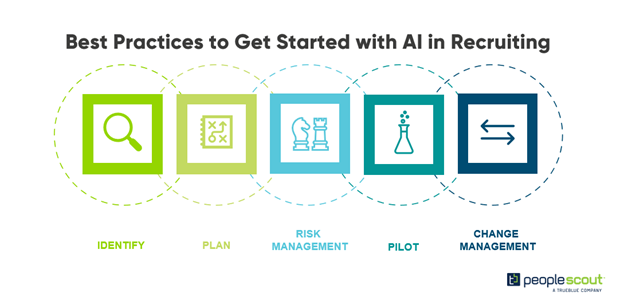
We are bombarded with hype about the disruptive power of Generative AI, or Gen AI, on recruitment, including doom-laden, worst-case scenario predictions and claims that our existing talent assessment methods are already obsolete.

It is hard to make sense of all this to come to informed decisions about how we should respond to the new era of Gen AI. Much of what we see and hear is based on opinions, and the research reported focuses on the potential to disrupt rather than revealing the reality of what is actually happening right now.

At PeopleScout, we have responded to this confusion and lack of useful evidence by doing our own research. We wanted to look for evidence of real use cases and impact of Gen AI on job changers and live assessments—and what we found shines a different light on how candidates are using Gen AI in the real world.

In this webinar, we:

  • Debunk common myths and hype about Gen AI in recruiting.
  • Present real-world data and use cases of Gen AI’s impact on job seekers and assessments.
  • Offer actionable insights to help you navigate the evolving landscape of recruitment technology.


Revolutionizing Healthcare Staffing: The RPO Advantage

Revolutionizing Healthcare Staffing: The RPO Advantage

Attracting and retaining top talent is a massive challenge in today’s competitive healthcare landscape. Unlike other sectors, a miscalculation in hiring the wrong candidates can have severe consequences for patients.

That’s where Recruitment Process Outsourcing (RPO) comes in.

In this ebook, Revolutionizing Healthcare Staffing: The RPO Advantage, you’ll discover how RPO can revolutionize your healthcare organization’s talent acquisition strategy. We’ll explore:

  • The unique hiring challenges facing the healthcare industry and how RPO addresses them head-on
  • The benefits of partnering with an RPO provider, from cost savings to improved candidate quality
  • Real-world case studies showcasing RPO’s impact in healthcare settings

Join the growing number of forward-thinking healthcare talent acquisition and HR leaders who have partnered with RPO providers to stay ahead of the competition. Download our ebook today!

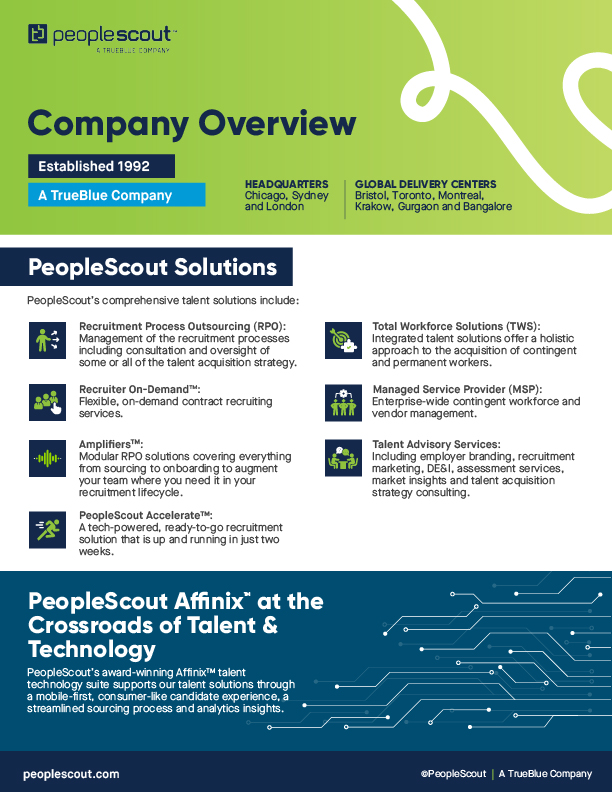
PeopleScout Company Overview

PeopleScout Company Overview

Global talent solutions providing unmatched scalability to meet the professional, specialist, volume and contingent hiring needs of organizations of all sizes and sectors.

Download this fact sheet to learn more.

Learn more about PeopleScout’s award-winning talent solutions.

Dig Into More Talent Insights

Ultimate Recruitment Process Outsourcing Toolkit
Toolkit

Ultimate Recruitment Process Outsourcing Toolkit

Our complete six-piece toolkit gives you the essential information on how RPO can boost your recruitment outcomes.

Recruitment Process Outsourcing (RPO) Buyer’s Guide
Buyer’s Guide

Recruitment Process Outsourcing (RPO) Buyer’s Guide

Check out this in-depth exploration of RPO and how it can help you achieve your recruitment goals.

Global Hiring and Labor Market Trends Affecting Recruitment in APAC 
Article

Global Hiring and Labor Market Trends Affecting Recruitment in APAC 

Check out these labor market trends in APAC and their effect on talent acquisition in the region.

TrueBlue’s PeopleScout Unveils “Connect More”™ Brand Promise

Demonstrating commitment to elevating connections with top talent

TACOMA, Wash., – April 30, 2024 – TrueBlue (NYSE: TBI), a leading provider of specialized workforce solutions, today announced that its global talent solutions brand, PeopleScout, has undergone a strategic brand refresh. PeopleScout’s new brand promise, “Connect More”™, and refreshed visual identity convey the importance of meaningful connections between employers and critical talent in the changing world of work.

“Today’s dynamic talent landscape demands an innovative approach to attracting candidates and engaging employees,” said Taryn Owen, President & CEO of TrueBlue. “PeopleScout’s ‘Connect More’ brand promise emphasizes the importance of these connections across the talent spectrum, furthers our mission to connect people and work, and underscores the important difference the right talent can make for our clients.”

PeopleScout knows that cultivating deeper, more profound connections is imperative. “Connect More” extends beyond connecting employers with talent. It spans PeopleScout’s industry-leading technology, scalable offerings, and unrivaled in-house talent advisory expertise to deliver actionable insights, transformative strategy, and a partnership experience unlike any other provider in the industry.

PeopleScout’s refreshed brand is grounded in its long legacy of exceptional service and differentiators that maximize results and improve outcomes for clients:

  • Proven Delivery: For more than 30 years, PeopleScout has built its reputation on integrity, transparent communication and a proven track record of success.
  • Meaningful Connection: PeopleScout excels at connecting with sought-after talent across diverse sectors—from the shop floor to the top floor; from healthcare clinics to innovation labs.
  • Digital Transformation: Leveraging its proprietary talent technology suite, Affinix™, PeopleScout provides candidates with a digital-first experience, harnessing AI, automation and data analytics to remove friction and enhance outcomes. 
  • Talent Advisory: With one of the industry’s largest in-house talent advisory teams, PeopleScout delivers fresh perspectives and innovative solutions to complex talent acquisition challenges.
  • Ultimate Scalability: PeopleScout’s unique blend of insight, experience and action offers flexibility and scalability to support specialty, professional, volume and contingent hiring for organizations of all sizes.
  • Speed and Agility: Flexible solutions like PeopleScout’s Accelerate™ and Amplifiers™ empower employers with the agility required to compete in today’s talent market and address immediate hiring needs.

“We believe in the transformative power of connection to drive results, and our new brand promise reflects our commitment to forging stronger connections throughout the talent ecosystem to improve business outcomes,” said Rick Betori, President of PeopleScout & EVP of TrueBlue. “By helping our clients ‘Connect More,’ we elevate employers’ connections to the right talent, build sustainable talent programs and achieve their immediate and long-term workforce goals.”

Discover how PeopleScout helps organizations “Connect More” with talent at the newly refreshed PeopleScout.com.

About PeopleScout

PeopleScout, a TrueBlue (NYSE: TBI) company, is a global talent solutions leader that provides unmatched scalability to meet the hiring needs of organizations of all sizes. It connects clients with top talent through Recruitment Process Outsourcing (RPO), Managed Service Provider (MSP), Total Workforce Solutions, and talent and technology advisory services. PeopleScout is helping talent leaders harness the power of data, drive decisions and exceed expectations through tech-charged solutions founded on machine learning and AI. PeopleScout’s legacy of service and partnership has led to consistent recognition as a leader by industry analysts. For more information, visit www.peoplescout.com.  

About TrueBlue

TrueBlue (NYSE: TBI) is a leading provider of specialized workforce solutions that help clients achieve business growth and improve productivity. In 2023, TrueBlue served 67,000 clients and connected approximately 464,000 people to work. Its PeopleReady segment offers on-demand, industrial staffing; PeopleManagement offers contingent, on-site industrial staffing and commercial driver services; and PeopleScout offers recruitment process outsourcing (RPO) and managed service provider (MSP) solutions to a wide variety of industries. Learn more at www.trueblue.com. 

Press Contact
Taylor Winchell 
Senior Manager, External Communications 
+1 253-680-8291
pr@trueblue.com

Early Careers Recruitment Success for an Australian Construction Giant

Early Careers Recruitment Success for an Australian Construction Giant

Early Careers Recruitment

Early Careers Recruitment Success for an Australian Construction Giant

PeopleScout embarked on a strategic project to revitalize the graduate recruitment program for one of Australia’s largest development and construction companies. Through our early career talent expertise, we brought in more innovative approaches to candidate engagement and elevated the graduate recruitment experience, cutting renege rates in half.

18 Weeks Cut from Time Spent on Recruitment Activity
50 % of Graduate Hires Identified as a Woman
50 % Reduction in Candidate Drop Off & Reneges

Situation

One of Australia’s largest development and construction companies had a graduate recruitment program consisted of a short burst of marketing and campus engagement (six weeks), two recruitment phases in March (16 weeks) and August (12 weeks) and a long “keep warm” period. This approach heavily impacted their HR and recruitment teams as well as a line manager resource. Plus, the long recruitment process and keep warm periods resulted in drop off or renege rates of up to 30%.

They engaged PeopleScout to help them create a more efficient graduate recruitment process, while ensuring they connected with bright emerging talent.

Solution

Seeking to strengthen the connection with students and to drive more efficiency, we executed an early careers talent solution that shifted the focus of the campaign—adding more meaningful campus engagement (24 weeks) and one short, sharp recruitment window (10 weeks).

Laying the Foundation

The first step PeopleScout took in updating the program was to conduct in-depth job analysis interviews with a variety of stakeholders including: high performing graduates and interns, their line managers and visionaries across the business. This allowed us to develop a robust success profile, which defined what good looks like now and into the future.

Then we reviewed and updated the early careers value proposition and updated the campaign materials to tap into candidates looking to build a purpose-driven career. We also tailored our approach to ensure we connected with the client’s target diversity groups.

We created an always-on expression-of-interest portal for the client which allowed us to build a talent pool for the whole academic year. With the Affinix® Student Engagement Platform, we delivered tailored content and shared employee stories showcasing ‘a day in the life’ and career journeys. This helped us to drive interest and change minds about a career in construction and property by myth-busting common misperceptions.

Campus Engagement

Recognising the importance of genuine and authentic communication, we identified graduate ambassadors across the breadth of the business. Moving away from pure reliance on careers fairs and job boards, our campaign involved the delivery of 38 student engagement events, including site tours, “meet the team” sessions and panels with female leaders leveraging our ambassadors.

Recruitment Process & Candidate Assessment

Now, having driven engagement with the target student population, it was important that the recruitment process was also effective, efficient and engaging. Our client had been following the traditional path of online testing, group assessment centres and hiring manager interviews to deliver their graduate program. But there was opportunity to ensure the process amplified their brand, provided candidates a realistic job preview, and levelled the playing field for all, enabling candidates to demonstrate their potential.

Using the insights from the internal client stakeholder interviews during our discover phase, we implemented the following changes:

  • Completely redesigned the assessment framework.
  • Adopted a CV-blind approach which helped to reduce unconscious bias.
  • Implemented a skills assessment in place of previous cognitive tests, which provided a more holistic view of the candidate, tapping into their motivation, cognitive strengths and behaviours, and measured the candidate against the client’s success profile.
  • Provided candidates with meaningful feedback reports, giving candidates an overview of their strengths and areas for development.
  • Revamped assessment centre exercises to bring the client’s construction project world to life, with candidates working together to deliver solutions involving the client’s core areas of focus, like community and sustainability.
  • Used our virtual assessment centre technology to encourage participation, especially for working candidates, rural candidates or those unable to afford the travel who previously experienced barriers during in-person events.
  • Leveraged our technology to improve accessibility for candidates with a disability and for those with ESL requirements.

Results

  • Reduced time spent on recruitment activity from 28 weeks down to 10 weeks.
  • Achieved client diversity targets, with 50% of graduates hired identifying as women (compared with 15% of graduates with construction and engineering degrees identifying as women) and 3% of graduates hired identifying as First Nations (compared with 1% of graduates with construction engineering degrees identifying as First Nations).
  • Reduced candidate drop off and reneges from 30% to 14%.

“The process was very well run, and we had strong candidates. Thank you for the hard work and efforts with this program. It was a very thorough process with great results.”

Client Feedback

The enhanced engagement and innovative approach to assessment had an amazing impact on the client’s candidate Net Promoter Score (cNPS) with candidates rating their experience at 65, which is considered great. Candidate feedback was incredibly positive with a sample of feedback below:

  • “Very modern and innovative approach to the regular interview process. Allows busy applicants to complete in their own time.”
  • “The interview process was very innovative and provided additional insight into the role.”
  • “Overall has been a great experience. The assessment provided me with feedback that I can take into account in the future.”
  • “Very user friendly interface and didn’t feel demeaning or intimidating.”
  • “Thank you for making it such a smooth application process. I really appreciated all of the support provided, and I’m looking forward to working in such a supportive work environment. I also really appreciated the quick turnaround time for my application.”

At a Glance

  • COMPANY
    Large development and construction company
  • INDUSTRY
    Building & Construction
  • PEOPLESCOUT SOLUTIONS
    Recruitment Process Outsourcing, Affinix

Securing Software Engineers for a Healthcare Tech Pioneer

Securing Software Engineers for a Healthcare Tech Pioneer

Tech Recruiting in Healthcare

Securing Software Engineers for a Healthcare Tech Pioneer

A global healthcare technology company turned to PeopleScout to find much-needed tech talent to grow their healthcare data and analytics services.

97 % Offer Acceptance Rate
Implemented SMS Text Screening
20 % Exceeded Submittal-to-Interview Ratio Goal by 20%

Situation 

A healthcare technology company approached PeopleScout to help with their hard-to-fill software engineering and niche technology positions. With demand for tech and digital skills on the rise across all industries, the client was struggling to fuel their business growth.  

Solution 

PeopleScout implemented a partial-cycle recruitment process outsourcing (RPO) program for the client. Our dedicated delivery team consisted of tenured recruiters who had at least five years of software engineering recruitment experience. We established a multi-channel sourcing process, screening, scheduling interviews and completing the hiring process for the client.  

The PeopleScout RPO team partnered closely with hiring managers to brainstorm creative solutions to particularly hard-to-fill roles and to provide talent intelligence and detailed compensation information that they could take back to their leadership. 

We also implemented new technology that allowed us to screen candidates via two-way SMS texting to speed up screening time, improve candidate engagement and reduce fallout. Hiring manager surveys were also rolled out to gain more feedback, and reporting and analytics were set up to measure SLAs. 

Results 

PeopleScout effectively hired candidates for the organization’s niche technology roles, while exceeding time to fill expectations. Our recruiters thoroughly sourced against the role requirements, assuring candidates met the client’s standards. As a result, 77% of hires made were externally sourced candidates, and we increased the submittal to interview ratio to 54%, exceeding our target by over 20%. The offer-acceptance rate grew to 97%, well above the industry average of 70%.  

Following this success, the RPO program expanded from roles within the U.S. to also cover recruiting tech roles in the UK and Ireland. 

At a Glance

  • COMPANY
    Healthcare technology company
  • INDUSTRY
    Technology
  • PEOPLESCOUT SOLUTIONS
    Recruitment Process Outsourcing, Affinix
  • ANNUAL HIRES
    250
  • LOCATIONS
    U.S., expanding to UK and Ireland
  • ABOUT THE CLIENT
    This healthcare technology company provides data, analytics and software for healthcare and government social services. The organization works with healthcare providers, health plans, governments and life sciences companies to get more from their health data, using artificial intelligence, data analytics, cloud computing and other advanced information technology.

Ultimate Recruitment Process Outsourcing Toolkit

Ultimate RPO Toolkit

Not sure recruitment process outsourcing (RPO) is for you? Think your organization is too small for RPO? Think outsourcing doesn’t fit your company culture?

Think again.

Our complete six-piece toolkit gives talent acquisition leaders the essential information on how RPO can boost their recruitment outcomes.

In this toolkit, you’ll get:

  • Our comprehensive buyer’s guide for RPO—everything you need to know
  • A guide for building a business case for RPO (including a free template!)
  • Conversation starters to help you create buy-in for RPO at your organization

Learn how RPO can unlock the full potential of your talent strategy. Download your kit now.

Internal Talent Mobility: Filling Skills Gaps with Your Existing Workforce 

With labor shortages and intensifying talent scarcity, hiring challenges are only increasing, impacting all industries. To tackle these hiring difficulties, many leaders look to external solutions like expanding their talent pool or enhancing their employer brand. However, one of the most effective and sustainable solutions is already inside your organization. Developing existing employees through internal talent mobility is key to filling skills gaps now and in the future. 

Keep reading to learn more about internal mobility, why internal mobility programs are crucial for future success and how you can leverage reskilling and upskilling programs to facilitate internal mobility at your organization.  

What is Internal Mobility? 

The goal of internal mobility is to match your existing talent to open positions through internal transfers, job rotations, secondments and promotions. An internal mobility program is a structured process that facilitates the movement of employees, both vertically to higher or lower positions as well as laterally between roles at the same level. These programs are often anchored in reskilling and upskilling initiatives focused on developing employees’ skills and capabilities to meet evolving organizational needs. 

Reskilling programs aim to provide training to help employees gain new skills that allow them to transition into different roles or business areas. For example, a finance employee can reskill to learn data analytics and move into a business intelligence role. 

Upskilling programs focus on building additional skills and competencies related to an employee’s current role or expanding their knowledge in their field. For example, a marketing manager can upskill their digital marketing capabilities in social media and digital advertising platforms to take on a more strategic role in the department.  

The Benefits of Internal Talent Mobility 

A strategic focus on internal mobility provides both talent management and bottom-line benefits for an organization, including: 

  • Improved employee retention and engagement: Providing clear paths for career development and advancement within the company increases employee satisfaction and loyalty. Employees feel valued and motivated when they see opportunity for upward or lateral mobility. 
  • Stronger talent pipeline: An internal mobility program creates a robust pipeline of qualified candidates for open roles from within. According to research from LinkedIn, organizations that leverage skills-first hiring expand their talent pool by nearly 10x on average compared to those simply looking for similar job titles or industry experience.  
  • Cost savings: It is typically more cost effective to fill a position internally rather than externally recruit, onboard and train new hires. Internal mobility is a strategic talent management approach. 
  • Improved performance: Internal candidates have organizational and cultural knowledge, so they are often able to transition and ramp up faster in new roles. Data from Spotted Zebra shows that internal movers reach competence 20% faster than external hires and are twice as likely to be rated as top performers in their role. 
  • Improved diversity: Internal mobility provides opportunities for improved representation and diversity in leadership by developing and advancing talent from within. 
  • Agility and flexibility: Having an internal bench of qualified candidates enables organizational agility to swiftly mobilize talent to meet emerging needs. 

The Lack of Investment in Internal Talent Mobility Programs 

Despite the benefits, internal mobility is not being prioritized by most HR leaders. Given the challenges recruiting skilled talent, we expected to see internal mobility as HR leaders’ default strategy to tackle skills shortages. However, through our research report, The Skills Crisis Countdown, we found that nearly a third (30%) of HR leaders admitted they simply do not view reskilling and upskilling as a priority and only 37% of organizations have formal reskilling and upskilling programs in place. Even in areas of high priority like technology advancement, there appears to be a lack of focus on mobility and development. When we asked HR leaders about how they’re preparing their workforce for the implementation of new technologies, only a fifth (20%) said they’re investing in upskilling initiatives to enhance current employee technological skillsets.  

The lack of skills development is echoed by employees. A quarter of employees report their employer has not been offered opportunities to upskill or reskill. A third (34%) of workers have doubts about how their skills will keep pace with new technology and automation. With transformations on the horizon for many roles due to technological advancements, ensuring employees’ skills evolve along with their jobs is essential for organizations.  

The Key to Internal Mobility: Reskilling and Upskilling 

Ongoing reskilling and upskilling of employees is crucial to enabling effective internal mobility. As business needs evolve and new technologies emerge, employees’ skills and competencies must also progress to keep pace. Providing internal development opportunities allows employees to gain the updated capabilities required for critical roles, increasing their eligibility and readiness to transition into new positions. By making learning core to the culture, reskilling and upskilling initiatives ensure organizations can source top talent from within. 

Implementing Successful Upskilling 

For your upskilling programs, you need an accurate understanding of your employees’ current skills and future needs. Our research showed most HR leaders rely on subjective manager feedback rather than taking a data-driven approach. 

To get ahead of emerging skills gaps, perform a skills audit and compare that to how your existing roles will evolve in the coming years. Identify both the competencies your employees need to be effective in their roles as they develop into the future and any deficiencies they have now.  

Once you understand the lay of the land, you can develop continuous upskilling initiatives to grow your employees’ high-value skills over time in alignment with technological advancements. Proactively upskilling employees will keep your workforce on the cutting edge of skill set transformations. 

Implementing Successful Reskilling 

Reskilling programs also require an understanding of the existing capabilities of your workforce and the required competencies for emerging roles. This allows you to accurately match employees to opportunities they can transition into successfully. 

Rather than relying on subjective manager interviews, utilize skills-based assessments. This provides data-driven insights into employees’ technical aptitudes and behavioral strengths. You can then align these skill profiles with the requirements of your new roles. 

For example, PeopleScout partnered with a global financial services company to take a skills-based approach for a major digital transformation initiative. By identifying the best candidates for reskilling, we helped employees move from declining customer service roles into new tech-focused positions, saving the company $2 million in exit costs and reduced training dropouts dramatically. The company gained the critical future-focused skills it required while providing career growth opportunities to its valuable existing employees. 

Internal Mobility & RPO: Your Partner in Sustainable Workforce Planning 

Over half (56%) of HR leaders report resistance to change within their organization when faced with the prospect of what they mistakenly believe can only be a huge, C-suite-led project that spans the entire talent lifecycle. However, as a leading RPO partner PeopleScout is perfectly positioned to provide the strategies and technology to embed and scale a skills-based approach. 

By leveraging an RPO provider’s expertise and resources, organizations can maximize the return on investment in internal mobility initiatives. According to Everest Group, over half of RPO engagements include some element of internal mobility. The RPO acts as a strategic talent advisor focused on improving talent mobility with strategies like: 

  • Skills gap analysis: An RPO provider can perform a skills audit to assess current capabilities versus required future skills and identify reskilling needs to inform development programs. They can also provide market intelligence to help you understand the skills available within your talent markets as well as salary requirements so you can make informed decisions.   
  • Internal candidate sourcing: Your RPO partner can source and screen internal candidates for open roles to identify top talent for mobility opportunities. 
  • Career mapping: RPO experts can map career paths, succession plans and competency requirements for critical roles to guide internal development. 
  • Development program design: An RPO provider can help design and implement reskilling, upskilling, job rotation and mentoring programs to build enterprise talent. Plus, they can administer and manage the end-to-end internal mobility program from sourcing to placement as well as provide project management. 
  • Change management: RPOs can provide guidance on change management strategies to gain buy-in and promote a culture of internal mobility. Plus, they’ll provide data, analytics and reporting on program effectiveness and opportunities to fine-tune strategies. 
  • Technology consultation and implementation: RPOs can recommend and implement skills management platforms and talent mobility platforms to enable seamless movement and track program metrics. 

Filling your organization’s talent gaps begins with the workforce already inside it. But this untapped talent potential can only be leveraged through strategic, skills-based internal talent mobility programs. Your existing workforce could provide the talent solution you’ve been searching for. By partnering with an RPO on reskilling and upskilling initiatives, you gain strategic expertise to build a future-ready, skilled workforce.  

Reskilling for Tech Roles Results in $2.5M in Savings for Global Bank

Reskilling for Tech roles Results in $2.5M in Savings for Global Bank

Talent Consulting

Reskilling for Tech roles Results in $2.5M in Savings for Global Bank

PeopleScout helped a global financial services company in their digital transformation efforts with a reskilling program to move employees from declining customer service roles to tech and digital roles.

150 customer service staff redeployed to tech roles in pilot program
5,000 more employees will be reskilled following the successful pilot
70 % reduction in reskilling cost-per-person achieved

Situation

A large global financial services company needed to undertake a major digital transformation program, which required new digital and tech skills. With the growth of online and digital channels, in-person transactions through bank branches and call centers have declined. The organization needed to acquire hard-to-find tech and digital skills to grow and maintain digital banking tools while leveraging the existing company knowledge of employees in declining customer service roles by reskilling them into new high-growth roles.

Reskilling efforts focused on developing new hard skills, so finding the best candidates meant identifying those with the soft skills most aligned with the new job opportunities. Previous efforts by the financial services organization to assess candidate suitability for reskilling were led internally and included multiple, time-consuming line manager interviews. Of even greater concern, around a quarter of those who began the reskilling
program dropped out.

Solution

As their long-term RPO partner, PeopleScout worked with the client and skills-platform provider Spotted Zebra to create a skills-based approach to reskilling, helping the organization to assess customer service staff in bank branches and call centers to find ideal candidates for its tech skilling program.

We identified individuals who had a strong motivation to reskill, high levels of adaptability (a predictor of future potential) and a strong alignment with the behavioral skills required for success in the role. A skills profile was created for all the growth roles, and employees were assessed against them to identify which role was the best fit.

Results

  • Through an initial pilot, the company redeployed over 150 people from declining roles who would have been made redundant to tech jobs, saving around $2.5 million in exit costs.
  • The company is expanding the reskilling program to move over 5,000 employees into new roles with one year.
  • By identifying those individuals who are a better behavioral fit for reskilling opportunities, the number of dropouts from the training program dropped dramatically, resulting in a savings of in training and development costs.
  • The new approach is more effective, simplifying the process in a fair and consistent way. The company has saved a considerable amount of manager time and reduced the reskilling cost-per-person by 70%.
  • Crucially, the reskilling program means the organization’s digital transformation project is on track, with reskilled individuals moving into mission-critical digital roles that would otherwise go unfilled.

At a Glance

  • COMPANY
    Global financial services company
  • INDUSTRY
    Financial Services
  • PEOPLESCOUT SOLUTIONS
    Talent Advisory

What to Expect During RPO Implementation: A 120-Day Timeline

Some companies see their RPO provider as only a vendor, but taking a partnership mindset creates a more satisfying, successful working relationship. Working well together as a united front always makes for an easier, smoother rollout with a new RPO program.

The implementation and transition phases before and after a rollout are crucial, as this is when you set the tone and expectations for all involved. It’s also when certain issues need to be addressed and configured.

Recruitment process outsourcing (RPO) has evolved significantly over the past few years. Here are some key areas talent acquisition leaders should focus on when implementing a new RPO program:

Before Your RPO Implementation Starts

It’s no secret that people are hesitant when it comes to change—especially when that change is likely to affect their day-to-day routine. To address this hesitation, it’s important to get everyone on the same page, consider the effect on each stakeholder, and educate people on what they should plan for once the implementation begins.

Some stakeholders will be early adopters who are hungry for change; utilize them as ambassadors for the new process. Others will be resistant, and these are the people from whom you want to gain buy-in for RPO. Once you identify the more cautious stakeholders, try to help them see the benefits of change from their perspective. Then, they can serve as primary communicators to others who are hesitant and explain the value of the change in ways resistant team members will understand.

Establish Key Players Early in the Process

During the transition, one of the most important steps is to establish one key champion within your business. This person is your internal point of contact for RPO with the power to get things done. There’s often a lengthy checklist of tasks that need to be completed before a rollout. The appointed decision-maker must be able to use their influence with HR, legal, IT and other stakeholders, including hiring managers and vice presidents, to get things accomplished. Conversely, your RPO partner should also provide a primary point of contact who will work closely with you to navigate the implementation process. Effective communication with your RPO contact will keep things moving forward.

Be sure to let your RPO team know who your internal stakeholders are (especially any unofficial ones) and how they may influence the implementation and rollout process. Loop your RPO team into conference calls and meetings so they can get a feel for the issues at hand and start building trust with stakeholders.

Clarify Expectations and Goals for Your RPO Program

At the beginning of your rollout, have an open discussion with your RPO provider about what success looks like for your organization today and going into the future. It may be helpful to hold a workshop to specifically determine what stakeholders want out of the RPO program and how those goals can be measured.

Define clear, measurable goals aligned to business objectives like time-to-fill, candidate quality, requisition volume, diversity and more. Both you and your RPO team must work toward, and measure against, the same goals.

If historical data on key performance indicators (KPIs) is available, now is the time to provide it to your RPO contacts so they can use the data to set a baseline for future measurements. But if this isn’t available, your RPO partner should be able to help you benchmark against other organizations.

Address Key Questions Early On

The best way to get people on the same page is to address pain points and questions early on so people know exactly why a change is being implemented. Begin that process by answering these key questions:

  • What specifically is changing? Tell people what you’re going from and what you’re going to.
  • What does this change mean for what I do? Explain how daily operations will be affected.
  • Will this make a difference? Show people how the change will bring value.
  • How will success be measured? Set clear calendar goals and openly address when these goals are not met.
  • Where do I go to find more information? Designate point people to address all updates regarding the transition.

Continue to communicate these Q&As to your team throughout the RPO implementation to further drive buy-in for the new process.

👉 Debunk common RPO myths.

During the RPO Implementation

A typical implementation for an enterprise, full-cycle RPO engagement is 30-60 days, with a 90-day transition period afterward. Modular RPO engagements will have much shorter timelines. No matter what RPO solution you choose, map your timelines out before beginning implementation, and stick to the timetable and deliverables. However, realize that you get just one chance to roll the process out well. Thus, you should keep your rollout date flexible enough to get the process right.

It’s also useful to set within your organization the expectation that the first 90 days of a new RPO program are a learning curve for all involved. Proactively manage change by clearly communicating process changes, providing training if needed, and getting buy-in from hiring managers and other stakeholders.

The Four Phases of Implementation (First 120 Days)

Understanding these phases will help keep you on track during the implementation process.

Phase 1: Introduction & Learning — This is the time to educate people on what RPO is and what changes are going to take place. People are excited, energy is high, and everyone is working hard to be open-minded about the changes. Some people might feel an initial shock, as though changes are already starting, but this is the time to get everyone used to the idea of new processes and people before any big changes are made.

Phase 2: Optimization — In the second phase, you address lessons learned in phase one and can begin operating at the new normal day by day. Energy remains high as people become more proficient in using the new processes. Issues decrease, but small concerns begin to go unreported. While morale is still high, minor frustrations occur while not everyone is up to speed yet.

Phase 3: Measurement & Consistency — This is the phase your client delivery leader will warn you about; believe them when they say you’re going to get frustrated! Phase three is the toughest because it’s when people start becoming impatient with the way things are progressing. Everyone expects everyone else to be fully competent in the new processes and performing according to plan. Minor issues that went unreported in phase two often turn into bigger issues that come to light during this phase, leading to amendments to current processes and a review of the team structure.

For one client, during the first three months small changes were made to the process almost every day. At first, it felt frustrating, but it was the way the client was able to make progress quickly versus waiting for designated biweekly meetings for issues to be addressed. Through careful documentation, the client was empowered to successfully combat candidate fallout by continually adjusting the order of steps in the hiring process.

Phase 4: Scale & Grow — After adjustments are made to the team and process, things finally start to move more smoothly. People are now highly competent, wins are gained more consistently, and issues are reported and resolved as they occur. The team gets along and feels positive because it is at the correct size and structure. Phase four begins a state of steady growth, which leaves room to evolve.

While these phases are fixed, people in your organization will complete them at different rates. It’s okay that some people might still be getting adjusted in phase two while others are already becoming more competent in phase three. However, phase four means the entire team has mastered the changes and is ready for innovation and further growth.

Foster Open Communication and Trust

This cannot be overstated: communication is essential to establishing a strong working partnership with your RPO provider. The more you communicate, the better your RPO team can serve you. The RPO team should ask your stakeholders about their experience, what they want to achieve with the new engagement, and what potential obstacles the team might encounter.

It’s important to be open about what is happening in the company. If something is working against the RPO process, let the team know so they can work around it. Remember, RPO providers can only advise you on best practices; ultimately, they are there to serve your needs. Communicate openly, and your RPO team can make the decisions that will ensure you have a positive experience. The more collaborative the partnership is, the smoother the transition will be.

Because outsourcing your recruitment function means people from across the organization will be affected, be mindful not to overlook a specific group when communicating information about changes. As much as you need to be transparent with people about the goals and progress of the transition, they need to be open with you as well. As issues are addressed and people start performing in accordance with the changes, be sure to publicly recognize and reward their behavior to further reinforce the idea that each team member brings value to the success of the implementation.

Invest in Change Management and Technology

Proactively manage change by clearly communicating process changes and encouraging weekly or daily check-ins to get everyone on the same page.

Be prepared to work in an agile way, continuously optimizing processes and innovating together. You should work collaboratively with your RPO partner to take full advantage of the latest recruiting technologies like AI-enabled sourcing, virtual interviews, chatbots, and more. Remain flexible and adapt to changing business needs and market conditions quickly.

Technology and automation enable your RPO provider to scale talent acquisition strategically. Technology can create a better candidate experience, facilitate better collaboration between recruiters and hiring managers, and equip you with better analytics so you can measure ROI.

Identify Challenges Upfront

Don’t assume that your RPO provider knows what the potential hurdles to adoption will be at your organization. Talk about your concerns and what you see as risks. Together, make contingency plans to address how such situations will be handled, and categorize risks by the level of fallout that may occur. Be sure to discuss what kinds of issues are considered common mistakes and what kinds of things absolutely cannot be allowed.

rpo implementation timeline

After Your RPO Implementation

Beyond the initial 120-day implementation period, your RPO engagement enters a new phase focused on optimization, evolution, and sustained success.

An RPO implementation may feel like an uphill battle, but it’s important to remember that it’s a good thing. Through every growing pain along the way, you’re still moving forward, and that’s what an RPO transition should feel like. There’s always going to be some level of discomfort with any change, but remember, your RPO partner is there to help guide you throughout the implementation and beyond.

With any RPO engagement, you always want to be evolving and changing. As you’re working with your provider to fine-tune the changes, you’ll start to look at things with an innovative eye. As soon as you find yourself thinking about trying something new or adding in an extra piece to the program, that’s a good sign that you’re moving forward in the right direction.

This is when the benefits of your RPO partnership truly begin to materialize. You should feel excited by the idea of the value your RPO partnership will bring. If you ever stop feeling value, that’s when you know something needs to change.

How to Ensure a Successful Transition

Success in an RPO implementation isn’t achieved by chance—it requires intentional effort, clear communication, and a genuine partnership mindset throughout the entire process.

Build a True Partnership

RPO has evolved into a more strategic, technology-enabled partnership. Taking the time to communicate and build relationships with your RPO partner can make a huge difference in ensuring a smooth and successful rollout. Some companies see their RPO provider as only a vendor, but taking a partnership mindset creates a more satisfying, successful working relationship. Working well together as a united front always makes for an easier, smoother implementation.

Leverage Technology and Innovation

Work collaboratively with your RPO partner to take full advantage of the latest recruiting technologies like AI-enabled sourcing, virtual interviews, chatbots, and more. By focusing on these key areas, talent acquisition leaders can ensure their RPO engagement will deliver great talent and business impact in today’s world.

Maintain Continuous Communication

Communication is a two-way street, and it only works if both parties are actively communicating throughout the entire engagement. The more you communicate, the better your RPO team can serve you. Open, transparent dialogue helps identify issues early, allows for quick adjustments, and builds the trust necessary for a successful partnership.

Recognize Progress and Celebrate Wins

Throughout the implementation and beyond, acknowledge the efforts of your team. As issues are addressed and people start performing in accordance with the changes, publicly recognize and reward their behavior. These wins, no matter how small, build momentum and reinforce the positive impact of the RPO engagement.

Stay Flexible and Evolve

Remember that change brings both challenges and innumerable benefits. The best way to approach change during an RPO implementation is with the knowledge of what to expect and how to succeed in the face of obstacles that appear along the way. Stay flexible, adapt to changing business needs and market conditions quickly, and continuously look for opportunities to innovate and improve.

Your RPO partner is there to help guide you throughout the entire journey. By maintaining a collaborative mindset, investing in clear communication, and staying committed to continuous improvement, you’ll create the foundation for a successful, long-term RPO partnership that delivers real value to your organization.