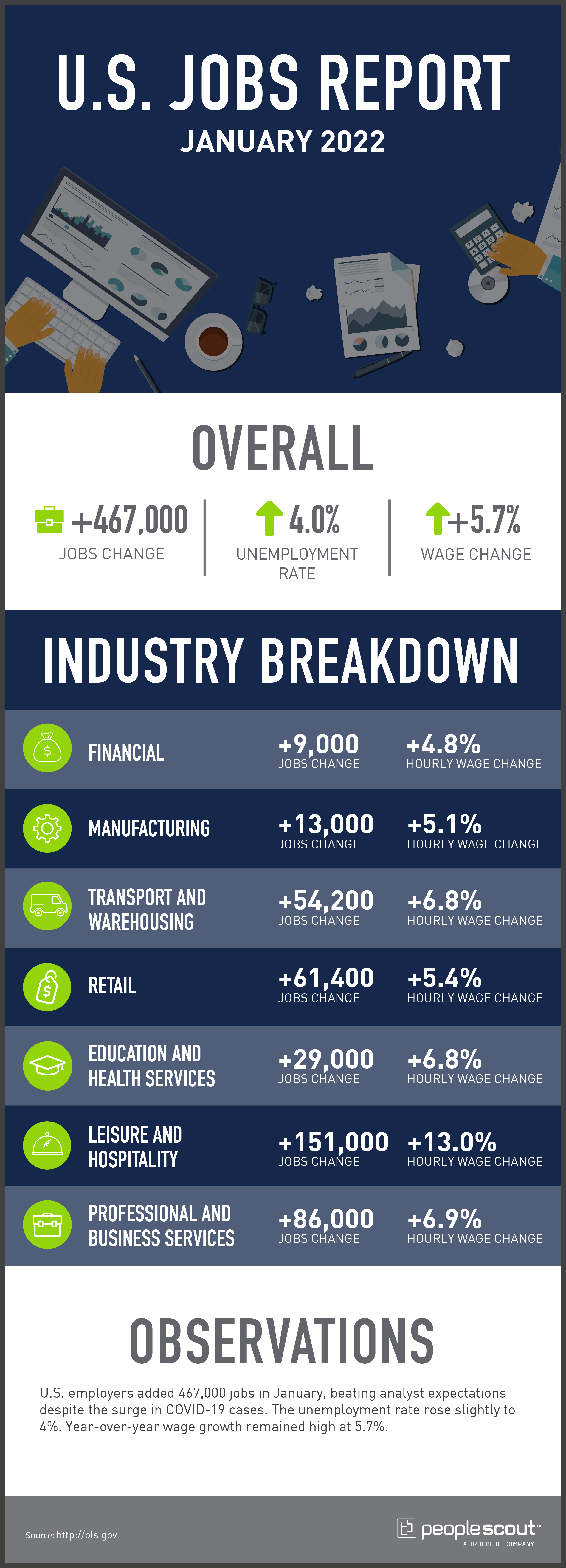
U.S. employers added 467,000 jobs in January, beating analyst expectations despite the surge in COVID-19 cases. The unemployment rate rose slightly to 4%. Year-over-year wage growth remained high at 5.7%.
The Numbers
467,000: Employers added 467,000 jobs in January.
4%: The unemployment rate rose slightly to 4%.
5.7%: Wages rose 5.7% over the past year.
The Good
Despite record numbers of COVID-19 cases across the country, employers beat analyst expectations to add 467,000 jobs to the U.S. economy in the first month of 2022. Additionally, the jobs numbers for November and December were revised up 700,000 over what was initially reported. According to MarketWatch, some experts had predicted an increase of only 150,000, while others had even expected a decrease in employment. Even the slight increase in the unemployment rate is good news, as it indicates more workers sidelined during the pandemic have reentered the labor market.
The Bad
There weren’t many downsides to January’s report. However, there may have been some impact due to the Omicron variant. The Wall Street Journal reports that nearly 2 million workers were prevented from looking for a job in January because of the pandemic. Additionally, 7.8 million said they missed some work because of Omicron.
The Unknown
Looking ahead to the rest of 2022, economists will be watching some factors still holding back the economy, according to the New York Times. Supply chain bottlenecks, labor shortages and high inflation have left Americans frustrated despite the fact that the unemployment rate has fallen faster than many experts predicted. Additionally, the strong recovery makes it likely that the Federal Reserve will raise interests rates in March, with traders predicting a half-point increase. Finally, employers and workers will be closely watching wages. Over the past year, wages have increased an average of 5.7%. While increasing wages are drawing more workers back into the labor market, they pose a challenge for employers.
In January, the U.S. Supreme Court granted a temporary stay on the implementation of the Occupational Health and Safety Administration (OSHA) Emergency Temporary Standard (ETS) requiring employers with 100 or more employees to require proof of vaccination or weekly COVID-19 testing.
This means that the ETS is on hold for further review by the U.S. Court of Appeals for the Sixth Circuit and a potential return to the Supreme Court. For employers, this ruling is not a final decision on the issue, but it does give them more time to prepare if the ETS does ultimately take effect. However, it also indicates for employers that the current Supreme Court is unlikely to approve the requirement.
The ruling also does not apply to any state or local requirements. Littler maintains a chart of vaccine-related legislation by jurisdiction. In some states, lawmakers have taken steps to limit or prevent vaccine mandates, while other states, cities and counties already have vaccine mandates in place for certain workers. Employers should work with legal counsel to determine if they are impacted by any existing legislation.
Employers that are not impacted by any federal, state or local legislation, can choose policies and practices best suited to their business as long as those policies do not violate the law, according to law firm Jackson Lewis. According to U.S. Equal Employment Opportunity Commission (EEOC) guidance, employers are able to mandate vaccines in most cases, but they must provide reasonable accommodations for employees who cannot receive the vaccine because of certain medical conditions or sincerely held religious beliefs.
Employers who are asking about vaccination status should take care in their approach. Tracking employee vaccination status can help employers determine whether workers need to wear masks, how quickly they can return to the workplace after an exposure to COVID-19 or if they can increase capacity in offices, but employers should be cautious in asking follow-up questions about why a person has not gotten the vaccine. According to SHRM, questions about why an employee is not vaccinated could be subject to the Americans with Disabilities Act (ADA).
As for workers, surveys show they are split on vaccine mandates, with a small majority (53%) saying they want to see their workplace introduce the proper technology that could record proof of COVID-19 vaccination.
Talent attraction means grabbing a candidate’s attention and in this day and age that is not an easy task. Every day, we’re bombarded with between 4,000 and 10,000 ads. Naturally, we don’t give every one of them our full attention; our brains screen out the majority that they consider irrelevant so we don’t get overwhelmed. Recruitment messages—designed to grow awareness and excitement around job opportunities—are just one subset of ads fighting for our attention in this intense daily contest.
In such a ruthless environment, talent attraction techniques have evolved and adapted. Modern recruitment marketing now draws heavily on consumer marketing practices and technology to ensure that recruiting organizations create clear space between themselves and their competitors. This optimizes the likelihood that their messages will receive the attention of the right candidates and fuel growth in healthy pipelines for future vacancies.
This article will walk you through four strategic pillars to succeed in this hugely competitive space for top talent.
Talent Attraction Pillar One: Establishing Your Brand Narrative as a North Star
To attract top talent, you need to tell a vivid story about your unique employer value proposition, or EVP. This proposition should clearly communicate the compelling elements of your employment offer, as well as the behaviors and values you expect of candidates in return.
This narrative allows candidates to make an informed decision about whether your organization is somewhere they aspire to work and somewhere they can have an influence. But, it also ensures that the people who do go on to apply are in tune with your company values; are motivated to be a part of your team’s mission; and are ready to take on the particular challenges associated with their role.
Recruitment marketing is the task of telling that story—why talent should want to work for you. Specifically, it’s about telling it:
To the right people, at the right time
Consistently, with targeted content and experiences that develop a candidate’s understanding of—and trust in—your company
In exciting and unexpected ways to stand out from the competition
Changing jobs is a significant life event fueled by a complex and highly emotional decision-making process. More than ever, candidates are searching for an employer that exhibits a shared set of values and work that they find meaningful. This is even more apparent in the Millennial and Gen Z members of the workforce. As such, a well-articulated employee value proposition can provoke an emotive response from candidates; give them a first glimpse into your company culture; and differentiate you from your competitors for talent. Without a clearly defined employer brand story, the guiding North Star of your strategy is missing.
Talent Attraction Pillar Two: Build Authenticity & Trust with Your Employees’ Voice
When considering whether to apply for a role, candidates will evaluate the authenticity of your brand claims and develop perceptions of what it’s really like to work for you. Therefore, when it comes to the credibility of your messages, the sources that deliver them are all important. Appetite for glossy corporate advertising is low; candidates are looking for trusted spokespeople to reveal the real story.
According to Edelman’s brand trust report, nearly seven in 10 people globally use one or more advertising avoidance strategy.
Personal experience, earned media, and peer-to-peer conversations are far more influential than owned media and paid advertising in the battle for brand trust.
Industry experts and regular employees are seen as significantly more credible spokespeople for a brand than the company’s CEO.
Similarly, candidates are savvy to corporate clichés and empty promises. Alternatively, they will use resources like Glassdoor and Indeed to seek out the opinions of existing employees who have previously road-tested an employee experience.
Of course, you can’t control everything that’s written about your brand online, but you can empower your most engaged employees to be the voice of your brand by sharing their own experiences. Plus, personal stories will provide you with credible evidence to support your employer value proposition and build credibility among your external brand audiences. It can be easy to overcomplicate advocacy; the key is to make it a fun and celebratory process. For instance:
Make sharing simple. There are many content amplification tools that will allow employees to access your employer brand content and repost it to their own social channels in seconds.
Introduce a little competition. Award points to employees for sharing their own stories and reposting those of their colleagues.
Make advocacy rewarding. What do your advocates get in return for being active brand ambassadors? Social media training? Networking opportunities?
But, don’t just expect employees to go off and create great content; you’ll need to offer support. So, consider setting content creation challenges with detailed guidelines to keep them energized and engaged.
Talent Attraction Pillar Three: Connect to Talent with Data-Driven Insights
Top talent doesn’t need to actively look for new opportunities because, like in the consumer world, offers have already started coming to them. Nowadays, passive and active candidate status is no longer clear cut. While some people are actively looking for jobs, it would be incorrect to label everyone else passive and disinterested in new opportunities.
In fact, candidates expect to be approached with new opportunities. Take the highly competitive tech market, for example: More than half of all software engineers in North America are approached by recruiters at least once every quarter. In such a competitive market, you need to engage your future workforce before the demand to hire them exists.
So, instead of playing the numbers game and hoping that the right person is out there somewhere, wouldn’t it be better to have an existing relationship with the people we think would be perfect for the job? And, better still, to know exactly their level of interest in new opportunities so that, when we do approach them, we know it’s a welcome advance? Fortunately, this is all made possible if we build high-quality, data-driven talent pipelines that provide recruiters with live insights into candidate interest levels and improve their efficiency. Below are three steps you can take to start building talent pipelines.
Pillar Four: Differentiate Your Brand Through Human Experiences
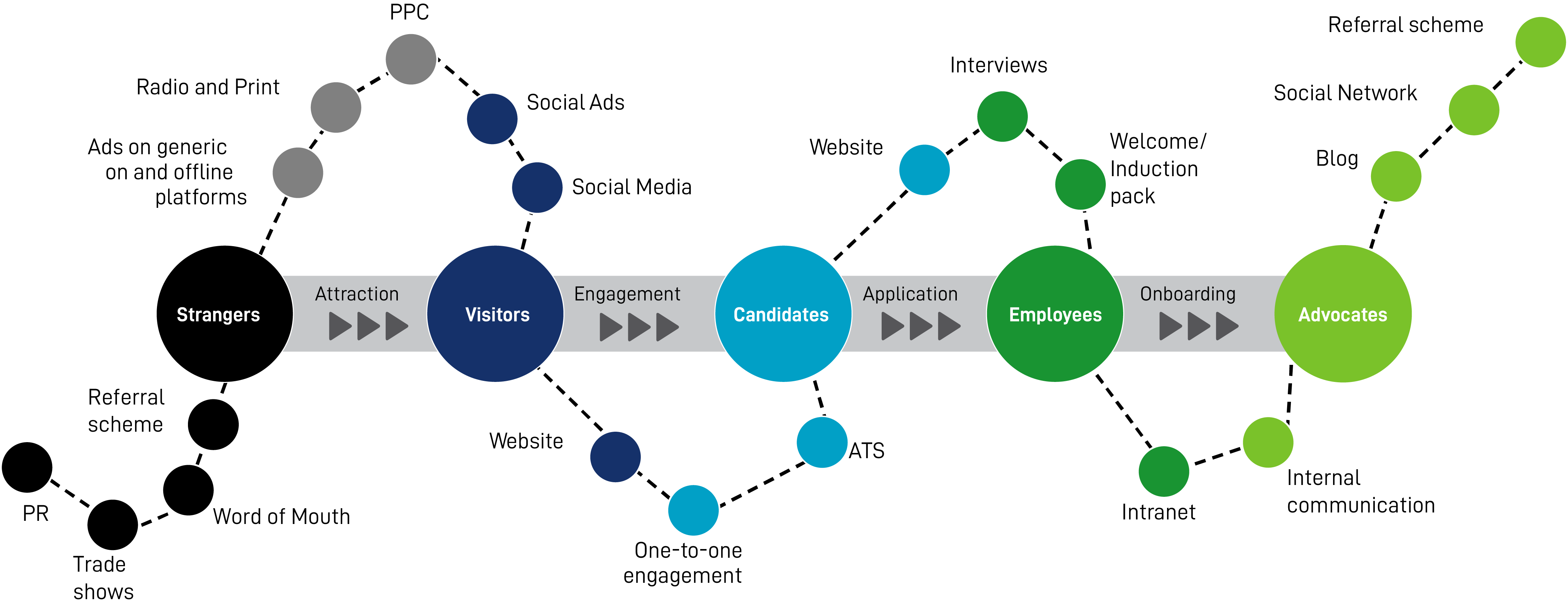
Let’s reimagine the marketing funnel as the journey of a single candidate. Armed with your compelling employer value proposition, the task throughout this journey is to bring the promises of that proposition to life for candidates and reinforce your brand messages so that they build a preference for your organization.
In other words, rather than just telling candidates why you should be their preferred choice of employer, show them at every touchpoint.
Remember when we referred to your employer brand as your North Star? This is exactly what we meant by that: Use your employer brand and value proposition as a guiding force when crafting all of your recruitment communications and experiences. The more consistently and distinctively your value proposition is expressed throughout the candidate journey (and beyond into the employee lifecycle), the more your brand reputation will align to the identity that you want to portray.
As an example, if you claim to be an employer that cares about employee wellbeing, show candidates from the start by supporting them through the recruitment process with deep empathy. Likewise, if you claim to be an employer that fosters innovation, ensure that your communications are fresh and different.
The way that candidates experience your organization throughout the candidate journey will show them everything they need to know about how your company treats customers and colleagues. That perception, once created, is hard to shift. If you treat candidates with dignity and show them how their time is valued, most will walk away from the recruitment process feeling positive about the brand you represent—whether they were successful or not. This means that you’re more likely to be the beneficiary of positive word-of-mouth advertising from that individual, as well as ensure that they’re more likely to reengage with you in the future should another, more appropriate, opportunity arise. That could be next week, next month or next year. The long game matters. A human-centric approach is different and will certainly stand out among the numerous companies that still facilitate an impersonal hiring process.
Making The Right Match
When these four strategic pillars work cohesively together, they allow you to seek out top talent and start conversations with potential employees wherever they prefer to consume content. Then, you can convert candidates to the next stage of the recruitment process by delivering content that responds to behavioral triggers and underlying candidate motivations. Finally, you can differentiate your organization from your competitors with human experiences that bring your employer brand to life in unexpected and exciting ways.
To learn more about recruitment marketing and talent attraction and retention, including the important metrics you should focus on, read our ebook.
When people of different backgrounds with different experiences come together, they drive innovation—both in the workplace and in the world at large. In fact, there’s substantial research that DE&I initiatives bring many advantages to the workplace, including increased profitability and creativity; greater productivity; and better problem-solving, among others.
Employees with diverse backgrounds also bring their own perspectives, ideas and experiences, which help to create organizations that are resilient and effective and that outperform organizations that do not invest in diversity.
Yet, despite the obvious benefits of increased diversity and inclusion in the workplace, the reality still leaves much to be desired. For instance, research from Boston Consulting Group shows that diversity and inclusion efforts have yielded sparse results: Although nearly all companies have programs in effect, only 25% of employees from diverse backgrounds feel they have personally benefited from them.
Clearly, employers must do more, and the responsibility for diversity, equity and inclusion (DE&I) belongs to the entire organization—including talent acquisition and HR leaders. So, in this article, we’ll cover the different areas of the business that contribute to DE&I; how you can determine your DE&I program maturity; and areas where talent acquisition leaders can have the greatest influence.
So, Who’s Responsible for DE&I Initiatives?
For years, talent acquisition teams have led diversity efforts within organizations. In some cases, employers hire a chief diversity officer (CDO) and provide a budget for DE&I initiatives. However, the responsibility for DE&I initiatives is much broader, and everyone from senior leaders to entry-level employees in everything from marketing to IT has a role in creating an inclusive workplace. Here, we outline the roles that different areas of the business play in DE&I efforts.
Talent Acquisition & HR
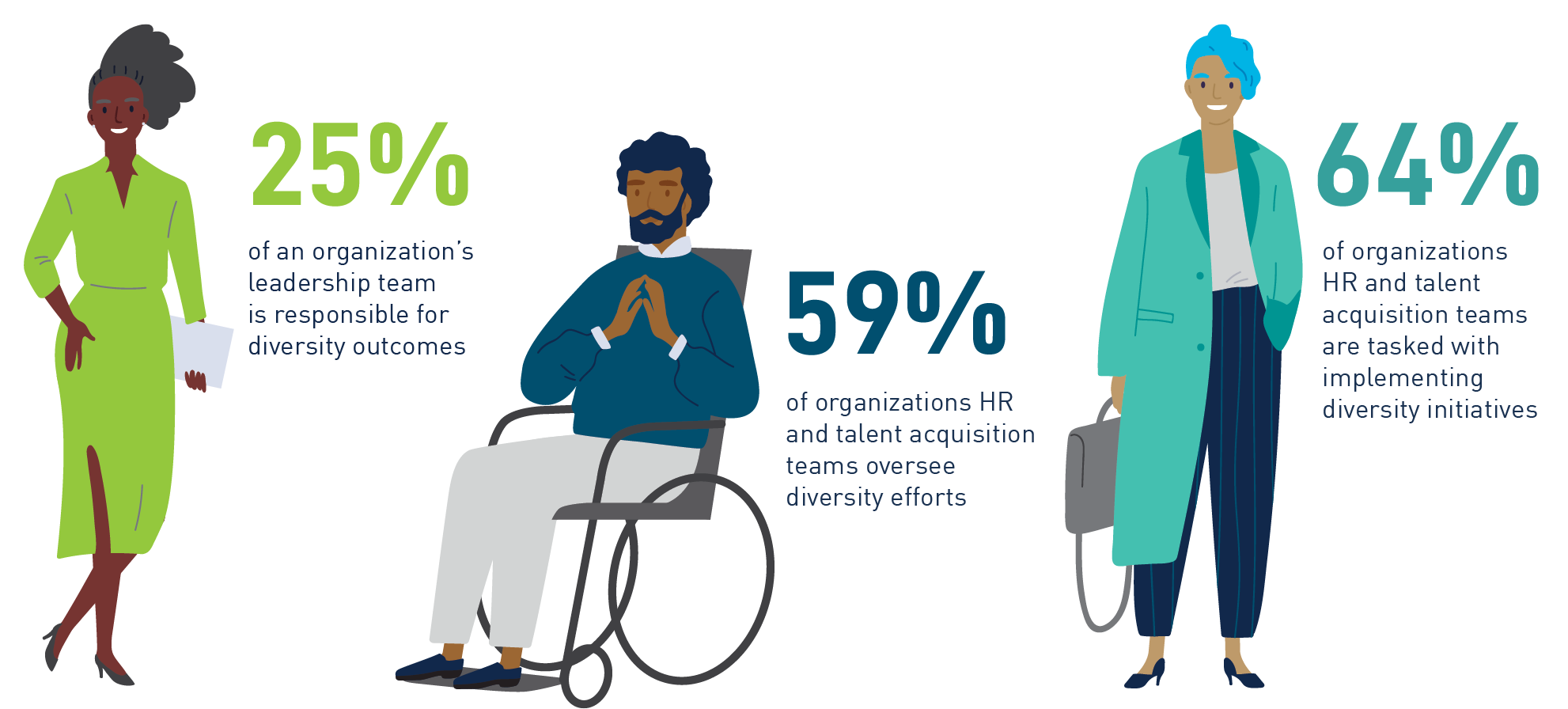
More than any other group or individual, talent acquisition and the broader HR organization are responsible for diversity and inclusion in the workplace. According to a Society for Human Resource Management (SHRM) survey, in 59% of organizations, HR and talent acquisition oversee diversity efforts and, at 64%, they’re tasked with implementing diversity initiatives.
Leadership
An organization’s leadership team is responsible for diversity outcomes at 25% of organizations, according to a Deloitte report. But, leadership must play a role in the DE&I initiatives at all organizations. In fact, having a C-suite member as the diversity and inclusion program leader is one of the biggest differentiators between organizations in which diversity is not considered a barrier to progression versus ones where it is, according to PwC’s data.
However, to be successful champions of diversity, leadership needs to be fully engaged—because an inclusive and equitable culture must be present from the top down. Notably, if time and other responsibilities that accompany their jobs make it difficult for executives to be fully engaged, organizations may want to reconsider having their C-suite remain heavily involved in their diversity efforts. In this case, you might consider appointing another individual (or individuals) who is more able to focus on the work and, as a result, bring about more change.
Diversity Committees
Not every organization has the resources to support a full-time diversity role. In fact, the larger the employer, the more likely it is to have dedicated diversity staff, according to Xpert HR. However, as SHRM found, smaller organizations may be able to aid diversity and inclusion programs by taking a cue from the 17% of employers that have an advisory group/committee comprised of volunteer staff members. This can actually be quite an effective approach, as employee sponsorship corresponds with lower levels of reported bias within an organization, according to Center for Talent Innovation research.
Identifying Gaps in the Maturity of Your DE&I Initiatives and Programs
When it comes to really progressing your organization’s DE&I program, the best place to start is by asking yourself where your organization stands today. That way, you can best identify where to place your initial efforts in order to create the greatest influence. Below, we outline the different stages of DE&I program maturity. Note that your organization may be at different levels in different areas.
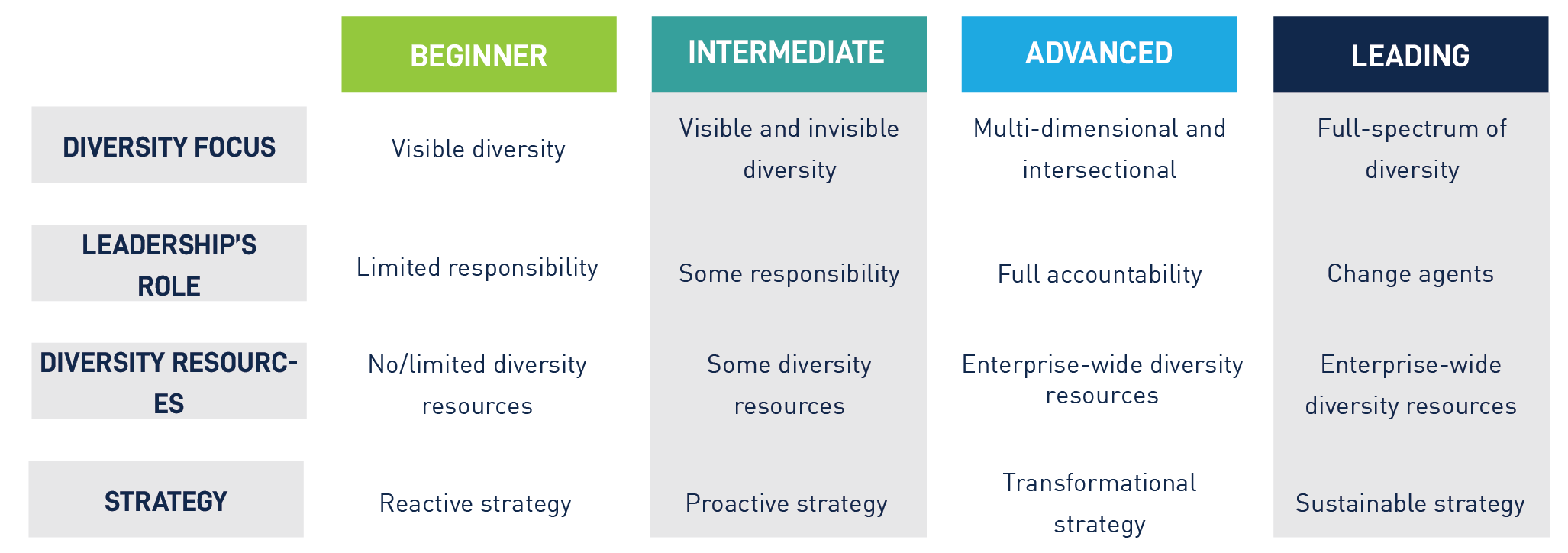
Beginner: Generally, employers at the beginner level of maturity tend to be more reactive rather than proactive; they may narrowly define workplace diversity, and leaders usually have limited involvement in driving DE&I forward within the organization.
Intermediate: Employers at the intermediate level typically focus on more purpose-driven DE&I initiatives, with leadership assuming a greater role in progressing DE&I in the workplace. At this level, the definition of diversity expands to include less-visible characteristics, like disability, religion, class, age, regionalism, sexual orientation and more. Additionally, at this stage, an employer may employ a dedicated staff and provide a budget for DE&I.
Advanced: Employers at the advanced stage focus on multi-dimensionality and intersectionality when thinking about diversity. In this situation, leaders practice inclusive leadership skills and are held accountable for creating a diverse and inclusive workplace. They also often have DE&I resources and budgets distributed throughout the organization to ensure organization-wide diversity.
Leading: Employers at this level take a sustainable approach to DE&I, in which leaders are expected to lead holistically and inclusively; be key DE&I initiatives change agents; and hold the organization accountable. In addition to their internal resources, they often have external DE&I advisory boards that guide them on leading practices.
Identifying your organization’s DE&I maturity level allows you to better measure your progress on key areas of workforce diversity, including communication, employee education, company culture, resource investment and the involvement of leadership. This will help guide your next steps toward creating a more diverse, equitable and inclusive workforce, as well as allow your organization to focus on interventions that are targeted and specific. Plus, in organizational environments facing a multiplicity of DE&I issues at once, the ability to pinpoint current state, plot out the desired state and craft the roadmap to get there is critical.
What is DE&I? The Role of Talent Acquisition
While the responsibility for DE&I is spread across an organization, talent acquisition still plays a major role. Recruiters, sourcers, hiring managers and HR leaders are powerhouse roles that must work together to find the right candidate for the job, while also demonstrating an organization’s commitment to DE&I from the company’s first interactions with employees.
As talent acquisition leaders, you also play a key role in bringing to life diversity and inclusion as values that are deeply embedded in an organization. More precisely, your team plays a particularly critical role by sourcing, engaging and eventually hiring candidates from underrepresented groups.
Does your organization have a talent pool of diverse candidates? Do your interviewing practices reduce unconscious bias? Do you have a strong reputation for being a diverse workplace? These are some of the critical questions that you and your teams should attempt to answer to deliver on the organization’s diversity agenda.
By understanding your role and performing it effectively, talent acquisition teams can work with leaders in other areas of the business to build a truly holistic DE&I program. Here, we discuss some of the tactics that talent acquisition can adopt to overcome diversity sourcing, selection and hiring challenges.
Championing Diversity
Once your talent acquisition team establishes awareness and accountability, members should become champions of diversity hiring; you have a tremendous opportunity to drive the diversity agenda by reinforcing the case for diversity hiring. For instance, engaged recruiters can champion diversity and make it an everyday dialogue with hiring managers. That’s because recruiters are responsible for ensuring that all candidates are treated fairly and equally in a process that removes bias. They’re also the first step in demonstrating how the organization appreciates and celebrates its diverse employees.
Diversity Sourcing
To ensure that your talent pool is representative of diverse candidates, source your candidates from a variety of talent channels. Clearly, you can’t rely on the same sources repeatedly when seeking out new candidates; focusing only on the sources that you know best can result in a talent pool of similar candidates and a lack of diversity.
Instead, seek out opportunities to source candidates from underrepresented backgrounds. For example, there are many online and offline groups dedicated to women in technology. This could be a great opportunity to meet and connect with high-caliber, female candidates directly—instead of waiting for them to find you through platforms like Indeed. And, the more initiative you take to find these channels, the more likely it is that your talent pools will be diverse.
What’s more, if you’re struggling to find diverse talent, reach out to employees from diverse backgrounds and encourage them to share your job ads with their networks; then, give them the tools they need to promote open roles within your organization. As a result, your employees and candidates will both feel that your company values their opinions and contributions, which is fantastic for team morale and engagement.
DE&I Initiatives: Building Inclusivity
Building an inclusive workplace is central to creating a workplace environment in which every employee feels valued. Granted, every organization is different, so the content and structure of an inclusion program needs to meet the conditions of your organization. To get you started, SHRM offers an inclusivity checklist for HR that provides a good place to start:
Make sure that company leaders understand that inclusion is about ensuring that everyone’s voice is heard, opinions are considered, and value to the team is evident.
Train managers to show that inclusivity is a core competency—and hold them accountable.
Form an inclusion council with genuine influence and power.
Value differences and create an environment in which people can feel comfortable bringing their authentic selves to work.
Identify the needs of underrepresented groups, and give them the necessary support and resources.
Provide workers with a safe space to voice their concerns.
Benchmark key aspects of your organization’s culture and understand the employee experience before making changes to promote inclusivity.
Remember that daily interactions are the most telling sign of whether your company has an inclusive culture.
Unconscious Bias & Candidate Selection
One of the key reasons companies lose out on diverse talent is unconscious bias, which can have detrimental effects on the diversity hiring process. The concept of unconscious bias or implicit bias was first introduced in 2006 as “the new science of unconscious mental processes that has a substantial bearing on discrimination law.”This challenged the longstanding idea that people are guided only by explicit beliefs and conscious intentions.
One example of unconscious bias is that a candidate’s last name—which implies their ethnic background—can adversely affect their chances of landing a job. Unfortunately, studies by Ghent University show that the last name appearing on a candidate’s résumé can reduce the possibility of receiving a call back by 25% in Germany; 29% in Sweden and the UK; and 50% in the U.S. Accordingly, to address unconscious biases, some companies mask candidate demographics while presenting them to the hiring team in order to shift the focus from ethnicity to experience and skills.
In another strategy highlighted by DiversityJobs, a large utility company in the U.S. moved away from the practice of long interviews with a few leaders and started exposing candidates to more interviewers in multiple, short interviews. This reduced the chance of a single, biased assessor significantly influencing a hiring decision. Additionally, the organization was also able to showcase a more diverse selection team to all new hires.
Diversity at Work: Converting Candidates From Underrepresented Groups Into Employees
However, winning over diverse candidates goes beyond just locating them and ensuring that they’re treated fairly during the hiring process. Rather, to win diverse talent, organizations should demonstrate the authenticity of their commitment to DE&I by leveraging their employer brand through career sites and social media channels, as well as by showing how diverse and inclusive they are through their employees and leadership.
Furthermore, talent acquisition can also play a role in reinforcing these messages by:
Adding a link to diversity and inclusion policies and practices in job advertisements and recruiters’ email signatures.
Minimizing adverse effects of recruitment discrimination by complementing recruiters with talent acquisition technologies like PeopleScout’s AffinixTM.
Ensuring job-related information is accessible to all groups. (For example, ensure your career site is accessible to those with visual impairments through design, alt text and screen readers; and ensure presentations and videos include subtitles or sign language.)
Scheduling interviews in locations that are accessible and convenient for all candidates, such as parking for people with disabilities; Braille script on elevators and signage; and female, male and gender-neutral restrooms.
Sharing relevant stories about a diverse set of employees in the organization and involving diverse employees and senior leaders in the interviewing process.
Respecting candidates’ gender identity. Because gender identity is internal, a person’s gender identity is not necessarily visible to others, so asking candidates what pronoun(s) they prefer to use in interviews and other communications can make a difference.
DE&I Initiatives: Talent Technology
The right talent acquisition technology can be a powerful tool for reaching your DE&I initiatives and goals. And, as you begin to recognize and fix disparities in hiring processes and work environments, data can be an important tool in determining the effectiveness of those efforts. No DE&I initiative can be successful unless it can be measured.
To that end, diversity dashboards—like those available in PeopleScout’s Affinix Analytics—can break down your hires by gender and ethnicity. Then, with that information, you can identify where the most diverse hires have been found. From there, you can focus on which recruitment strategies are most effective in bringing in candidates form underrepresented groups. And, once those initiatives are in place, you can track your success over time.
The goal of diversity, equity and inclusion in the workplace should be a central pillar in any organization’s journey. Embracing a multitude of viewpoints and cultures drives innovation; improves decision-making; increases employee productivity and retention; and leads to better-served employees—and, by extension, customers. While responsibility for diversity, equity and inclusion is shared across an organization, talent acquisition leaders have a significant influence.
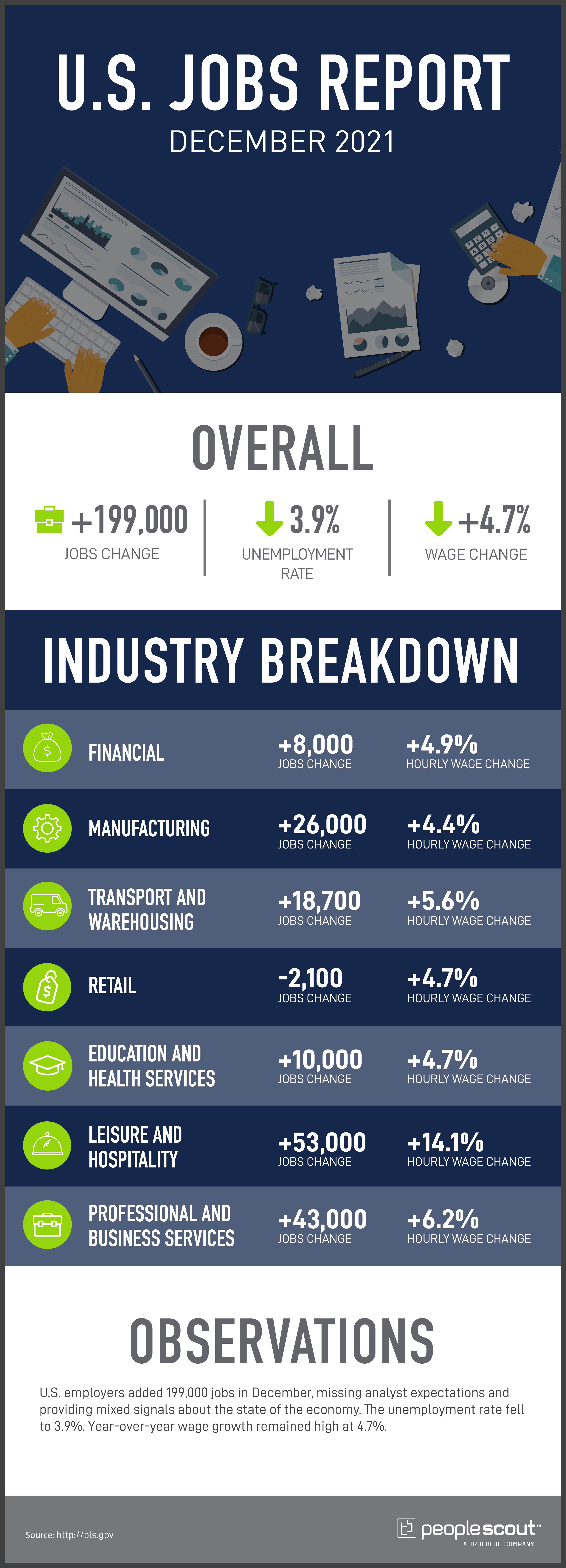
U.S. employers added 199,000 jobs in December, missing analyst expectations and providing mixed signals about the state of the economy. The unemployment rate fell to 3.9%. Year-over-year wage growth remained high at 4.7%.
The Numbers
199,000: The U.S. economy added 199,000 jobs in December.
3.9%: The unemployment rate fell to 3.9%.
4.7%: Wages rose 4.7% over the past year.
The Good
While the headline of 199,000 jobs added in December is disappointing, other numbers in December’s jobs report point to good news. The unemployment rate fell to 3.9% faster than the Federal Reserve had predicted. Additionally, the New York Times reports that the labor participation rate rose to 61.9% in November and December, the highest rate since the pandemic started.
Additionally, the U.S. economy added 6.4 million jobs in 2021, the highest yearly increase on record.
The Bad
As MarketWatch reports, December’s increase in employment was less than half of what analysts had projected. Experts say the lower numbers were caused, in part, by the tight job market. To compete for workers, employers have raised wages significantly over the past year, with year-over-year wage growth hitting 4.7% overall, though some sectors, like leisure and hospitality, have seen even larger increases. Because December’s numbers are based off the first two weeks of the month, before the latest COVID-19 surge began, the Omicron variant likely only had a small role in the month’s numbers.
The Unknown
Looking ahead to 2022, the Wall Street Journal reports that workers continue to quit their jobs at record rates, and experts predict a potential disruption caused by the surging Omicron cases followed by a strong year of job creation. Economists say that while businesses have gotten better at responding to waves of COVID-19 cases, Omicron has caused millions of sick workers to quarantine. The resulting labor shortage has already led to canceled flights and temporarily closed restaurants. However, as demonstrated by a rapid drop-off in cases in South Africa, Omicron is expected to cause only a short-term disruption.
After administering more than 30 million vaccines across the U.S., a healthcare company announced a company-wide vaccination policy requiring employees in clinical and corporate positions to be fully vaccinated against COVID-19 by the end of October 2021. The move was driven by health and safety concerns for employees, patients and customers, but the client knew it wouldn’t come to fruition without impact to their workforce.
Flexing our Process for the New Policy
Because the new policy stipulated that all new hires in impacted roles be vaccinated, the PeopleScout client engaged with us prior to the announcement to discuss their plans and get ahead of any impact to recruitment efforts. As their long-term RPO partner, we were uniquely positioned to help the healthcare company create a multi-faceted plan to communicate the vaccine mandate to candidates and adjust recruitment activities to ensure new hires are in compliance with the mandate.
Leveraging copy and communications from the company’s HR and legal teams, we updated all relevant job descriptions with a section on the vaccine mandate and deadlines. To provide an additional screening step, we added vaccine status questions to application forms for the relevant positions. If candidates indicated that they were not vaccinated or not willing to be vaccinated, they were automatically disqualified in most states.
Taking a Hands-on Approach to Reduce Candidate Drop Off
To mitigate the impact on the dropout rate at the top of the funnel, we followed up with every candidate who said “no” to ensure they had understood the questions and hadn’t answered in error. As a result of this extra effort, several candidates were requalified and put back into the running for employment with the healthcare company. Disposition codes were also used to indicate when candidates left the funnel due reasons related to the vaccine requirements. This helped the company gather data on how the policy was impacting recruitment outcomes.
Supporting the Accommodation Process
COVID-19 vaccine mandate information was added to the candidate communication sequence in the organization’s CRM, directing them to a website complete with FAQs. Throughout the screening and interview process, the PeopleScout team also fielded questions from candidates. Common queries were about how to apply for a reasonable accommodation for those who are unable to be vaccinated due to medical or religious reasons. While the internal legal team handled the review of all accommodation applications, the PeopleScout team did field questions about the accommodation process, freeing up the organization’s internal teams to focus on more strategic initiatives while boosting the candidate experience.
For successful candidates, we ensured all offer letters contained language about the vaccination requirement and followed up with candidates to address any final questions.
Now more than ever, an organization’s hiring strategy should be adaptable. Throughout the last two years, many employers have had to reimagine their recruitment processes. Due to the pandemic, organizations rapidly moved recruiting processes to virtual models, shifting in-person interviews to digital and transitioning traditional office roles to remote.
Today, as businesses bounce back and job openings are at record highs, employers need to hire top talent—and fast. And, just as a hybrid approach to in-person and remote work for employees has become the norm, so, too, will the need for a blended recruiting strategy that will optimize the candidate experience advantages of in-person, while also continuing to leverage the benefits of virtual.
So, in this article, we’ll walk through what a hybrid hiring strategy is, discuss the benefits of in-person versus virtual techniques and provide tips for how to create a hybrid hiring strategy that works for your organization.
What is a Hybrid Hiring Strategy?
Hybrid hiring—or hybrid recruiting—is a strategy that allows organizations to maximize the benefits of both in-person and virtual hiring techniques. Specifically, a hybrid approach allows employers to leverage the advantages of virtual recruiting where it makes sense, while simultaneously using strategic, in-person methods to add value to the candidate experience along the way.
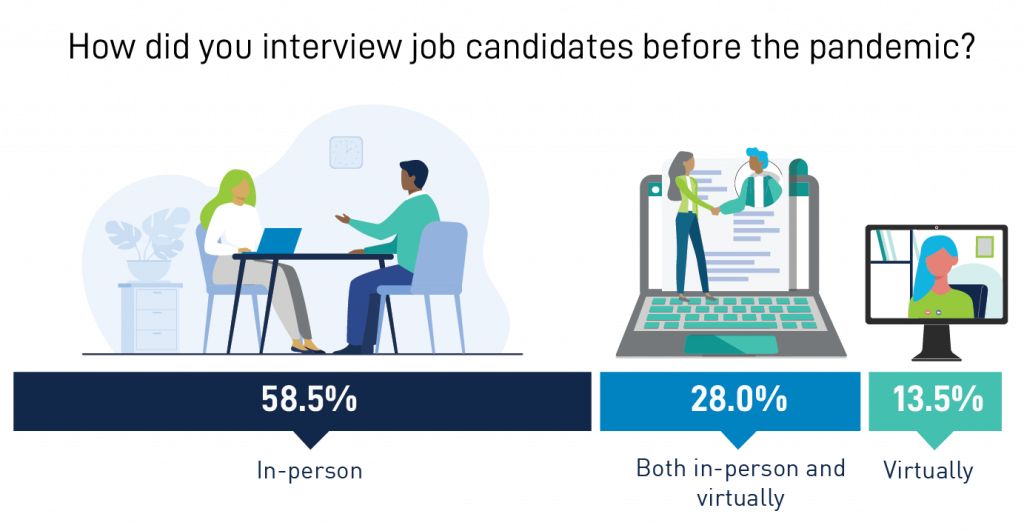
Granted, hybrid hiring isn’t new; many organizations employed a mix of virtual and in-person techniques prior to 2020. However, COVID-19 rapidly accelerated the need for safe, efficient hiring models, thereby leading to greater adoption of virtual strategies. Now, because employers have seen the advantages of virtual recruiting, the benefits of a hybrid model have become clear. Depending on the type of role you’re hiring for, having a strong hybrid hiring model in place makes it easy to recruit staff 100% virtually if and when it’s needed, or with a blended approach.
Source: Workest by Zenefits
Benefits of a Hybrid Hiring Strategy
Leveraging a hybrid hiring strategy means you get the best of both worlds. But, what does that entail? Here are some of the biggest benefits of both virtual and in-person hiring techniques—and how they’ll play out post-pandemic.
Benefits of Virtual Hiring Techniques
Reduced Cost & Greater Efficiency
When you remove the physical component of recruiting, you see a greatly improved speed-to-hire and an overall reduction in costs. For example, PeopleScout helped this retail client reduce time-to-hire by more than 20% by implementing a mobile-first, shortened application process. Plus, expenses that would normally be spent on hosting recruiting events—such as travel costs, venue fees and printed materials—suddenly drop to zero. Additionally, your employees save time by hosting events remotely and also reap the benefit of having more candidates in attendance.
Expanded Reach & Reduced Bias
With travel out of the equation and with remote job options in place, employers can then expand the geographies from which they source talent. This offers greater opportunities for candidates and also opens up the candidate pool to top talent who may not have been on your radar previously.
Virtual hiring also reduces the amount of hiring bias experienced during in-person interviews. As humans, we judge people on many things (unconsciously or not), including how a candidate may look. But, with virtual interviews, recruiters are able to focus less on a candidate’s appearance and more on what they have to say.
According to the American Psychological Association, when it comes to height, every inch counts—in fact, in the workplace, each inch above average may be worth $789 more per year. This is the kind of bias that can be eliminated with virtual interviewing techniques.
Overall Convenience
Virtual interviews and other virtual recruiting tactics are convenient for both candidates and recruiters alike. For example, candidates can schedule on-demand interviews at a time that is most convenient for them, and recruiters can watch those recordings at their own convenience. What’s more, through the use of artificial intelligence (AI) and automation, candidates can also self-schedule follow-up interviews, ask questions and receive real-time responses that would have previously taken much longer without the technology that has come from the rise of virtual.
Benefits of In-Person Hiring Techniques
Showcase Your Company Culture
One challenge of virtual recruiting is the ability to effectively showcase your company’s culture. While there are certainly ways to do so, nothing quite compares to experiencing how individuals in an organization interact with one another in-person. Especially for roles that are required to work in an in-person or office setting, providing a time to come in for an in-person interview or assessment can be a great way to show your candidate what it would really be like to work for your company on a day-to-day basis.
Human Touch
While AI and automated tools help with efficiency, improve candidate experience, and speed up the overall time-to-hire, today’s talent pool can also find benefits from a blended model. In fact, candidates today are feeling more confident, in general, and more comfortable negotiating their salary when meeting face-to-face. A phone call and video interview can get the candidate in the door, but an in-person conversation can seal the deal—especially when it comes to hiring senior talent who would really appreciate being brought in for the final stages of the interview process.
Source: Workest by Zenefits
Added Value
Furthermore, utilizing in-person techniques can also add value to the candidate experience overall. From office tours to final interviews, it’s difficult to recreate human touch and company culture completely virtually. To that end, where it makes sense, in-person meetings can help sell a candidate on why they should work for your organization, as opposed to the competition.
How to Recruit People Now: Balancing Your Post-Pandemic Hybrid Hiring Strategy
Your hybrid hiring strategy will likely depend on your organization’s needs and what your workforce will look like on the other side of the pandemic.
For example, if some or all of your teams will work entirely remotely, it would make the most logical sense to complete the entire recruiting process virtually. Inevitably, bringing the candidate in for an in-person interview or office tour would waste time and money, and would likely confuse the candidate and, therefore, lead to a poor candidate experience. Instead, recruiting for these roles completely virtually and providing opportunities for human interaction and culture along the way can help candidates feel like they know what it will be like to work remotely for your company.
“How do we show candidates our company culture when we can’t invite them to the office? We send personalized, handwritten cards to candidates before their start date (as well as some swag!). We want to give them a feeling of being really welcomed into the company—which is what we’re really about.”
Ewa Zajac, Recruiting Operations Manager at Zendesk
On the other hand, if some of your teams will be working both from home and from the office, a hybrid approach would be the best fit. Virtual options save a lot of time and money in the beginning stages of sourcing, screening and interviewing, and candidates will want the flexibility to complete those initial interviews and assessments from the comfort and convenience of their own homes.
Then, when it comes to final interviews with candidates you’re very excited about, bringing them in for an in-person interview can be the final step before extending an offer. The candidate will appreciate the time you’re investing to bring them in, and they’ll get a taste of what it will be like when they work in-person. This will be especially important for roles that will be primarily in the office or in which relocation is necessary.
In the end, hybrid hiring won’t be a one-size-fits-all strategy. Whether your organization opts to keep recruiting fully virtual or works in opportunities for in-person techniques, the candidate experience will need to remain at the forefront of any model. Think about what candidates will want and how the recruiting process will make the most sense for the role you’re trying to fill.
Talent pools are important. However, expanding your talent pool amid turbulent times can be difficult. As businesses navigate reopening and hiring amid the surge of the Delta variant of COVID-19, many are struggling to fill their open roles with the talent they need: According to a survey by Willis Towers Watson, 73% of companies are having difficulty attracting employees, and 70% expect that their current challenges to hire and keep workers will linger into 2022.
Notably, the same survey found that these hiring challenges are caused by a variety of different factors, which vary based on industry and position type. For example, for hospitality, restaurant, warehouse and distribution employees, postponing their return to work and collecting unemployment when it was offered was the most commonly cited reason for difficulties in attracting staff. And, even when those extended unemployment benefits ended, hiring did not surge. Meanwhile, virtual employees present challenges based on high wage expectations, and other professionals are holding out for companies with work-from-anywhere policies.
At the same time, millions of workers are also planning to change careers: Data released by Monster showed that 95% of workers surveyed said they were considering changing jobs, while 92% said they were willing to switch industries to do so. Therefore, if your organization is struggling to fill open positions, developing a program to attract and reskill workers who are changing careers could significantly expand your talent pool.
In this article, we’ll explain why people are choosing to change careers, share common skills you should look out for in your talent pool expansion, and provide suggestions for how to create a reskilling program that will work for your organization.
How the Talent Pool is Evolving: Why Are Workers Changing Careers?
As a result of the pandemic and the tragic losses that came with it, people were faced with a reminder that every day is not guaranteed. This realization caused many to rethink their life choices and shift to prioritize their health, loved ones, hobbies and the things they truly enjoy. For many, this included rethinking their career path and goals—including exploring job opportunities that they’re truly passionate about so that they could make every day count.
Source: Prudential
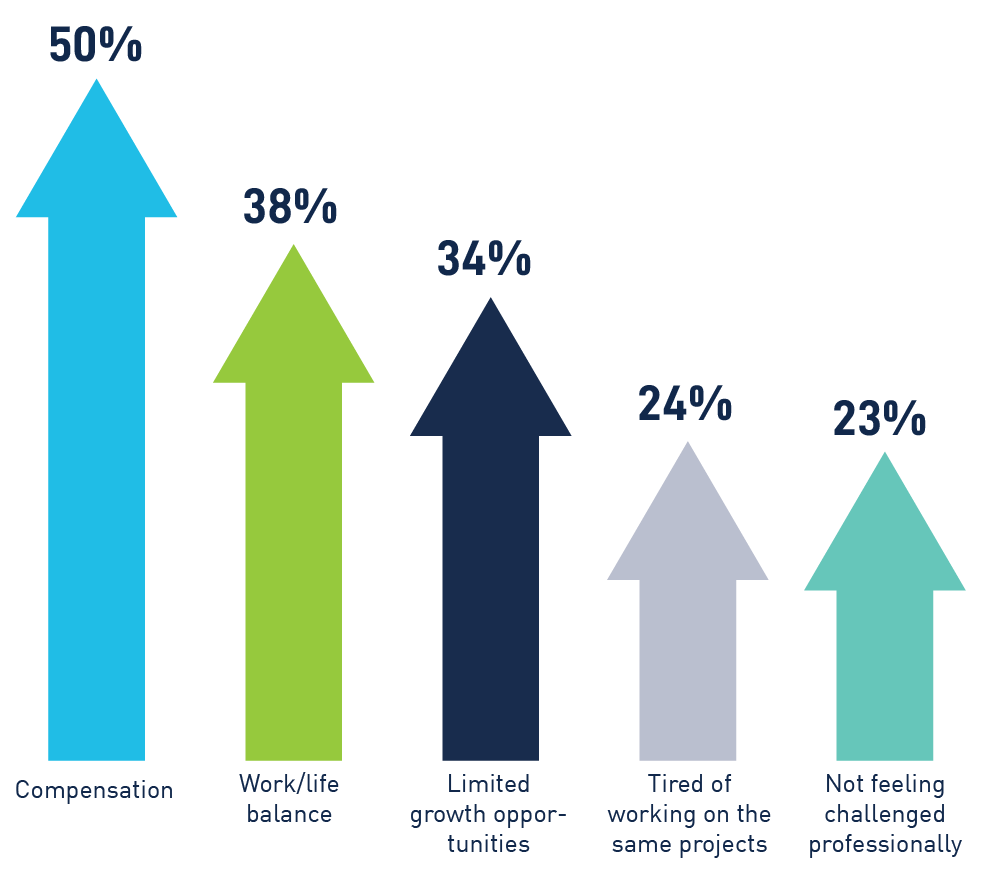
As an employer, you can capitalize on this migration by offering competitive employment packages complete with work/life balance and promoting those benefits via recruitment marketing techniques. More precisely, beyond compensation and flexible work arrangements, show candidates how you will challenge them and help them grow in their career.
Building a Talent Pool: Identifying Transferable Skills in Workers Changing Careers
Fortunately, you don’t need to start from scratch when hiring people who have chosen to change career paths. Instead, focus on attracting candidates who have strong transferable skills across industries.
Transferable skills, also known as “portable skills,” are qualities that can be transferred from one job to another. Transferable skills can be used to position your past experience when applying for a new job—especially if it’s in a different industry.
Furthermore, when you find candidates with certain transferrable skills, you won’t have to worry about training them on those. And, because many transferrable skills are soft skills, the candidate will be more malleable and will integrate well into a new job. In particular, they’ll be able to start working faster and will be more productive from the beginning. As a result, your training time can be focused on knowledge specific to your organization and the role.
Consider looking for these common transferrable skills when expanding your talent pool beyond your industry:
Problem-Solving
Workers who can demonstrate strong problem-solving skills in their previous roles will likely be able to apply that same mentality on the job at your organization. Specifically, employees with problem-solving skills will be able to identify problems, find what is causing the problem and seek out potential solutions—without you having to nudge them.
Teamwork
If the role you’re hiring for requires a lot of collaboration between team members, look for candidates who have experience working toward a common goal with others. Teamwork also encompasses several other skills, such as empathy, active listening and communication.
Communication
Communication is perhaps the most common transferable skill across all industries and job types because it’s required in almost every role. Workers with effective communication skills will be able to clearly share ideas and information both verbally and in writing; know when to ask questions; read body language; and communicate with others in a wide range of settings.
Leadership
While leadership skills are especially vital for leadership roles, such as managers and above, they’re also important for people to possess across the organization. That’s because leadership skills contribute to an employee’s ability to take the lead, get a team on the same page, delegate when needed and see a project through to completion.
Adaptability
Workers who are adaptable and flexible will be able to adjust as deadlines, teams or processes change. They’ll be able to pivot and learn new skills when needed, while also maintaining a positive attitude and ensuring goals are still met.
Technology Literacy
If you don’t want to teach your next hire the basics, look for candidates who have experience working with common business tools and technologies that will easily integrate into your business function. Similarly, if your organization is embracing more digital tools, it’s also important that your candidate is comfortable learning new technologies and software to improve efficiency and evolve with your organization.
While the list above highlights some key transferable skills, there are numerous others that might fit into your organization and the roles you’re looking to fill. Check out this list from FlexJobs for more.
Building a Reskilling Program for Workers Changing Careers
Attracting and hiring candidates with transferable skills will allow you to skip basic training on those qualities. However, because many of these hires will be coming from different industries, you’ll likely still need to provide some reskilling training for non-transferable skills to help them adjust to the new role.
Plus, employees expect training to come from employers. In a survey from Prudential, when asked who was most responsible for helping them develop the skills they need (aside from themselves), workers most often ranked employers as number one (33%). Likewise, when asked about the top ways that employers can support workers’ learning, workers most often said flexible schedules (78%), followed by employee-offered training (71%) and on-demand courses (71%).
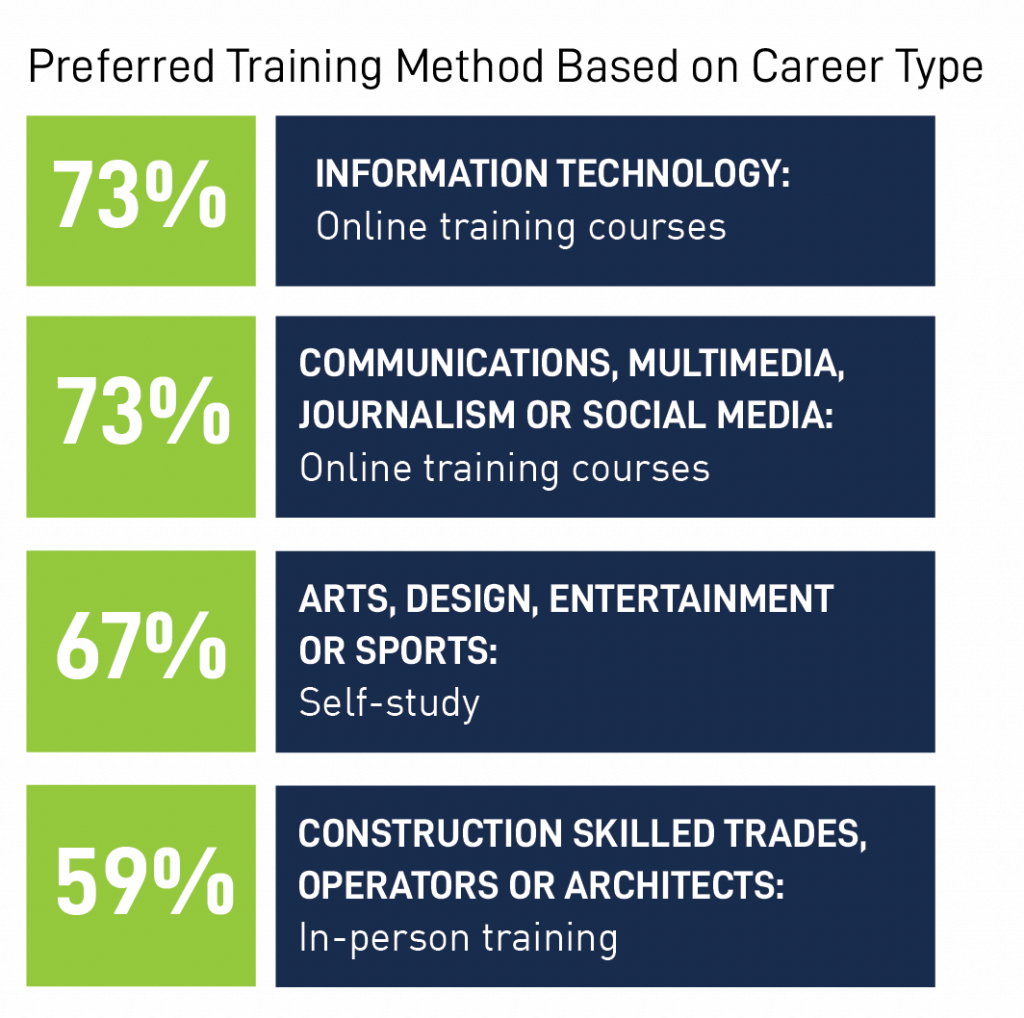
But, what type of training will work for your organization? Well, that depends on what types of roles you’re looking to fill. According to a report by CompTIA, candidates have different preferences regarding training methods based on the type of job they’re seeking.
Consider these three steps to help you build an effective reskilling program:
1. Identify Skills Gaps
When hiring candidates from different industries, there’s no doubt that they’ll require some additional skills training to be able to be successful in the new role. So, identify what those key skills are so you can build your training program from there. Then, rather than spending time on transferable skills you already know your candidate possesses, focus on skills unique to the job and your organization, instead.
2. Develop Specific Skills Trainings
Once you’ve identified the key areas that will need to be covered, develop trainings specific to those needs. These trainings should encompass a variety of reskilling methods to fit the individual needs of your new hires, including:
a. On-the-job training:Employees can take on small projects and learn from real-world experience.
b. Online learning:Virtual courses can be taken at any time and are a great way to speed up the learning process. They provide a lot of content in a digestible form that anyone can grasp.
c. Blended learning: Combine online courses with in-person training to maximize the benefits of both. Employees can engage with instructors in person and come equipped with knowledge and questions from online training.
d. Peer learning: Employees can learn from one another through collaboration and job shadowing. By observing what someone’s day looks like, employees will get a good sense of what will be expected of them day-to-day.
3. Measure Success
Leverage surveys, discussions, post-training assessments and candid feedback from trainees regarding the value they found from the reskilling trainings. Do they feel like they’ve learned something new? Do they have the knowledge to put new skills to use? Are they implementing what they’ve learned on the job? Once you find out, revaluate and improve your training program regularly based on the strengths and weaknesses that employees identify.
Marketing Your Reskilling Program to Your Expanded Talent Pool
Now that you’ve assessed the transferable skills to watch for and developed a reskilling program for workers who are changing careers, it’s important to make that program known to these workers: Utilize recruitment marketing techniques on social media to promote your roles and share that your organization is offering reskilling to employees from a variety of industries. In job ads, highlight the fact that hires will be provided with reskilling training to ensure they’re successful in their new role. This—in conjunction with a strong employment offer and benefits—will help your business stand out above others in the competitive search for top talent.
Global RPO: Hiring Engineers with Niche Skills for a Global Manufacturer in LATAM and Europe
A multinational automotive components manufacturer at the forefront of electric driving technology engaged PeopleScout for a full-cycle, multi-country Recruitment Process Outsourcing (RPO) solution. To continue supplying automotive technology for millions of the world’s cars, they needed to source the next generation of engineering talent across 54 locations in 21 countries in Latin America, Europe and Asia.
100%New Hires Completed Ahead of Schedule
80%Candidate Submissions Invited to Interview
1300Applications Received for 150 Positions
Scope & Scale
A global automotive parts manufacturer partnered with PeopleScout to initially source 150 hires across locations in Poland, Spain, Italy, Germany and India as well as facilities in Latin America. They needed a global RPO provider who could handle sourcing for niche engineering roles in English, Polish, Spanish, Italian and Hungarian languages.
Challenge
As the client expanded manufacturing into new regions to support their global growth agenda, they turned to PeopleScout to partner with their in-house talent acquisition teams to drive their transformational change projects.
Hiring in Latin America had stagnated as the region became the go-to region for automotive manufacturing. With major car brands moving more of their operations into the region, competition for talent became more and more steep.
Meanwhile in Europe, a shortage of niche engineering skills was impacting operations in Poland. The talent war between organizations in the area hiring for similar roles was driving up salary expectations, but the manufacturer lacked the labor market data to make informed decisions to adjust their strategy.
Solution
Analyzing Labor Markets on Two Continents
Our Client Delivery team started by undertaking labor market and workforce analytics in each region. We worked with the client’s HR and operational teams to support their workforce strategy through a competitive analysis which led to recommendations on salary bands for each role and level of experience. For roles in Poland, we helped them explore the possibility of relocating new hires in order to widen their talent pool to other parts of the country where there was more access to experienced engineering professionals.
“PeopleScout has done a great job to support the project, showing high commitment and flexibility in this difficult and changing environment. We’ve had great collaboration together.”
Senior Director of Engineering
Sourcing Passive Candidates with Personalized Videos
Meanwhile, our multilingual teams in Bristol and Krakow began sourcing experienced Product Application Engineers in Latin America and across multiple European locations, as well as Design & Test Engineers in Poland.
Not satisfied with one outreach, we employed a different approach with candidates who were unresponsive after the first communication. Our recruiters created and sent personalized videos introducing themselves and the opportunity to the candidate. This personal touch drove higher engagement and interest from talent who hadn’t engaged initially.
Over 80% of applicants were identified via passive sourcing, with the remaining candidates coming from ongoing advertising campaigns across job boards and social media.
Leveraging Social Media to Boost Employer Brand Awareness
Through our Social Network Awareness Package (SNAP) we identified the best social channels to reach the manufacturer’s audience and created tailored posts, including imagery and headlines. We used this social media content to boost awareness of the client’s employer brand among relevant groups and individuals based on their locations, professional details and interests. Throughout each campaign, we provided a reporting dashboard and analyzed engagement which helped shape recruitment marketing activity going forward.
Testing Technical Skills with a Custom Assessment Center
These highly specialized engineers, regardless of region, needed to have a good command of English as well as technical aptitude. We assessed for both by designing and executing a technical testing program. Our assessors administered these exams virtually, freeing up hiring managers to focus on running their operations.
Once offers were made, our team continued to keep in contact with successful candidates during their notice periods and onboarding. We notified the client’s HR team of any potential concerns of dropouts, working together to mitigate risks.
Results
In just 10 months, we filled 100% of the manufacturer’s niche engineering headcount, including all openings in Poland—two months ahead of schedule. Our team reviewed over 1,300 applications and screened over 250 candidates, supporting hiring managers with initial phone screens, technical assessments and post-offer communications.
The hiring managers were thrilled with the quality of the candidates they saw, with over 80% of candidates put forward by our team being invited to interview.
Following this success, we expanded our engagement with the client to their India operation, taking over from local third-party agencies. This Recruiter on-Demand solution will support volume hiring challenges and drive cost savings.
“PeopleScout did really great work across hard-to-fill disciplines. We had a fantastic sense of partnership across the whole project.”
Global Head of Talent Acquisition
At a Glance
COMPANY Global automotive manufacturer
INDUSTRY Manufacturing
PEOPLESCOUT SOLUTIONS Recruitment Process Outsourcing
ANNUAL HIRES 150+
LOCATIONS 21 countries in Latin America, Europe and Asia
At the onset of the COVID-19 pandemic, employers across all industries faced difficult personnel decisions as organizations were forced to reduce their workforces. Now, as a sense of normalcy and stability returns, employers find themselves facing a new challenge: The Great Resignation.
So, how can employers mitigate talent turnover and start building their workforces for the economic recovery? In this article, we’ll explain the Great Resignation, take an in-depth look at what job candidates are looking for from employers and provide retention strategies for navigating the current talent landscape.
What is the Great Resignation? The Great Resignation is Here and It’s Real
The great resignation is here and it’s real. In the wake of the pandemic, workers are expecting more from their employers. In particular, they expect employers to help alleviate—or at least acknowledge—their concerns, needs and special circumstances. Notably, organizations that failed to do so have suffered.
While every sector is experiencing an increase in resignations, the healthcare, retail, hospitality and restaurant industries have been hit the hardest. For some workers in these industries, it’s because these jobs have extensive interaction with the public and employees are worried about the risk to their health. Meanwhile, others—specifically those in lower-wage jobs—are pivoting to new careers that promise better pay, benefits or rewards during the Great Resignation.
The Great Resignation is a term coined by researcher Anthony Klotz of Texas A&M University. It refers to the massive, economy-wide increase in job turnover that is expected to accompany the end of COVID-era regulations, business closures and work-from-home mandates. According to Klotz, there is no single factor responsible for the Great Resignation. Rather, numerous motivators are inspiring employees to consider changing jobs.
For instance:
Many employees who would have otherwise already quit their jobs stuck with their positions for the duration of the pandemic. And, now that job security is less important, people in this group are preparing to finally make the change they’ve been postponing.
The stress of the pandemic contributed to higher levels of employee burnout, which is associated with higher turnover rates.
Time away from the workplace has led some people to consider rebalancing their priorities to focus more on their families or hobbies. Others are reevaluating how their careers align with their values and interests.
Millions of employees experienced the flexibility and convenience of remote work for the first time during the pandemic. As a result, many do not want to return to the office, even after the Great Resignation ends.
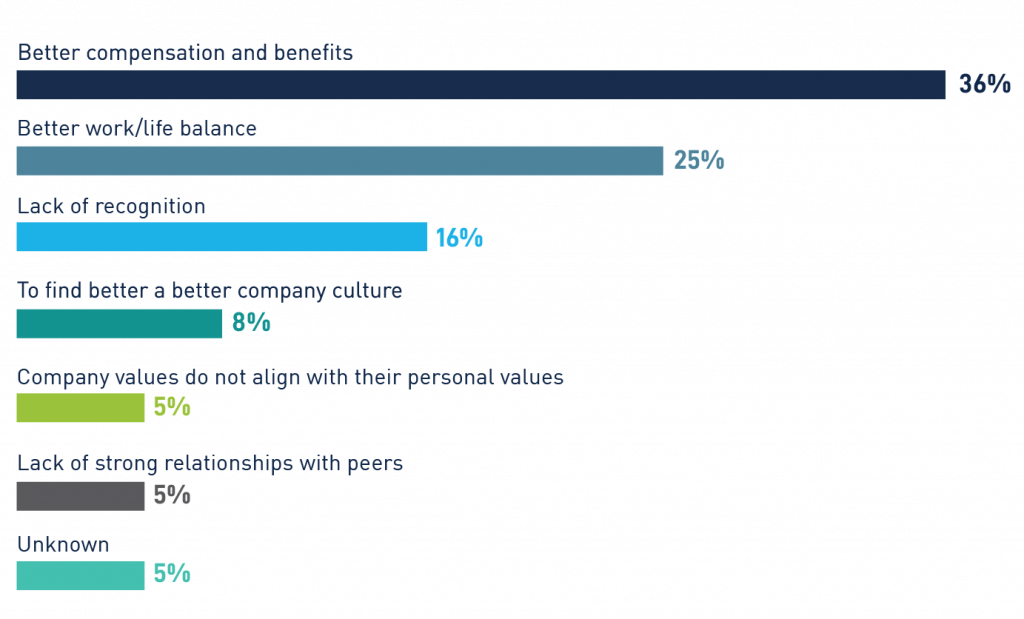
As you can see, the data shows that some workers are resigning based on how their employers treated them during the pandemic. Likewise, workers who may have been teetering on the edge of quitting pre-pandemic were also pushed to a breaking point with the additional stress brought on by COVID-19. And, although workers have always cared about their work environments, now there’s an entirely new dimension: An increased willingness to leave a role if dissatisfied. To that end, in the next section, we provide proactive strategies for retaining your workforce amid recovery.
Retaining Talent During the Great Resignation
With so much riding on successfully retaining talent right now, it’s particularly important for employers to get it right. As such, employers need to better understand what drives and sustains career satisfaction among their employees. Below, we outline strategies for gaining insights into your workforce that can help you better retain talent amid the Great Resignation.
Professional Development & Advancement Opportunities
“Career management continues to be a top driver of attraction, talent retention and sustainable engagement for most employees,” wrote Laurie Bienstock of Willis Tower Watson in an article published by HR Dive. “Effective career management at many organizations remains elusive. That’s one of the main reasons so many of today’s employees feel they need to leave to advance their careers.”
Fortunately, with an expanded skill set, not only will employees feel more empowered, but they’ll also have more tools to help your organization—a win-win scenario. When starting a professional development program, leverage the expertise you have within your organization.
For instance, senior employees can serve as mentors and help mentees sharpen both their soft skills and technical skills; gain practical knowledge, institutional insights and hands-on guidance; and become more valuable and versatile employees.
Reinforce Your Workplace Culture
As employers transition toward a hybrid workforce to address the challenges presented by the pandemic, fostering a workplace culture that is consistent both online and in-person has become more challenging. So, consider what matters most to the employees in your organization. If diversity and inclusion is a priority, remote work can provide the opportunity to bring in hires from around the world who otherwise would not be available. Similarly, if professional development and mentorship are most important, think about how online tools can be used to foster these types of relationships.
Employee Benefits & Wellbeing
The right employee benefits can be influential when workers are considering resignation. According to Prudential’s Road to Resiliency study, threequarters of all talent surveyed factor benefits into their decision regarding whether to stay or leave a job.
Namely, benefits can include items like insurance, equipment allowances or childcare, but can also cover things like gym memberships, reimbursements for phone bills or weekly coffee allowances. What’s more, benefits focused on employee wellbeing—such as providing therapy vouchers or additional paid time off (PTO) for leisure activities or to take care of themselves and their families—can go a long way to engender greater loyalty in your workforce
Conduct Stay Interviews
In some ways, “stay” interviews are similar to exit interviews; they’re both used to identify reasons employees like or dislike their job. They can also uncover concerns or issues that an employer may be unaware of.
However, stay interviews can actually be more valuable than exit interviews because they provide insights that employers can leverage to motivate and retain employees before they decide to leave. Questions to ask during a stay interview:
What keeps you working here?
What do you enjoy about your job?
What would cause you to leave the company?
What would you like to change about your job,
team or department?
If you could change one thing about the
company, what would it be?
Have you ever thought about leaving the
organization?
What motivates you at work?
Do you feel appreciated in your role?
Where do you see yourself in five years?
Employers can use the information gleaned from stay interviews to guide company policy; make improvements in corporate culture; and keep talent engaged and wanting to stay. COVID-19 has profoundly changed what employees expect from employers, and attributing record-high resignations simply to salary concerns misses the bigger trends in growing the workplace.
In truth, the pandemic has changed the way employees work and how they view their employer. Now, many workers are reflecting on what a quality workplace feels like—and many are willing to quit to find a better one. As a result, reversing the tide of resignations in your organization requires leaders who care; who engage their teams honestly; and who give workers a sense of purpose, inspiration and motivation to perform.
Retaining Talent Begins with Reevaulating
Whether that is achieved through flexible work policies, improving benefits, sharing common values or unique career opportunities, it’s essential that you listen to your employees’ needs, keep checking in on them, and work together to create a workplace that is not only able to serve you both, but one that can also make you both happy, as well.