The Multigenerational Workforce: Keeping Millennials Motivated

In this article, the third in our Multigenerational Workforce series, we’ll be focusing on millennials in the workplace, including what matters to them and how best to engage them.

By 2025, millennials will make up over half of the workforce, essentially replacing retiring Baby Boomers. They’ve already made a huge impact on the way we work, including leveraging technology to revolutionise productivity. As the older millennials enter their 40s, they’re moving into leadership roles and will have even more influence on how organizations operate into the future. So, how can employers harness the power of millennials to drive their businesses forward?

Who are Millennials?

Millennials, less commonly known as Generation Y, follow Gen X and precede Gen Z. Millennials were born between the early 1980s and the mid-1990s during the rise of personal computers and technology, making them tech-savvy. They’re the first generation to come of age in the new millennium, hence the name millennials. They are also known to be values-driven.

Workers from this generation are bound together through their shared experience of financial challenges, including the 2008 Great Recession, which caused a 19% unemployment rate and massive student loan debt among millennials. As a result, members of this generation are more likely to find themselves underemployed or self-employed.

Perceptions and Misperceptions

This generation have been characterized as lazy and narcissistic, labelled as “Generation Me.” Other common perceptions include being easily bored and hopping from job to job rather than staying with one employer. However, this could be due to the anxiety caused from the global financial crash.

Despite these stereotypes, millennials have been described as self-sufficient, solving their own issues and teaching themselves through the internet rather than relying on others for help. They are also known to be confident, curious and open-minded.

What Matters to Millennials in the Workplace?

Digital & Tech Skills

Having been the first generation to grow up in a digital world, millennials have widespread experience of the development of technology, being both the “pioneers and the guinea pigs”.

This has affected the way that they communicate, with 41% of millennials choosing to communicate electronically instead of face-to-face according to a study by PwC. However, they’re also the last generation to have grown up in a world without the internet in every household.

When considering a job, 59% of millennials claim that technology in the workplace is an important factor. Employers are responding to this by encouraging professional use of social media at work and introducing smartphones as an employee benefit.

Mission and Purpose

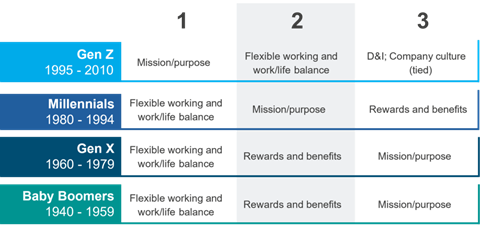
Millennials thrive in a workplace that is mission-driven, keeping them motivated and inspired. In our recent report, Inside the Candidate Experience, we found that mission and purpose were the second most important factor for millennials when considering a new job. Those who work for companies with this as a priority feel more accomplished. Millennials want to share their employer’s goals and values in order to feel they are contributing to the world.

Collaboration

The move to a more collaborative working environment has been driven by millennials through the use of technology as it’s become more sophisticated. A collaborative environment allows workers to speak their ideas freely and feel a sense of belonging as part of a team. One way that employers are emphasizing collaboration is through mentorship programs, which have been proven to increase the happiness of workers and their productivity.

How Do You Engage Millennials at Work?

As millennials slowly take over as the majority of the workforce, employers must learn strategies to keep them motivated and feeling valued.

1. Be Open and Transparent

Millennials want openness and transparency from their leaders, ensuring their confidence through factual information that can be validated.

Keep millennials productive by creating clear targets are regular opportunities for feedback and praise. In fact, according to the same PwC study, 51% of this demographic believe that frequent or continuous feedback is a must on the job, making up a huge part of what keeps them motivated and engaged in their work.

2. Embrace Teamwork

To manage a multigenerational workforce, leaders must recognize that each generation may need different methods of management. Among millennials, 74% expressed that they are as happy working alongside other generations as with their own. So, it’s unsurprising to find millennials now managing older workers.

However, 34% of millennials felt that their personal drive could be perceived as intimidating to other generations. Effective programs that encourage interactions between different generations are necessary to overcome these misperceptions. For example, millennials thrive in opportunities such as “reverse mentoring,” in which they are able to learn from and teach skills to older workers.

3. Invest in Employee Development

Millennials look at their work as a means to learn and develop, which may be the greatest differentiator between them and all other generations. Indeed, a whopping 87% of millennials say that growth and development opportunities are important to them in a job, compared to just 69% of non-millennials. Offering opportunities to develop technology skills and interpersonal skills will not only help you retain millennial employees, it will help you ensure this important segment of your workforce is ready to step into leadership roles.

4. Trust Them

While millennials want to be supported through feedback and praise, they also want the freedom to “be their own boss.” Flexibility is important to millennials in the workplace.They’ll happily put in the long hours if they believe their work has a purpose, but those hours may not be during the traditional 9-to-5.

Millennials believe that success should be evaluated through productivity, rather than the number of hours they are seen in an office. If they meet the deadlines you set, don’t be concerned about the hours they clock in and out. Focus on creating a flexible work culture to maximize millennial engagement, allowing employees to have more control over their working hours and location.

5. Lead with Your Values

Millennials are searching for more than “just a job” and want to achieve something worthwhile. Akin to Gen Z, millennials believe that companies and their leadership should be contributing positively to society. Strong corporate ethics will encourage loyalty among millennials.

A report from Deloitte found that 54% of millennials research a brand’s environmental impact and polices before accepting a job offer. To keep up with today’s candidates, it’s vital that organizations have updated employer value propositions (EVP) showcase the companies intentions to address social and environmental concerns.

In our multigenerational workplace, each generation will shape the world of work in their own way, and each will need different things from their working lives. Millennials bring commitment and collaboration to the workplace. In return, they want opportunities to grow and collaborate. Organizations that can effectively empower millennials to provide ethical leadership hold key to keeping them engaged.

Find out our top 10 predictions for what we think the working world will look like in 2030 and the best practices to prepare for the future in our Destination 2030 report.

Future of Work

Destination 2030: 10 Predictions for What’s NEXT in the World of Work

[On-Demand] Ready-to-Go RPO: Introducing PeopleScout Accelerate 

[On-Demand] Ready-To-Go RPO: Introducing PeopleScout Accelerate

Unpredictable hiring peaks. Talent gaps. Lack of insight. We know organizations are struggling to hire talent and stay agile while facing these challenges in today’s tumultuous market. 

That’s why we’ve developed PeopleScout Accelerate—to optimize your recruitment funnel, enhance your candidate experience, maximize ROI and ensure your workforce success—now and into the future.

PeopleScout Accelerate is a tech-powered, ready-to-go recruitment process outsourcing (RPO) solution that combines PeopleScout’s deep recruitment expertise and a pre-configured Affinix® talent acquisition technology suite—implemented in just two weeks.

In this Talking Talent webinar, PeopleScout Senior Vice President of Business Development Jessie McGowan and Vice President of Global Product and Implementation, Mark Fita, take a deep dive into what PeopleScout Accelerate can do for you. Jessie and Mark dig into how you can leverage PeopleScout Accelerate, specific use cases and its benefits, including:

  • Faster Time-to-Value
    Accelerate your ROI. Amplify your agility. This stress-free RPO engagement is ready to deliver the right talent in just two weeks.

  • A Recruitment Experience Your Candidates Will Love
    A pre-configured Affinix total talent suite powers a modern, consumer-like journey that candidates have come to expect.

  • Recruitment Experts on Your Side
    With over 30 years of industry expertise, we provide know-how and market insights to augment your team and bring your talent acquisition program to the next level.

Ready-to-Go RPO: Introducing PeopleScout Accelerate is available on-demand now.

The London Borough of Hounslow: A Collaborative Partnership Increased Their Offer Acceptance Rate to 87%

The London Borough of Hounslow: A Collaborative Partnership Increased Their Offer Acceptance Rate to 87%

The London Borough of Hounslow: A Collaborative Partnership Increased Their Offer Acceptance Rate to 87%

The London Borough of Hounslow needed to source candidates that shared their values and vision as part of delivering their ambitions for a new Corporate Plan. They partnered with PeopleScout for RPO to help build new high performing teams from diverse backgrounds.

87 % Acceptance Rate
65 % of New Hires Identify as a Person of Colour
39 % Boost to Social Media Engagement

Situation

In July 2022, the Cabinet of the United Kingdom approved a new Corporate Plan and the first version of a new Delivery Plan for the London Borough of Hounslow. The Delivery Plan sets out the first set of programs to enable the Council to deliver its ambitions over the term of the new administration. This was large-scale, initially incorporating 19 programs of work, with more to come in future iterations of the plan. To make this happen, they required a high-quality workforce to be execute on their ambitions.

Hounslow were looking for a recruitment partner to develop and deliver an innovative and high-quality recruitment campaign that would enable them to recruit across a range of roles in the corporate Project Management Office (PMO) and the Service Design and Transformation team, as well as other roles that were vital to program delivery. It was critical that candidates aligned with the Council’s values and that the campaign reached those with diverse backgrounds and experiences from local communities and beyond.

Hounslow didn’t have the internal capacity or market knowledge to do this on their own. However, previous outsourcing interactions had been with agencies with a very transactional relationship. Hounslow felt this didn’t meet their needs, so they partnered with PeopleScout for a consultative approach, utilizing RPO for the very first time.

Solution

In winning a 12-month award with the Council, our initial focus was on six key job profiles, hiring between 35 and 40 individuals. It was imperative for Hounslow to build a team with the right skills, experience and ambition to deliver the Corporate Plan.

Due to our initial success, we will continue to support Hounslow’s recruitment needs for another 12 months under the award.

A Consultative Approach

Our dedicated and skilled senior recruiters acted as brand ambassadors and became an extension of the in-house team, optimizing and managing Hounslow’s recruitment process from attraction to offer. We managed each position in its entirety, from briefing through to verbal offer acceptance, including creating a sourcing and attraction plan for each role profile.

Keeping Candidates Engaged

Historically, the public sector has struggled to engage candidates. We utilized many touchpoints to improve engagement and retention rates throughout the candidate journey. Our dedicated recruitment marketer focused on creating engaging copy and provided recommendations on the best supplementary media options for the target audiences. This included a sourcing-led service, in which the focus was on brand awareness, targeting candidates within niche roles. This sourcing approach gained an engagement rate of 39% on LinkedIn.

Our recruitment marketing strategy included a social media attraction campaign to further increase Hounslow’s brand in the market. Social content included showcasing projects and testimonials from current employees. We also built a a landing page, for which we worked with Hounslow to understand and showcase their employer value proposition to boost talent attraction. This helped to increase brand awareness, bringing in higher quality candidates.

On top of these attraction efforts, we directly sourced passive candidates to raise Hounslow’s profile in the market and increase diversity within the talent pools.

“The London Borough of Hounslow has shown through their recruitment process that they are keen to remove unconscious bias and attract a diverse pool of candidates.”

Candidate feedback

Utilizing Technology

As part of the project, we leveraged our tech stack to enable better data capturing, to make better data drive decisions, to track and monitor their DE&I agenda and to provide a better overall candidate journey.

Throughout the project, we gathered market feedback and tracked hiring metrics, presenting data through bespoke dashboards to guide hiring decisions and educate. Hounslow received weekly reports from us, including regular analysis of market insights, salary benchmarks and candidate feedback.

Results

Our consultative approach to hiring and tailored strategies for each role resulted in:

  • An 87% offer acceptance rate.
  • An enhanced candidate and hiring manager experience, through a consultative approach.
  • Increased diversity within roles filled, with over 65% of candidates hired identifying as non-white.
  • 2:1 to interview-to-hire, exceeding the average of 3:1.
  • Increased social media engagement to 39%.

We have become an embedded and trusted partner to Hounslow, due to our effective articulation of their brand story, ambitions, and values to their target audience.

“PeopleScout ensured that communication and planning were at the forefront. What really set them aside is the time they spent listening and understanding what the roles were and what type of people we wanted.

The end result is that we trusted PeopleScout’s shortlisted candidates. The Hounslow Service Design team is now full of talented people with the mindset and values we share as an organization.”

Mike Burch, Head of Service Design and Transformation

“The collaborative approach was key. PeopleScout took the time to fully understand our requirements and source quality candidates. We now have fantastic teams in place delivering great value to the organization and residents of Hounslow.”

Kieron McQuade, Head of PMO

At a Glance

  • COMPANY
    The London Borough of Hounslow
  • INDUSTRY
    Government & Public Sector
  • PEOPLESCOUT SOLUTIONS
    Recruitment Process Outsourcing, Talent Advisory
  • ABOUT BOROUGH OF HOUNSLOW
    The London Borough of Hounslow is an area of West London, England, governed by Hounslow London Borough Council.

The Recruitment Handbook for Energy & Utilities

The Recruitment Handbook for Energy & Utilities

The energy and utilities industry is undergoing a massive transition as providers move to green and renewable energy sources and adjust to changing energy use patterns across the globe.

This means the sector is facing a unique set of talent challenges. In many areas of the globe, energy job growth is outpacing the rest of the economy. At the same time, the workforce is aging, creating a massive talent gap. In fact, according to McKinsey, the massive growth in solar and wind projects expected by 2030 will make it almost impossible to staff these projects with qualified development and construction employees as well as operations and maintenance workers.

Now, talent leaders need to think big—not just to attract more and younger workers, but to reskill workers in the shrinking fossil fuels industry and plan for the future.

In this handbook, you’ll learn:

  • Global trends driving the need for energy and utilities talent
  • Strategies for overcoming challenges in your energy and utilities hiring programs
  • How partnering with an RPO provider can help

The Recruitment Handbook for Travel and Hospitality

The Recruitment Handbook for Travel and Hospitality

5 Strategies for Recruiting the Best Travel and Hospitality Talent Now and into the Future

Through the job market volatility that has defined the hiring market for the past three years, the travel and hospitality industry saw some of the biggest impacts worldwide, and the reverberations and recovery are still shaping the industry years later.

While many industries have recovered the jobs lost in 2020, hospitality lags behind. While people are traveling again, the industry faces a new set of talent challenges, from a talent exodus to shifting traveler expectations. Now, employers have the opportunity to reshape their talent programs for the world of travel.

In this handbook, you’ll learn:

  • Global trends driving the need for travel and hospitality talent
  • Strategies for overcoming challenges in your travel and hospitality hiring programs
  • How partnering with an RPO provider can help

ESG and Life Science Recruitment: Why ESG Initiatives Will Make Your Competition Green With Envy  

A plethora of social, economic and environmental impacts are contributing to the emerging global “polycrisis.” Beyond the pandemic, the future impacts of climate change, biodiversity loss, pollution and overexertion of natural resources will affect global health in the long term. This will impact the work of life science organizations as climate change is increasingly linked to diseases like cancer, diabetes and heart disease. Plus, the life science industry is among the largest carbon emitters, with biotech and pharma as the leading contributors. It’s no surprise that life science companies are focusing on Environmental, Social and Governance (ESG) initiatives. For talent acquisition leaders, this poses unique challenges and opportunities when it comes to life science recruitment. 

In this article, we review the industry’s impacts on the environment, how those impacts affect life science recruitment, and how a green EVP and employer brand can be leveraged as a critical differentiator in your ability to attract talent.  

Life Science’s Impacts on the Environment 

The average carbon footprint of one life scientist ranges from an estimate of four to 15 tons of CO2 per year. This doesn’t even include the use of consumables, chemicals, production resources, equipment, transportation, energy, and construction and building maintenance materials. There’s no denying that the entire industry’s workforce footprint is quite significant. 

Moreover, pharmaceutical production is highly water-intense, and waste is poorly managed with only nine out of 118 pharmaceuticals removing their waste sustainably during the treatment process. Approximately 4,000 active pharmaceutical ingredients (APIs) are administered worldwide in prescription and over-the-counter medication as well as therapeutic and veterinary drugs. Residues from these drugs are released into the environment, contaminating the soil, rivers and lakes. With drug waste polluting the environment, the Global Leaders Group has created a call to action for all countries to improve measures for the management and disposal of antimicrobial-containing waste, declaring it as a “major threat to public health.” 

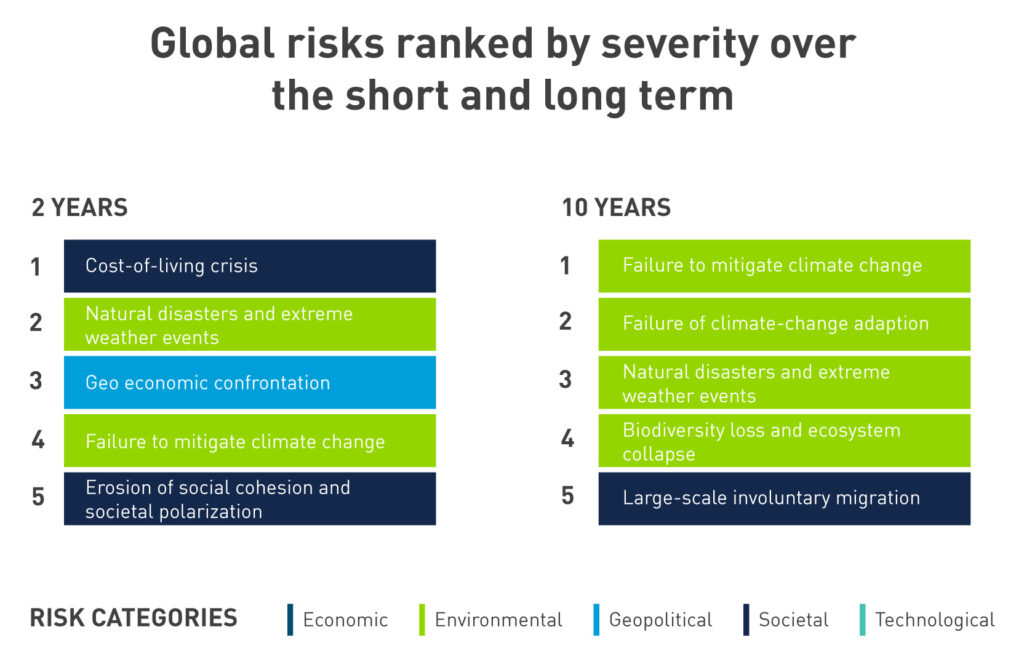
Four out of the top five (80%) global risks forecasted for the next decade are related to global health and climate change. The opportunities created by the industry to improve their environmental impact through ESG initiatives are huge.  

(Source: World Economic Forum, The Global Risks Report 2023) 

Gen Z and Millennials Care About ESG Initiatives

By 2029, Gen Z and millennials will account for 72% of the world’s workforce. This workforce has placed greater importance on ESG issues than previous generations. Considering the industry’s impact on the environment and the global force of this growing talent, millennials and Gen Z will keep the life science industry on its toes. To stay on top, it’s crucial that life science recruitment teams and hiring managers understand what this workforce wants, what they value and how these components contribute to their employment decisions. 

Around the world, young scientists and environmentalists are stressing the need for organizations to radically reduce their carbon emissions. They are tired of politics influencing scientific decisions, slow global engagement and action, and “poor public communication concerning the state of our understanding of climate change.” 

As this talent seeks purpose in their careers, they prefer to work for employers that have set actionable ESG initiatives towards improving their sustainability efforts. Organizations with ESG practices and policies show top talent that they are purpose-driven and progressive, which is a top consideration for this younger STEM-based workforce when applying and working for your company.  

According to a study by Swytch, nearly 70% of Gen Z and millennial respondents say that a strong sustainability plan would affect their decision to stay with a company long term. About 30% of respondents report that they have left a company due to its lack of a corporate sustainability agenda with over 11% doing so more than once. Additionally, a 2023 report by KPMG UK showed that ESG initiatives are influencing employment decisions for almost 50% of UK employees, with millennials and younger workers driving the growing trend of “climate quitting” in search of more environmentally friendly jobs. 

Employers must understand that candidate attraction is more than high salaries and fancy titles. This workforce wants leaders to fearlessly and publicly take a stance on their ESG initiatives and to make it a part of the workplace culture. Failure to do so will make it difficult to attain top talent, further adding to current life science recruitment challenges due to workforce shortages and widening skills gaps. 

Intertwining Your ESG Initiatives into Your EVP and Employer Brand Strategy

With no time to waste, life science organizations need to invest in a “green” employer value proposition (EVP) and employer brand strategy.  

“Today’s labor market wants to join companies that make a difference in a real way.”

Cynthia Burkhardt, Global Head of Talent Acquisition, Kimberly-Clark 

With Gen Z and millennials viewing social and environmental responsibilities as a key differentiator when considering where to work, it’s no surprise that an employer’s ESG initiatives have become a crucial component of the life science recruitment process. Whether your organization is already incorporating sustainable practices into your operations and mitigating risks to climate change or planning to do so, this is the opportunity to showcase that. Here are steps you can take that will appeal to your current and future workforce: 

1. Define Your ESG Voice 

Sustainability buzzwords are not enough, and top talent isn’t buying it. In fact, the European Commission’s National & Consumer Protection survey found that more than 42% of online corporate “green” claims were exaggerated, false or misleading. With “greenwashing” or “green-laundering” on the rise, employers need to establish ways to gain the trust of Gen Z and millennials. Your voice must showcase your purpose and intent. For example, using keywords like “zero discharge” and “risk mitigation,” rather than vague and misleading terminology such as “eco-friendly” or “sustainable,” will have candidates viewing you as more honest and authentic than the competition. 

“Sustainability plays a big role for me. An employer that is supposedly committed to it, but hardly knows what to do with the topic behind the scenes, has no future for me.”

Gen Z respondent from Austria 

2. Communicate Your Mission 

Build your internal and external employer brand messaging around the organization’s ESG initiatives such as corporate sustainability efforts and climate change initiatives. Keep in mind that the internal launch of an EVP and employer branding platform plays a critical part in laying the foundation for the success of the external launch. Bring your EVP to life through transparency and stakeholder alignment. Your employer brand message must be aspirational, future-focused and agile enough to sustain any changes that may come.  

3. Weave ESG Initiatives into Your Life Science Recruitment Marketing Materials 

Incorporate your ESG-centric mission and values into your career site and explain how those objectives are part of the organization’s DNA. On social media and other attraction channels, feature content that is relevant to topics like green training and development, environmental advocacy, waste minimization and corporate reduction of CO2 emissions to attract a wider variety of STEM-related talent. 

4. Showcase Your Investment and Metrics 

Remember that acting on your ESG initiatives is more than providing donations or partaking in “volunteer hours” that gain you a gold star. Let candidates know how much landfill waste you’ve reduced through your recycling program or that you’ve reduced your carbon footprint by 10%. Organizations that actively monitor their social and environmental impacts yield greater candidate attraction and positive impacts to their triple bottom line.  

5. Highlight Employee and Leadership Involvement 

Leverage your employees’ passions, concerns and ideas as a compelling way to address the organization’s initiatives. You can take the output from this to generate recruitment marketing materials, such as employee testimonials, quotes and even videos of leadership involvement or team building initiatives. For candidates, this effort exemplifies a company culture that genuinely wants to make an impact.  

6. Green Up the Candidate Experience 

Alignment of values is top priority for today’s candidates. However, it can be difficult for them to determine if a potential employer’s ethics align with theirs. To improve candidate experience, incorporate ESG initiatives into your job descriptions. For example, call attention to how the role will help achieve sustainability initiatives and feature any employee green benefits like locally sourced perks or green travel packages.  

Most importantly, make sure your recruiters and hiring team are aware of your green values. According to HRD Australia, often times the hiring team is not well-informed on what the company is doing in these areas. A life science recruitment team that is aligned with the organization’s ESG initiatives will ensure smooth communication and a good first impression with potential candidates. 

Can You Keep Up? 

With Gen Z and millennials shaping the future of work, employers cannot afford to trail behind the curve when it comes to ESG. Additionally, as early-career candidates and graduates are a top source for talent in the life science industry, organizations that do not have visible and measurable ESG metrics risk alienating this top talent. Focus on incorporating your ESG initiatives into your organization’s EVP, tweak your employer brand messaging to reflect what your workforce wants.

The Recruitment Handbook for Pharmaceuticals & Life Science

The Recruitment Handbook for Pharmaceuticals & Life Science

From increased adoption of technology in scientific research to the growing demand for innovation in pharmaceuticals and medical diagnostics, the global life science industry is changing rapidly, requiring recruitment teams to be agile to meet demand.  

With 87% of life science executives indicating that they’re experiencing skill gaps and expect to experience more within a few years, life science organizations must invest in better talent acquisition strategies to future-proof their workforce. 

In this ebook, we explore leading industry developments that are transforming the life science workforce: 

  • How demand for tech talent is reshaping the industry 
  • How innovation in medical research and patient care are creating skills gaps 
  • How the global push for sustainability and climate change initiatives is impacting the workforce 

Plus, learn how an RPO partner can help your life science organization rethink and remodel current recruitment strategies to overcome talent acquisition challenges.  

Digital Talent Demands: A Guide for Talent Leaders

The demand for skilled tech and digital talent is growing at an unprecedented rate in response to the emergence of new technologies, making the competition for talent as tight as ever, with both tech and non-tech companies vying for the same qualified candidates. For the tech sector, it’s a time of transformation. For non-tech organizations, it’s a golden opportunity to fill their technical skills gaps. But for any employer looking to attract top digital talent, it is essential to first understand what candidates are looking for in a new employer.  

In this article, we explore the opportunity for non-tech organizations and offer insights into what tech and digital professionals are looking for in a new employer.  

Plenty of Demand Despite Tech Sector Shifts 

The tumultuous labor market and recent economic landscape have been a rollercoaster for all HR leaders, but those in the tech sector have experienced particularly high highs and low lows. Recent layoffs at tech companies are being categorized as a “course correction” by many publications, and it seems the “growth-at-all-costs” attitude has finally caught up with tech organizations. Over 160,000 professionals were laid off in 2022 according to Layoffs.fyi, with additional cuts taking place in 2023.  

Yet, despite this, demand for tech talent remains high. Over 375,000 tech jobs remain unfilled in the U.S. according to the Dice Tech Job Report. In Australia, tech jobs grew more than twice as fast as the average employment rate in the last decade. In the UK, 41% of companies expect to hire for technical skills in 2023. 

The Tech & Digital Talent Diaspora 

This demand is being primarily driven by traditional companies, rather than software companies or other tech organizations. In fact, the majority of people in tech occupations (59%) don’t work in the tech sector

In our digital-first world, every company—from apparel brands to car insurance companies—has tech at the heart of their business as they develop mobile apps and ecommerce consumer experiences. In fact, the biggest and fastest-growing industries for tech professionals are finance, manufacturing and healthcare as these sectors increasingly digitize their operations. 

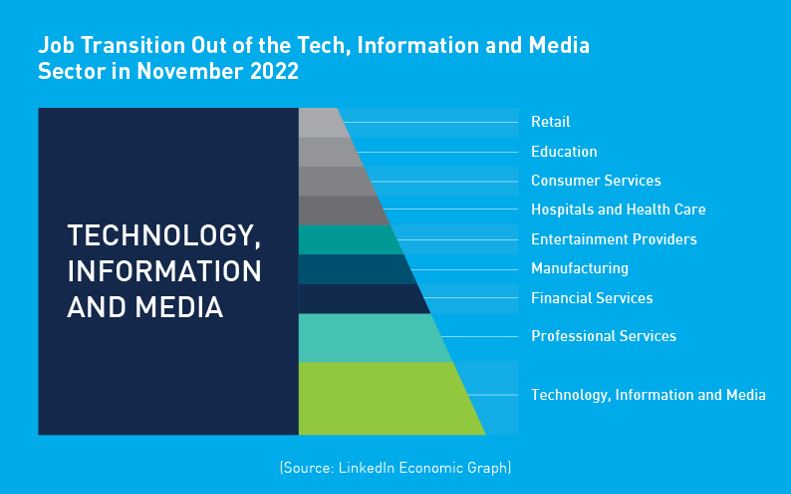
The ratio of tech and digital workers employed outside of the tech industry will continue to grow. Many workers recently laid off from Big Tech firms have highly sought-after skills, creating an opportunity for more traditional organizations to land tech and digital talent

Graph showing which industries tech and digital talent are moving into.

Will Former Tech Workers Re-Evaluate Their Options? 

Given the extent of the downsizing in the tech sector, many workers will think twice about going back to a tech company in the future. Traditional employers, that previously couldn’t compete against the high salaries and quirky perks that Big Tech could provide, now have more to offer tech workers—including stability. 

Tech workers are trading the excitement of startups for the steadiness of more traditional employers. The unpredictable nature and funding rollercoasters of tech firms have left many tech professionals seeking a saner pace. As traditional companies embrace AI, blockchain and cybersecurity, workers who have left the tech sector can still leverage their tech and digital skill sets, but with a greater sense of security.  

What Do Tech and Digital Talent Want? 

When they’re ready for growth again, Big Tech will have to rethink their approach to engaging tech talent and attracting them back to the industry. So, what do tech and digital workers want from their employer and their job? Here are three top considerations that organizations across sectors should focus on to attract and retain tech and digital talent.  

Flexibility & Work/Life Balance 

Many tech workers who experienced the fast pace and intense work culture of startups now find themselves burnt out and are prioritizing more work/life balance. Flexible contracts and remote working are important to tech workers, with 34% citing flexibility as a top priority when looking for a job. Yet, 48% of tech sector employees said that they were feeling pressure from their employer to come into the office more often. 

Recent Gallup analysis shows that employee engagement is lowest among on-site employees, with the biggest dip seen among employees who are capable of working remotely but are required to be on site. Flexibility is not just a perk to offer employees; it should be viewed as a critical way to increase productivity. Organizations can reap the benefits of flexibility in the workplace by continuously monitoring their flexible work program and addressing any challenges experienced by employees or hiring managers.  

What tech and digital talent want

Digital Skills Development  

No one is more aware of the speed of technological advancement than tech and digital workers. And this can lead to anxiety. In fact, 29% of digital employees globally believe their skill set is redundant now or will be in the next one to two years, and 38% believe their skills will be obsolete in the next four to five years. 

In terms of retaining digital talent, investing in training and upskilling programs is crucial for all organizations. Digital talent are more willing to change employers if they feel their skills are stagnating in their current role. Plus, 58% say they would gravitate to organizations that offer better tech and digital skills development. 

With an abundance of job opportunities available, these employees won’t hesitate to find an employer that will invest in their career development. So it’s concerning that 25% of employees said they have not been offered opportunities to learn new skills. Learning and development programs are not only an important part of retaining talent with tech and digital skill sets but can also be an effective way to attract talent.  

Start with a skills audit and compare the findings to your business roadmap. By uncovering the areas where your workforce needs the most training, you can then take steps to develop an upskilling program. For example, PeopleScout worked with a longstanding UK financial services RPO client to lead a reskilling program to help the client evaluate their customer service staff in bank branches and call centers to find candidates for their tech skilling program. We were able to identify over 1,000 employees who are now participating in a 12-month “bootcamp” to build digital and tech skills and move into new careers within the organization. 

Meaningful Work  

Organizations must find out how to communicate their employer value proposition (EVP) in a way that resonates with digital talent. Make sure your attraction content emphasizes the give and get for people in tech roles at your organization including learning and growth opportunities, your tech innovations and projects, well-being initiatives and more. Plus, more and more candidates are paying attention to organizational values and mission. If they can’t determine if their personal values are aligned with the company’s mission, they won’t apply.  

EVP is not all about attraction, but also about employee retention. From a retention perspective, it’s crucial that employers continue to showcase how you’re investing in your employees beyond compensation and benefits. This helps to boost feelings of engagement and to build loyalty. 

As the pace of digital transformation accelerates, it is difficult to envisage a company attaining its full potential without a strong foundation of tech and digital talent. Demand for this crucial part of the workforce won’t let up soon. It’s mission critical for organizations to understand what makes this group tick in order to attract, hire and retain tech talent. To get more strategies for attracting and hiring tech and digital professionals, download our Recruitment Handbook for Tech & Digital Talent.

Recruitment Handbook for Tech & Digital Talent

The Recruitment Handbook for Hiring Tech & Digital Talent

The Recruitment Handbook for Hiring Tech & Digital Talent

5 Strategies for Recruiting the Best Tech Talent Now and into the Future 

Today, every company is a tech company as organizations across sectors create digital customer experiences, embrace automation and AI, and analyze the data created through these platforms. In fact, 6 out of 10 of the most indemand skills are tech-related.

However, according to Gartner, a third (36%) of HR leaders say their sourcing strategies are insufficient for finding the skills they need. So, how can talent acquisition leaders keep up with the demand for tech and digital talent?

In this handbook, you’ll learn:

  • Global trends driving the need for tech talent
  • Strategies for overcoming challenges in your tech hiring programs
  • How partnering with an RPO provider can help


Proud at Work: LGBTQ+ Diversity & Inclusion in the Workplace

The month of June was designated LGBTQ+ Pride Month in remembrance of the Stonewall Uprising that occurred on June 28, 1969, when LGBTQ+ patrons of New York City’s Stonewall Inn clashed with police after the bar was raided. As people around the world commemorate this watershed moment for LGBTQ+ rights, it’s important for employers to have a deep understanding of the history and effect of these events in order to support employees and candidates.

The year after the uprising, marches were organized in New York City, Los Angeles and Chicago to commemorate the events of Stonewall and advance LGBTQ+ civil rights. Today, across the globe, numerous memorials, events and pride parades happen all month long to recognize the influence, struggle and triumphs of the LGBTQ+ community.

The events of Stonewall and the activism it inspired in its wake have helped spread the importance of LGBTQ+ equality and inclusion and the dangers of LGBTQ+ discrimination. This is evidenced by the increasing acceptance of the LGBTQ+ community across all age groups, but especially among younger generations — including Millennials and Generation Z — who are taking up larger parts of the workforce each year. In fact, according to a Gallup survey, the number of U.S. adults who identify as LGBTQ has more than double in a decade, from 3.5% in 2012 to 7.1% in 2022 — largely driven by people aged 25 and under.

Consequently, organizations looking to recruit the next generation of top talent need to be inclusive of LGBTQ+ employees and job-seekers in their policies, workplace culture, and talent acquisition strategy. That’s because, not only are LGBTQ+ people more likely to work for inclusive organizations, but so are their allies, 72% of whom said they were more likely to accept a job at an inclusive employer.

So, whether your organization is just beginning its diversity and inclusion journey or you’re looking for additional strategies to improve your diversity program, it’s always a good idea to brush up on the history, needs, and concerns of historically marginalized groups to better understand, engage and recruit in an increasingly diverse talent landscape.

Here, we provide a historical look at LGBTQ+ activism and its victories in the fight for workplace equity.

Dig Deeper

Diversity & the Candidate Experience: Identifying Recruitment Pitfalls to Improve DE&I Outcome

Heartbreaks & Triumphs: Milestones in the Fight for LGBTQ+ Equality in the Workplace

After the passage of the Civil Rights Act of 1964 in the United States, brave activists participated in a series of demonstrations for employment protections. At the same time, activists worldwide were also fighting for change, creating a global movement for LGBTQ+ rights. This timeline represents the struggles endured – and triumphs won – in the fight for LGBTQ+ rights in the workplace.

  • 1924: Henry Gerber founded the first gay rights organization, The Society for Human Rights. It aimed “to promote and protect the rights of LGBTQ+ people, including the right to work.”
  • 1969: Patrons of the Stonewall Inn in New York City clashed with police, who attempted to raid the establishment. The event is credited with igniting the modern LGBTQ+ rights movement.
  • 1974: Rep. Bella Abzug (D-NY), along with Rep. Ed Koch (D-NY), introduced the Equality Act, which would have amended the Civil Rights Act of 1964 to include sexual orientation under the protected classes for employment.
  • 1982: Wisconsin became the first U.S. state to outlaw discrimination based on sexual orientation.
  • 1996: The United States Supreme Court decided that Colorado’s second amendment – which denied gay and lesbian people protections against discrimination – was unconstitutional, calling them “special rights.”
  • 2009: President Obama signed a Presidential Memorandum allowing same-sex partners of federal employees to receive certain benefits.
  • 2010: The U.S. Senate voted to repeal the “Don’t Ask, Don’t Tell” policy, allowing gay and lesbian people to serve openly in the U.S. military.
  • 2015: The U.S. Supreme Court declared same-sex marriage legal in all 50 states.
  • June 2020: The Supreme Court of the United States (SCOTUS) affirmed that LGBTQ+ workers were protected from discrimination under the Civil Rights Act of 1964 – a landmark decision.

To engage a new generation of workers and clients – many of whom choose careers, products, and services based on businesses’ diversity and inclusion practices – organizations must reexamine their workplace culture and policies. In the next section, we provide guidance and strategies to make your recruiting and talent management programs as inclusive as possible and how to address LGBTQ+ issues in the workplace, as well as what steps you can take now to make your organization more inclusive for LGBTQ+ employees and candidates.


Strategies to Promote and Support LGBTQ+ Inclusion in the Workplace

While the June 2020 SCOTUS ruling represented major progress for LGBTQ+ civil rights in the U.S., there is still much work to be done to ensure every workplace has inclusive policies and practices in place. Specifically, the Human Rights Campaign’s report, A Workplace Divided: Understanding the Climate for LGBTQ Workers Nationwide, found the following LGBTQ+ discrimination facts:

  • 1in 5 LGBTQ+ workers reported having been told, or had coworkers imply, that they should dress in a more feminine or masculine manner
  • 53% of LGBTQ+ workers reported hearing jokes about lesbian or gay people at least once in a while
  • 31% of LGBTQ+ workers said they had felt unhappy or depressed at work
  • The top reason LGBTQ+ workers didn’t report negative comments they heard about LGBTQ+ people to a supervisor or human resources was because they didn’t think anything would be done about it – and they didn’t want to hurt their relationships with coworkers.

Therefore, strong policies against LGBTQ+ discrimination in the workplace, benefits and other practices that include LGBTQ+ workers are essential for organizations as they compete for talent – now and in the future. Below are suggestions for how your organization can improve LGBTQ+ inclusion, as well as how to attract and engage candidates from the community.

Create a Formal Policy to Reduce LGBTQ+ Discrimination

If you want to display your commitment to LGBTQ+ workers, setting formal policies outlining your expected behaviors organization-wide is a good place to start. Not only is this important in terms of communicating your organization’s support of LGBTQ+ employees and the community, but it also helps reduce compliance risks and costly discrimination litigation.

Specifically, the policies you put in place should support all employees’ understanding of what type of behavior is inappropriate, while also clearly communicating that harassment and homophobia in the workplace will not be tolerated. In particular, your anti-discrimination and harassment policies should address sexual orientation, gender identity and gender expression as prohibited grounds of discrimination. You may also want to provide examples of what discrimination and harassment look like to further educate employees. Finally, be sure to check with your legal department before enacting formal policies to ensure you are in compliance.

Support LGBTQ+ Workers by Using Gender-Neutral Language

Likewise, using gender-neutral language when writing and speaking to employees and job candidates can go a long way in making members of the LGBTQ+ community feel visible and included. First, examine the language on your career site, in recruiting messaging, during interviews and in other internal policies to make sure the copy is not exclusionary. Furthermore, while reviewing your career site, consider all the ways that gendered language enforces stereotypes and erases the existence of genderqueer and gender non-binary people within organizations. For example, instead of using “he” or “he/she,” it is acceptable – and, in some cases, preferred – to use “they” as a singular, gender-neutral pronoun. In fact, this is the practice of many major news and media outlets, such as The Washington Post.

Similarly, your organization should also review the language in your employee dress codes. For instance, instead of outlining appropriate workplace attire for men and women, you could simply state that all employees must dress to meet professional standards.

Reevaluate Your Benefits 

Additionally, to ensure your benefits package meets the needs of LGBTQ+ employees, it’s also important to understand their specific needs related to medical coverage, parental leave, bereavement and any other benefits you may offer. To that end, benefits that appeal to the needs of LGBTQ+ candidates are likely to attract more qualified candidates and help your employer brand stand out.

As an example, some organizations have progressive benefits packages that include coverage for drugs related to HIV/AIDs (including PrEP) and coverage for transition-related costs (including gender affirmation surgery.) Again, ensure you’re using inclusive language and perform regular reviews to ensure your benefits package remains relevant to your LGBTQ+ employees.

Provide Training for Managers

Meanwhile, managers should also be invested in the care and wellbeing of those who work for them and are also responsible for ensuring their teams interact professionally and respectfully. Plus, managers are often the first point of contact for questions around health benefits, dress code, use of restrooms, etc. As such, it’s important that they’re able to answer questions confidently and respectfully – or know where to direct an employee if further support is needed.

Granted, some managers will defer any uncomfortable questions to HR for fear of saying the wrong thing. But, a manager who understands the organization’s stance on these issues and is comfortable discussing it also sets the tone for inclusion in their department; training leads to confidence.

Support LGBTQ+ Employee Resource Groups

Employee Resource Groups (ERGs) are voluntary, employee-led groups made up of individuals who come together based on common interests, backgrounds, or demographic factors, such as gender, race or sexual orientation. ERGs provide safe places for people to meet, support each other and talk about issues related to the LGBTQ+ community in the workplace.

By supporting ERGs, you communicate to your workforce – and potential job candidates – that your organization supports the LGBTQ+ community. In turn, this can help boost retention and also improve your employer brand for job candidates researching your organization.

Support Gender Identity: Gender Neutral Policies for Talent Acquisition & Talent Management

lgbtq in the workplace

Gender transition refers to the process that some trans people undergo to affirm their gender identity. For some people, their transition may include changing their name and how they dress. As outlined by both the Human Rights Campaign and The 519’s Creating Authentic Spaces, gender transition guidelines ensure that there is an institutional protocol on how to support an employee who transitions.

However, there is no singular way for a person to transition; this is a personal process that is defined by the individual and, as such, it’s integral that these guidelines and any formal documents communicate that. Therefore, transition guidelines should delineate the responsibilities and expectations of supervisors, colleagues and other staff, as well as clearly state that any employee who wishes to transition will be supported.

Combating LGBTQ+ Discrimination in the Workplace: How to Support LGBTQ in the Workplace

If your organization is looking to have more of an influence in the LGBTQ+ community, you’re not alone. Many organizations have played an important role in the progress of LGBTQ+ rights by displaying public acts of support and becoming regular sponsors of annual pride events around the world. As a matter of fact, a record 206 major corporations signed an amicus brief in the spring advocating for the Supreme Court’s June 2020 decision protecting LGBTQ+ individuals from workplace discrimination.

At the same time, many organizations are also increasingly making business-critical decisions about recruitment practices, employee resource groups, and employer branding that embrace and welcome the LGBTQ+ community. Next, we’ll outline how your organization can better support LBGTQ+ employees and the communities they represent.

LGBTQ+ Diversity and Your Supplier Network

While many organizations have a formal code of conduct for employees, fewer extend this code to their suppliers. Ensuring suppliers align with your organizational values around LGBTQ+ inclusion goes a long way toward supporting LGBTQ+ workers. For instance, consider where your organization orders office supplies, goes to for catering, hires for cleaning, etc. These are all examples of opportunities to support organizations that are committed to LGBTQ+ inclusion and diversity.

One of the best ways to get your organization in front of many diverse suppliers is through non-profit LGBTQ+ organizations that work to connect diverse suppliers with the corporations looking to do business with them. The following organizations are a good place to begin:  

Updating Recruiting & Hiring Practices for the Future

Building an inclusive organization starts with recruiting and hiring a diverse set of employees. Unfortunately, conscious or unconscious bias against LGBTQ+ applicants can prevent them from getting hired, and prior studies found evidence of bias against LGBTQ+ job applicants. 

Many LGBTQ+ workplace issues begin before a person is hired. The selection process can also be full of challenges for an LGBTQ+ person. For example, studies using résumés indicating that they belong to gay menqueer women and transgender applicants received fewer callbacks compared with résumés without any indication that the applicant was gay, queer or transgender, respectively. A similar study compared matched pairs of women – in which one woman in the pair was transgender – finding a net rate of discrimination of 42% against transgender applicants, illustrating LGBTQ+ employment discrimination is still a persistent issue.

Clearly, qualified applicants should not have to hide their identity to get a job. Yet, one in 10 LGBTQ+ people reported removing items from their résumé to hide their sexual orientation or gender identity (SOGI) from employers. Alternatively, strategies like blind résumé screening – removing names, gender signifiers and affinity-group affiliations – can help reduce unconscious bias in hiring decisions.

In the meantime, start training recruiters and hiring managers on the many forms of unconscious bias that play out in the hiring process to ensure they’re selecting the best person for the job – regardless of perceived differences. For instance, consider whether your recruiters know how to interact with references who might not be aware of a previous employee’s gender transition (for example, a candidate’s previous employer may have known them by a different name and as a different gender).

Along the same lines, also consider where your job postings are advertised and how they’re written: Do they use gendered language? Are they reaching a diverse range of communities and people? Also, consider posting to job boards and relevant publications that are geared toward LGBTQ+ communities.

Intersectionality & Inclusion  

Many LGBTQ+ employees and job candidates are subject to discrimination based on their sexual orientation and other aspects of their identity. Furthermore, traits such as race, gender, religion and immigration status can also intersect, which may lead to the individual experiencing discrimination on multiple fronts. 

Today, most diversity and inclusion efforts include equity as a dimension, which gives everyone equal opportunities to develop and considers their background and the unique challenges they face. But, because the LGBTQ+ workforce is not a monolithic group with a single set of experiences and needs, avoid categorizing LGBTQ+ employees as a siloed group when crafting your diversity and inclusion strategies. Instead, if you want to build a truly effective diversity and inclusion strategy, start with a foundation grounded in intersectionality, which provides a lens to create and refine innovative and meaningful solutions that truly include everyone.

Moreover, to combat LGBTQ+ discrimination in the workplace, analyze data on pay and employee engagement – separating out variables of race, gender, sexual orientation or physical ability – to get a better picture of intersectional challenges within your organization. While this approach may seem complex, it’s necessary to improve inclusion. Also, note that intersectionality doesn’t require creating countless subgroups for each possible intersection. Instead, diversity and inclusion leaders, as well as ERGs, should educate employees on intersectionality to help everyone understand all of the possible contextual life factors of their LGBTQ+ colleagues and the experiences that these unique identities create.

LGBTQ+ inclusion in the workplace is fundamentally the right thing to do, and making the business case can sway those on the fence about the importance of LGBTQ+ inclusion. But, ultimately, as talent professionals, providing a space for all employees to thrive and bring their authentic self to work is what’s most important in the fight against LGBTQ+ discrimination in the workplace. As the march for equality continues, it’s beneficial to use multiple strategies to achieve a world in which LGBTQ+ people are celebrated for their diversity and unique experiences.

Only 5% of organizations say they’re succeeding with their DE&I initiatives. Download our free research report, Diversity & the Candidate Experience: Identifying Recruitment Pitfalls to Improve DE&I Outcomes, for insights into how to improve diversity recruitment outcomes.